Muutke küpsiste eelistusi

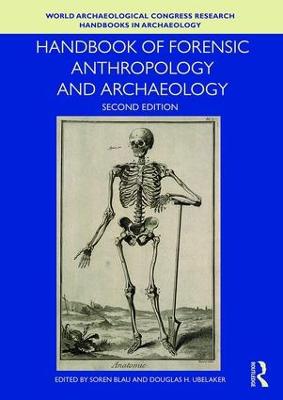
Handbook of Forensic Anthropology and Archaeology 2nd edition [Pehme köide]

Edited by (Victorian Institute of Forensic Medicine, Australia), Edited by (Smithsonian Institute, Washington, DC, USA)
  • Formaat: Paperback / softback, 738 pages, kõrgus x laius: 246x174 mm, kaal: 1620 g
  • Sari: WAC Research Handbooks in Archaeology
  • Ilmumisaeg: 27-Jul-2016
  • Kirjastus: Left Coast Press Inc
  • ISBN-10: 1629583855
  • ISBN-13: 9781629583853
  • Pehme köide
  • Hind: 58,94 €*
  • * hind on lõplik, st. muud allahindlused enam ei rakendu
  • Tavahind: 78,59 €
  • Säästad 25%
  • Raamatu kohalejõudmiseks kirjastusest kulub orienteeruvalt 3-4 nädalat
  • Kogus:
  • Lisa ostukorvi
  • Tasuta tarne
  • Tellimisaeg 2-4 nädalat
  • Lisa soovinimekirja
  • Formaat: Paperback / softback, 738 pages, kõrgus x laius: 246x174 mm, kaal: 1620 g
  • Sari: WAC Research Handbooks in Archaeology
  • Ilmumisaeg: 27-Jul-2016
  • Kirjastus: Left Coast Press Inc
  • ISBN-10: 1629583855
  • ISBN-13: 9781629583853
This thoroughly updated reference book, written by forensics experts from around the world, provides a solid, comprehensive foundation in forensic archeology and anthropology and adds new material on Africa, South America, the International Commission on Missing Persons, and the identification of victims of the First World War.


With contributions from 70 experienced practitioners from around the world, this second edition of the authoritative Handbook of Forensic Archaeology and Anthropology provides a solid foundation in both the practical and ethical components of forensic work. The book weaves together the discipline’s historical development; current field methods for analyzing crime, natural disasters, and human atrocities; an array of laboratory techniques; key case studies involving legal, professional, and ethical issues; and ideas about the future of forensic work--all from a global perspective. This fully revised second edition

-provides an updated perspective of the disciplines of forensic archaeology and anthropology;
-expands the geographic representation of the first edition by including chapters from practitioners in South Africa and Colombia;
-adds exciting new chapters on the International Commission on Missing Persons and on forensic work being done to identify victims of the Battle of Fromelles during World War I.


With contributions from 70 experienced practitioners from around the world, this second edition of the authoritative Handbook of Forensic Archaeology and Anthropology provides a solid foundation in both the practical and ethical components of forensic work. The book weaves together the discipline’s historical development; current field methods for analyzing crime, natural disasters, and human atrocities; an array of laboratory techniques; key case studies involving legal, professional, and ethical issues; and ideas about the future of forensic work--all from a global perspective. This fully revised second edition:

  • provides an updated perspective of the disciplines of forensic archaeology and anthropology;
  • expands the geographic representation of the first edition by including chapters from practitioners in South Africa and Colombia;
  • adds exciting new chapters on the International Commission on Missing Persons and on forensic work being done to identify victims of the Battle of Fromelles during World War I.

Arvustused

" [ T]his volume is indeed comprehensive. The Editors should be congratulated on an excellent book, which should be on the bookshelf of any serious practitioner and library. The Editors state that the methodologies summarized in this volume are state of the art but hardly the last word. However, this book should remain highly relevant for many years to come. Highly recommended!""

- James Robertson, Australian Journal of Forensic Sciences, review of the first edition

"This superb volume brings together contributions from practicing professionals in Australia, Canada, France, Great Britain, Guatemala, Indonesia, Italy, Spain, and the United States. For those individuals considering specializing in forensic anthropology, or applying their archaeological skills in the search, documentation, and recovery of human remains and evidence derived from non-archaeological contexts, this book inserts a large dose of reality into what it means to be an anthropologist first and a forensic anthropologist second."

- Leslie E. Eisenberg, Journal of Forensic Sciences, review of the first edition

List of Illustrations
x
Acknowledgments xx
Use of Images of Human Remains xxi
Contributors xxii
1 Forensic Anthropology and Archaeology: Moving Forward
1(10)
Soren Blau
Douglas H. Ubelaker
PART I History of the Disciplines
11(154)
2 Forensic Anthropology and Archaeology in the United Kingdom: Are We Nearly There Yet?
13(14)
Gaille MacKinnon
Karl Harrison
3 Forensic Anthropology and Archaeology: Perspectives from Italy
27(16)
Cristina Cattaneo
Daniele Gibelli
Dominic Salsarola
4 Forensic Anthropology: Perspectives from France
43(9)
Tania Delabarde
Eric Baccino
5 A History of Forensic Anthropology in Spain
52(13)
Jose L. Prieto
6 The Application of Forensic Anthropology to the Investigation of Cases of Political Violence: Perspectives from South America
65(10)
Luis Fondebrider
7 The Origin and Development of Forensic Anthropology and Archaeology in Colombia
75(19)
Angelica Guzman
Cesar Sanabria Medina
8 Historical Development of Forensic Anthropology: Perspectives from the United States
94(13)
Douglas H. Ubelaker
9 Forensic Anthropology: Canadian Content and Contributions
107(19)
Mark Skinner
Kristina Bowie
10 The Development and Current State of Forensic Anthropology: An Australian Perspective
126(14)
Denise Donlon
11 Historical Perspectives on Forensic Anthropology in Indonesia
140(11)
Etty Indriati
12 Forensic Anthropology as Practiced in South Africa
151(14)
Maryna Steyn
Ericka N. L'Abbe
Jolandie Myburgh
PART II Forensic Archaeology
165(30)
13 The Search for and Detection of Human Remains
167(14)
Thomas D. Holland
Samuel V. Connell
14 Excavation and Recovery in Forensic Archaeological Investigations
181(14)
Paul N. Cheetham
Ian Hanson
PART III Forensic Anthropology
195(250)
15 Differentiating Human from Nonhuman Skeletal Remains
197(16)
Dawn M. Mulhern
16 Dating of Anthropological Skeletal Remains of Forensic Interest
213(13)
Shari Forbes
Kimberly Nugent
17 Analysis of Commingled Human Remains
226(17)
John E. Byrd
Bradley J. Adams
18 The Assessment of Ancestry and the Concept of Race
243(18)
Norman J. Sauer
Jane C. Wankmiller
Joseph T. Hefner
19 Anthropological Estimation of Sex
261(12)
Samantha K. Rowbotham
20 Skeletal Age Estimation
273(20)
Tracy L. Rogers
21 Histological Age Estimation
293(15)
Christian M. Crowder
Jarred T. Heinrich
Victoria M. Dominguez
22 Stature Estimation
308(14)
P. Willey
23 Antemortem Trauma
322(24)
Eugenia Cunha
Joao Pinheiro
24 Perimortem Trauma
346(27)
Louise Loe
25 Forensic Taphonomy
373(18)
Stephen P. Nawrocki
26 Burned Human Remains
391(11)
Tim Thompson
Priscilla F. Ulguim
27 Craniofacial Identification: Techniques of Facial Approximation and Craniofacial Superimposition
402(14)
Carl N. Stephan
Peter Claes
28 Biomolecular Applications
416(14)
Lori Baker
29 Forensic Odontology
430(15)
John Clement
PART IV The Crime and Disaster Scene: Case Studies in Forensic Archaeology and Anthropology
445(146)
30 Investigative and Legal Aspects of a U.S. Federal Death Penalty Case
447(16)
Dawnie Wolfe Steadman
William Basler
Michael J. Hochrein
Dennis F. Klein
Julia C. Goodin
31 Domestic Homicide Investigations in the United Kingdom
463(14)
John Hunter
32 Forensic Anthropology in Disaster Response
477(19)
Paul Sledzik
Amy Z. Mundorff
33 Medico-Legal Investigation of Atrocities Committed during the Solomon Islands "Ethnic Tensions"
496(11)
Melanie Archer
Malcolm J. Dodd
34 Disaster Anthropology: The 2004 Asian Tsunami
507(13)
Sue Black
35 The Role of the Anthropologist in Disaster Victim Identification: Case Studies from the 2002 and 2004 Terrorist Attacks in Bali, Indonesia
520(12)
Alanah M. Buck
Christopher A. Briggs
36 Dealing with Human Remains from Recent Conflict: Mass Grave Excavation and Human Identification in a Sensitive Political Context
532(13)
Marija Djuric
37 Forensic Investigations in Guatemala: The Continuing Search for Truth, Justice, and the Missing Two Decades after the Peace Accords
545(18)
Caroline Barker
Ambika Flavel
Claudia Rivera Fernandez
38 Continuing Challenges for Forensic Archaeology and Anthropology in Iraq
563(12)
Derek Congram
Jon Sterenherg
Oran Finegan
39 Fromelles: Forensic Archaeology and Anthropology in Identification
575(16)
Margaret Cox
Louise Loe
Peter Jones
PART V The Professional Forensic Archaeologist and the Forensic Anthropologist
591(88)
40 More Than Just Bare Bones: Ethical Considerations for Forensic Anthropologists
593(14)
Soren Blau
41 How to Do Forensic Archaeology under the Auspices of the United Nations and Other Large Organizations
607(15)
Richard Wright
Ian Hanson
42 Contribution of Quantitative Methods in Forensic Anthropology: A New Era
622(13)
Ann H. Ross
Erin H. Kimmerle
43 The Expert Witness and the Court of Law
635(7)
Maciej Henneberg
44 Legal Aspects of Identification
642(18)
David Ranson
45 The International Commission on Missing Persons (ICMP) and the Application of Forensic Archaeology and Anthropology to Identifying the Missing
660(12)
Ian Hanson
Matthew Holliday
Kevin Sullivan
Kathryne Bomberger
Thomas Parsons
46 Conclusion: International Perspectives on Issues in Forensic Anthropology
672(7)
Soren Blau
Douglas H. Ubelaker
Index 679
Soren Blau is the Senior Forensic Anthropologist at the Victorian Institute of Forensic Medicine. She is an Adjunct Senior Lecturer in the Department of Forensic Medicine at Monash University, a Founding Fellow Faculty of Science at The Royal College of Pathologists of Australasia, and a recipient of a Churchill Fellowship. Blau undertakes forensic anthropology casework, including Disaster Victim Identification, and she has participated in the recovery and analysis of human remains from archaeological and forensic contexts in numerous countries, including the Democratic Republic of Congo, Guam, Indonesia, Israel, the Solomon Islands, East Timor, the United Arab Emirates, the United Kingdom, and Uzbekistan. Blau has worked as a consultant for the International Criminal Court and non-government organizations, and she has conducted training courses for forensic practitioners and related stakeholders.


Douglas Ubelaker is a curator and senior scientist at the Smithsonian Institutions National Museum of Natural History. Since 1978, he has served as a consultant in forensic anthropology, reporting on more than 900 cases and testifying in numerous legal proceedings. He is a lecturer with the departments of anatomy and anthropology at The George Washington University, as well as an adjunct professor in the Department of Anthropology at Michigan State University. Ubelaker has published extensively in the general field of human skeletal biology with an emphasis on forensic applications and has served on the editorial boards of numerous leading scientific publications. Since 1987, he has been a Fellow in the Physical Anthropology Section of the American Academy of Forensic Sciences, and he served as president of the Academy in 2011-2012. Ubelaker has received numerous honors from both American and international organizations.