Muutke küpsiste eelistusi

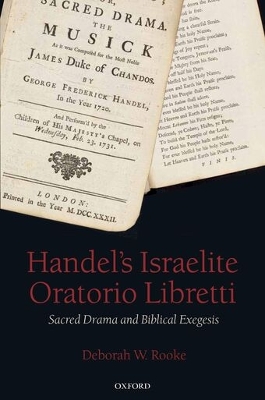
Handel's Israelite Oratorio Libretti: Sacred Drama and Biblical Exegesis [Kõva köide]

(Research Fellow in Bible and Music, Oxford Centre for Christianity and Culture, Regent's Park College, University of Oxford)
  • Formaat: Hardback, 280 pages, kõrgus x laius x paksus: 240x162x22 mm, kaal: 586 g
  • Ilmumisaeg: 23-Feb-2012
  • Kirjastus: Oxford University Press
  • ISBN-10: 0199279284
  • ISBN-13: 9780199279289
  • Kõva köide
  • Hind: 118,50 €*
  • * hind on lõplik, st. muud allahindlused enam ei rakendu
  • Tavahind: 148,12 €
  • Säästad 20%
  • Raamatu kohalejõudmiseks kirjastusest kulub orienteeruvalt 3-4 nädalat
  • Kogus:
  • Lisa ostukorvi
  • Tasuta tarne
  • Tellimisaeg 2-4 nädalat
  • Lisa soovinimekirja
  • Raamatukogudele
    • Oxford Scholarship Online e-raamatud
  • Formaat: Hardback, 280 pages, kõrgus x laius x paksus: 240x162x22 mm, kaal: 586 g
  • Ilmumisaeg: 23-Feb-2012
  • Kirjastus: Oxford University Press
  • ISBN-10: 0199279284
  • ISBN-13: 9780199279289
Handel's Israelite oratorios are today little known among non-specialists, but in their own day they were unique, pioneering and extremely popular. Dating from the period 1732-1752, they combine the musical conventions of Italian opera with dramatic plots in English that are adaptations of Old Testament narratives. They constitute a form of biblical interpretation, but to date, there has been no thoroughgoing study of the theological ideas or the attitudes towards the biblical text that might be conveyed in the oratorios' libretti. This book aims to fill that gap from an interdisciplinary perspective.

Combining the insights of present-day biblical studies with those of Handelian studies, Deborah W. Rooke examines the libretti of ten oratorios - Esther, Deborah, Athalia, Saul, Samson, Joseph and his Brethren, Judas Macchabaeus, Solomon, Susanna and Jephtha - and evaluates the relationship between each libretto and the biblical story on which it is based. Rooke comments on each biblical text from a modern scholarly perspective, and then compares the modern interpretation with the version of the biblical narrative that appears in the relevant libretto. Where the libretto is based on a prior dramatic or literary adaptation of the biblical narrative, she also discusses the prior adaptation and how it relates to both the biblical text and the corresponding oratorio libretto. In this way the distinctive nuances of the oratorio libretti are highlighted, and each libretto is then analysed and interpreted in the light of eighteenth-century religion, scholarship, culture and politics. The result is a fascinating exploration not only of the oratorio libretti but also of how culture and context determines the nature of biblical interpretation.

Arvustused

Every time [ Rooke] described Handels works with reference to modern biblical scholarship, the pages turned themselves ... a good read * Sarah Lenton, Church Times * [ Rooke] has amply demonstrated how biblical texts were interpreted by Handels librettists and in addition provides valuable insight into the world of early eighteenth-century biblical interpretation. * Richard H. Bell, The Journal of Theological Studies, *

Abbreviations xii
Introit xv
1 To Laugh or Not to Laugh: The Question of Esther
1(31)
2 A Gender Agenda: Deborah in Holy Writ and Handel
32(21)
3 Jezebel, Joash, and Jesus Christ: Aspects of Athalia
53(21)
4 Saul: Tragedy, Treachery, and Theology
74(24)
5 From Wild Man to War Hero: The Story of Samson
98(23)
6 Joseph: Saint or Sinner? Italian Opera, Handelian Oratorio, and Eighteenth-century Commentaries
121(24)
7 Judas Macchabaeus: Justifying the 1745 Anti-Jacobite Campaign
145(21)
8 Solomon and his Women: A Handelian Triptych
166(18)
9 Susanna: A Marriage Made in Heaven
184(23)
10 Sex and Death, or the Death of Sex: The Fate of Jephthah's Daughter
207(20)
Postlude 227(2)
Bibliography 229(18)
Index of Scripture References 247(5)
Index of Names 252