Muutke küpsiste eelistusi

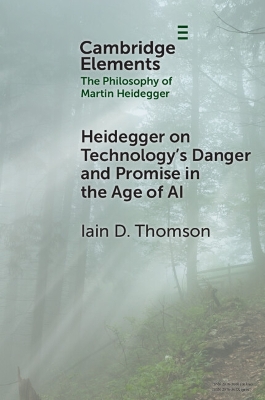
Heidegger on Technology's Danger and Promise in the Age of AI [Pehme köide]

(University of New Mexico)
  • Formaat: Paperback / softback, 74 pages, kõrgus x laius x paksus: 229x152x4 mm, kaal: 124 g, Worked examples or Exercises
  • Sari: Elements in the Philosophy of Martin Heidegger
  • Ilmumisaeg: 20-Mar-2025
  • Kirjastus: Cambridge University Press
  • ISBN-10: 1009629433
  • ISBN-13: 9781009629430
Teised raamatud teemal:
  • Pehme köide
  • Hind: 20,48 €*
  • * hind on lõplik, st. muud allahindlused enam ei rakendu
  • Tavahind: 27,30 €
  • Säästad 25%
  • Raamatu kohalejõudmiseks kirjastusest kulub orienteeruvalt 3-4 nädalat
  • Kogus:
  • Lisa ostukorvi
  • Tasuta tarne
  • Tellimisaeg 2-4 nädalat
  • Lisa soovinimekirja
  • Formaat: Paperback / softback, 74 pages, kõrgus x laius x paksus: 229x152x4 mm, kaal: 124 g, Worked examples or Exercises
  • Sari: Elements in the Philosophy of Martin Heidegger
  • Ilmumisaeg: 20-Mar-2025
  • Kirjastus: Cambridge University Press
  • ISBN-10: 1009629433
  • ISBN-13: 9781009629430
Teised raamatud teemal:
Critically examining the anxieties that surround our contemporary technologies, the author develops Heidegger's views on where technology comes from, how it is reshaping us, and where it might now lead. The result is a thoughtful and enlightening treatment of the dangers and promise of technology today.

How exactly is technology transforming us and our worlds, and what (if anything) can and should we do about it? Heidegger already felt this philosophical question concerning technology pressing in on him in 1951, and his thought-full and deliberately provocative response is still worth pondering today. What light does his thinking cast not just on the nuclear technology of the atomic age but also on more contemporary technologies such as genome engineering, synthetic biology, and the latest advances in information technology, so-called “generative AIs” like ChatGPT? These are some of the questions this book addresses, situating the latest controversial technologies in the light of Heidegger's influential understanding of technology as an historical mode of ontological disclosure. In this way, we seek to take the measure of Heidegger's ontological understanding of technology as a constellation of intelligibility with an important philosophical heritage and a dangerous but still promising future.

Arvustused

'Iain D. Thomson's Heidegger on Technology's Danger and Promise in the Age of AI offers a concise yet profoundly insightful engagement with Martin Heidegger's later philosophy of technology, demonstrating its urgent relevance for navigating our contemporary technological predicament, particularly the rise of Artificial Intelligence. It serves as a superb introduction to Heidegger's philosophy of technology for students and scholars, while also offering fresh perspectives for specialists.' Social Epistemology Review and Reply Collective

Muu info

A thoughtful and enlightening treatment of the dangers and promise of technology today.
A Note on the Notes;
1. Technology: Pure Comedy or Disturbing Dystopia?;
2. From Atomic Weapons to Genetic Engineering and Artificial Intelligence;
3. What is Called Thinking in 'the Age of Artificial Intelligence '?;
4. Learning to Think through Technology Ontohistorically;
5. Situating Heidegger's Thinking of Technology Ontohistorically: Modern Subjectivism, Late-modern Enframing, and the Coming of Postmodernity;
6. Thinking a Free Relation to Technology, or: Technology and the Other (Postmodern) Beginning; Abbreviations.