Muutke küpsiste eelistusi

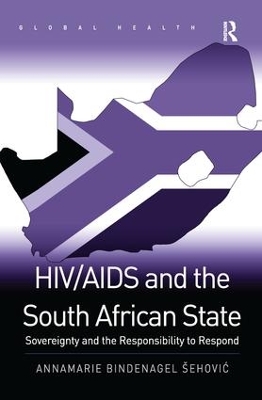
HIV/AIDS and the South African State: Sovereignty and the Responsibility to Respond [Pehme köide]

  • Formaat: Paperback / softback, 256 pages, kõrgus x laius: 234x156 mm, kaal: 453 g
  • Sari: Routledge Global Health Series
  • Ilmumisaeg: 17-Nov-2016
  • Kirjastus: Routledge
  • ISBN-10: 1138279315
  • ISBN-13: 9781138279315
  • Pehme köide
  • Hind: 57,93 €*
  • * hind on lõplik, st. muud allahindlused enam ei rakendu
  • Tavahind: 77,24 €
  • Säästad 25%
  • Raamatu kohalejõudmiseks kirjastusest kulub orienteeruvalt 3-4 nädalat
  • Kogus:
  • Lisa ostukorvi
  • Tasuta tarne
  • Tellimisaeg 2-4 nädalat
  • Lisa soovinimekirja
  • Raamatukogudele
  • Formaat: Paperback / softback, 256 pages, kõrgus x laius: 234x156 mm, kaal: 453 g
  • Sari: Routledge Global Health Series
  • Ilmumisaeg: 17-Nov-2016
  • Kirjastus: Routledge
  • ISBN-10: 1138279315
  • ISBN-13: 9781138279315
For three decades post-apartheid, the HIV/AIDS epidemic from first acknowledgement to its management as a chronic disease, demanded unparalleled attention. This was nowhere more evident than in South Africa. This book explores how the state responded to its responsibilities to defend and protect (human) security. Linking this to the role of the state as sovereign protector and provider of security, it applies the findings to the broader re-interpretation of sovereign responsibility in the 21st Century. This book does not seek to absolve the South African state of its responsibility to respond. Moreover, it argues that although the state, the government, before, during, and after the transition to democracy, was aware of and acknowledged the threat - political, economic and social - posed by the epidemic, it nonetheless chose not to make the epidemic a priority policy issue. As a result, it argues that the South African HIV/AIDS case illustrates the tension inherent between a state’s ultimate sovereign responsibility to respond and its tactical dependence on external contributors to meet the demands of all of its constituents.

This book does not seek to absolve the South African state of its responsibility to respond to the HIV/AIDS epidemic. Moreover, it argues that although the state, the government, before, during, and after the transition to democracy, was aware of and acknowledged the threats - political, economic and social - posed by the epidemic, it nonetheless chose not to make the epidemic a priority policy issue. As a result, it argues that the South African HIV/AIDS case illustrates the tension inherent between a state’s ultimate sovereign responsibility to respond and its tactical dependence on external contributors to meet the demands of all of its constituents.
Arvustused

This book on the fight against HIV/AIDS in South Africa is of utmost academic and political significance and key to understanding the complicated nexus between health and development. Well researched and cogently argued: the author has provided an excellent and penetrating empirical analysis and applied an original theoretical interpretation to demystify a complex development challenge confronting Africa's leading economy and add to knowledge on health sovereignty. Franklyn Lisk, University of Warwick, UK ... provides an alternative view on the fight against HIV/AIDS in South Africa...highlights the challenges if transnational actors take over state functions when the state is too weak but retains ultimate responsibility. A must read for anyone doing research on governance in areas of limited statehood. Tanja A. Borzel, Freie Universitat Berlin, Germany HIV/AIDS and the South African State is a comprehensive account of the countrys 30-year struggle with the disease, a history fraught with government inaction, harmful interventions and dramatic discord between the South African state, the international community and HIV/AIDS organisations. This book offers students of global health policy and political science a rich context in which to discuss theories of statehood, sovereignty and the problematic nature of the states responsibility to the international community and to its people ... HIV/AIDS and the South African State is a valuable contribution to cross-disciplinary literature exploring effective responses to combatting HIV/AIDS as well as other global grand challenges that require the collaborative efforts of state, external state and non-state actors. LSE Review of Books 'HIV/AIDS and the South African State: Sovereignty and the Responsibility to Respond is an important read for anyone wanting to understand the rise of HIV in South Africa. It provides a subtler understanding and rationale for often misunderstood aspects of political a

Acknowledgments List of Abbreviations;
Chapter 1 Introduction: The South
African State and the Responsibility to Respond;
Chapter 2 Situational
Analysis of HIV/AIDS in South Africa;
Chapter 3 Social, Economic, and
Political Consequences of HIV/AIDS in South Africa;
Chapter 4 The
(Inter)national Framework of South Africas Policy-Making;
Chapter 5 Policy
Polemics I: Apartheids Demise to HIV/AIDS Rise;
Chapter 6 Policy Polemics
II: Rising to the Challenge of HIV/AIDS;
Chapter 7 Comparative Applications
of the GAP Hypothesis;
Chapter 8 Conclusion and Recommendations;
Dr. Annamarie Bindenagel Å ehoviÄ is a political scientist and public (health) policy analyst with many years of experience in and focused on sub-Saharan Africa and global health and human security. Dr. Å ehoviÄ is currently health analyst at the German Institute for Development Evaluation (DEval), and affiliated with the Willy-Brandt School of Public Policy and the University of Erfurt, Germany, as well as with the health and human security component of the GR: EEN EU FP7 Funded Project at the University of Warwick, UK.