Muutke küpsiste eelistusi

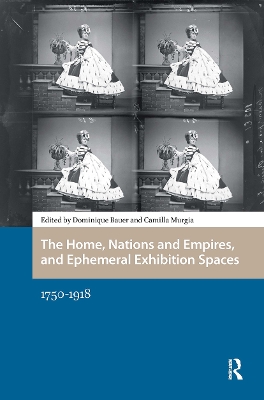
Home, Nations and Empires, and Ephemeral Exhibition Spaces: 1750-1918 [Kõva köide]

Edited by , Edited by
  • Formaat: Hardback, 276 pages, kõrgus x laius: 234x156 mm, kaal: 560 g, 29 Illustrations, black and white
  • Sari: Spatial Imageries in Historical Perspective
  • Ilmumisaeg: 25-May-2021
  • Kirjastus: Amsterdam University Press
  • ISBN-10: 9463720804
  • ISBN-13: 9789463720809
  • Kõva köide
  • Hind: 138,94 €*
  • * hind on lõplik, st. muud allahindlused enam ei rakendu
  • Tavahind: 185,25 €
  • Säästad 25%
  • Raamatu kohalejõudmiseks kirjastusest kulub orienteeruvalt 3-4 nädalat
  • Kogus:
  • Lisa ostukorvi
  • Tasuta tarne
  • Tellimisaeg 2-4 nädalat
  • Lisa soovinimekirja
  • Formaat: Hardback, 276 pages, kõrgus x laius: 234x156 mm, kaal: 560 g, 29 Illustrations, black and white
  • Sari: Spatial Imageries in Historical Perspective
  • Ilmumisaeg: 25-May-2021
  • Kirjastus: Amsterdam University Press
  • ISBN-10: 9463720804
  • ISBN-13: 9789463720809
The theme itself is new, the methodology is interdisciplinary (artistic, literary imageries + wide variety of textual sources and the history of built environment) the thematic scope is very varied This book explores ephemeral exhibition spaces between 1750 and 1918. The chapters focus on two related spaces: the domestic interior and its imagery, and exhibitions and museums that display both national/imperial identity and the otherness that lurks beyond a country’s borders. What is revealed is that the same tension operates in these private and public realms; namely, that between identification and self-projection, on the one hand, and alienation, otherness and objectification on the other. In uncovering this, the authors show that the self, the citizen/society and the other are realities that are constantly being asserted, defined and objectified. This takes place, they demonstrate, in a ceaseless dynamic of projection versus alienation, and intimacy versus distancing.
Introduction: Ephemeral Exhibition Spaces and the Dynamic of Historical Liminalities 7(14)
Dominique Bauer
I The Home
1 Panorama as Critical Restoration: Examining the Ephemeral Space of Viollet-le-Duc's Study at La Vedette
21(32)
Aisling O'Carroll
2 An Ephemeral Museum of Decorative and Industrial Arts: Charle Albert's Vlaams Huis
53(24)
Daniela N. Prina
3 Expanding Interiors: Architectural Photographs of the Countess de Castiglione
77(36)
Heidi Brevik-Zender
II Bygone Nations and Empires under Construction: Political Imaginations
4 The Land that Never Was: Liminality of Existence and the Imaginary Spaces in the Archbishopric of Karlovci
113(20)
Jelena Todorovic
5 The Theatre of Affectionate Hearts: Izabela Czartoryska's Musee des Monuments Polonais in Pulawy (1801-1831)
133(28)
Michat Mencfel
6 A Burning Mind, a Dream Space, a "Fantastic Exhibition"
161(20)
Inessa Kouteinikova
III England and the British Empire: Civil Society, Civil Service, and Ephemeral Exhibition Spaces
7 An Ephemeral Display within an Ephemeral Museum: The East India Company Contribution to the Manchester Art Treasures Exhibition of 1857
181(28)
Elizabeth A. Pergam
8 Julia Margaret Cameron's Railway Station Exhibition: A Private Gallery in the Public Sphere
209(32)
Jeff Rosen
9 Paper Monument: The Paradoxical Space in the English Paper Peepshow of the Thames Tunnel, 1825-1843
241(30)
Shijia Yu
Index 271
Dominique Bauer is Assistant Professor of History at the Faculty of Architecture, University of Leuven, Belgium, and a member of the Centre dAnalyse Culturelle de la Première Modernité at the Université Catholique de Louvain. Camilla Murgia is Assistant Professor in History of Art at the Adam Mickiewicz University in Poznan. Previously, she was Junior Lecturer and Substitute Senior Lecturer in History of Art at the University of Lausanne, where she researched space, theatre, and staging in nineteenth-century France.