Muutke küpsiste eelistusi

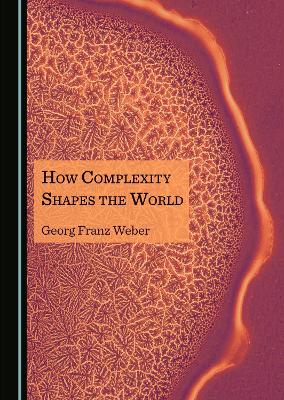
How Complexity Shapes the World Unabridged edition [Kõva köide]

  • Formaat: Hardback, 370 pages, kõrgus x laius: 212x148 mm
  • Ilmumisaeg: 07-Sep-2021
  • Kirjastus: Cambridge Scholars Publishing
  • ISBN-10: 1527571874
  • ISBN-13: 9781527571877
Teised raamatud teemal:
  • Kõva köide
  • Hind: 68,05 €*
  • * hind on lõplik, st. muud allahindlused enam ei rakendu
  • Tavahind: 90,74 €
  • Säästad 25%
  • Raamatu kohalejõudmiseks kirjastusest kulub orienteeruvalt 3-4 nädalat
  • Kogus:
  • Lisa ostukorvi
  • Tasuta tarne
  • Tellimisaeg 2-4 nädalat
  • Lisa soovinimekirja
  • Formaat: Hardback, 370 pages, kõrgus x laius: 212x148 mm
  • Ilmumisaeg: 07-Sep-2021
  • Kirjastus: Cambridge Scholars Publishing
  • ISBN-10: 1527571874
  • ISBN-13: 9781527571877
Teised raamatud teemal:
This book explores how we may overcome categorizations and opposites in how we explain all existence. It places such ideas into the context of existing complexity paradigms. Research into complex systems has revolutionized virtually all areas of inquiry over the past half century. The algorithms of non-linear systems research have enabled us to unify descriptions of the world that were distinct under traditional, reductionist explorations. It is the beauty of complexity that it brings together various scientific fields that, in the past, were treated as separate entities under specialized study. They are now found to be governed by the same laws of non-linearity. However, this achievement comes at the price of abstraction and open-endedness. The book is motivated by the philosophical desire to eliminate categorizations and opposites in the sciences and arrive at a unified description of nature and society. To the reader, it offers innovative philosophical insights derived from complexity research.
Georg Franz Weber has primarily dedicated his career to experimental biomedical science. In addition to numerous original research reports, he has published several books and monographs. As an academic, he has also had a lifelong interest in philosophical questions. His main concern in this regard is the application of complexity research to overcoming dichotomies in how we describe the world. Among other inquiries, he has shown that the opposition between chance and necessity can be meaningfully replaced with degrees of complexity.