Muutke küpsiste eelistusi

Human Intelligence: Its Nature and Assessment [Kõva köide]

  • Formaat: Hardback, 342 pages, kõrgus x laius: 234x156 mm
  • Sari: Routledge Revivals
  • Ilmumisaeg: 30-Jun-2026
  • Kirjastus: Routledge
  • ISBN-10: 1041352964
  • ISBN-13: 9781041352969
Teised raamatud teemal:
  • Kõva köide
  • Hind: 103,49 €*
  • * hind on lõplik, st. muud allahindlused enam ei rakendu
  • Tavahind: 137,99 €
  • Säästad 25%
  • See raamat ei ole veel ilmunud. Raamatu kohalejõudmiseks kulub orienteeruvalt 3-4 nädalat peale raamatu väljaandmist.
  • Kogus:
  • Lisa ostukorvi
  • Tasuta tarne
  • Tellimisaeg 2-4 nädalat
  • Lisa soovinimekirja
  • Formaat: Hardback, 342 pages, kõrgus x laius: 234x156 mm
  • Sari: Routledge Revivals
  • Ilmumisaeg: 30-Jun-2026
  • Kirjastus: Routledge
  • ISBN-10: 1041352964
  • ISBN-13: 9781041352969
Teised raamatud teemal:

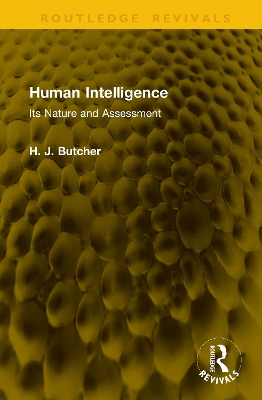
First published in 1968, Human Intelligence: Its Nature and Assessment is a seminal work that offers a comprehensive exploration of intelligence. Covering topics such as the concept and structure of intelligence, problem-solving, creativity, heredity, and social influences, the book provides a balanced and practical approach to understanding this complex field. Butcher delves into psychological measurement, intelligence tests, and developmental stages, making the text both theoretical and applicable to real-world issues.

Praised for its clarity and accessibility, the book avoids jargon and presents impartial discussions on contemporary challenges in psychology and education. Alice Heim lauds it as “the most useful book on intelligence to appear for at least a decade,” while Sir Cyril Burt recommends it as essential reading for students and professionals alike. P. L. Broadhurst calls it a “standard text” for those seeking a sound introduction to intelligence studies.


First published in 1968, Human Intelligence: Its Nature and Assessment explores intelligence comprehensively, covering its concept, structure, problem-solving, creativity, heredity, and social influences. It blends theory with practical insights, offering balanced discussions on psychological measurement and intelligence tests.

Arvustused

This is a well-balanced, lively, very readable, fair-minded book. Owing to its charity and sanity, it will be appreciated by a very wide variety of readers. It is probably the most useful book on intelligence to appear for at least a decade.

Alice Heim, British Journal of Psychology

His style is refreshingly free from the jargon that disfigures so much contemporary writing in the field of education. Throughout the volume his discussion of the complex problems with which he deals is admirably eclectic and impartial, and always linked to practical issues current at the present day. It is book that should be read by every student of psychology or education, and by every educational psychologist who wishes to bring himself up to date.

- Sir Cyril Burt, British Journal of Educational Psychology

...a standard text for all those seeking a sound introduction to this area.

- P. L. Broadhurst, British Journal of Psychiatry

Introduction
1. The Concept of Intelligence
2. The Structure of
Abilities
3. Problem Solving and Concept Attainment
4. Creativity and
Intelligence
5. Brains and Machines
6. The Influence of Heredity and Some
Related Questions
7. Normal Stages in the Development of Intelligence
8.
Principles of Psychological Measurement and Test Evaluation
9. A Selective
Survey of Intelligence Tests
10. Social and Cultural Influences
11. Ability,
Personality and Achievement Bibliography Subject Index Name Index