Muutke küpsiste eelistusi

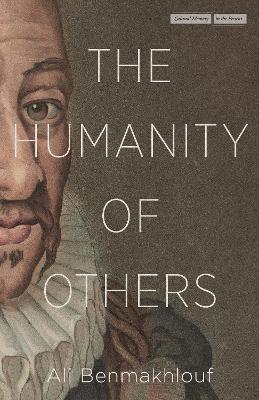
Humanity of Others [Pehme köide]

  • Formaat: Paperback / softback, 176 pages, kõrgus x laius: 140x216 mm
  • Sari: Cultural Memory in the Present
  • Ilmumisaeg: 23-Jun-2026
  • Kirjastus: Stanford University Press
  • ISBN-10: 1503646904
  • ISBN-13: 9781503646902
  • Pehme köide
  • Hind: 23,50 €*
  • * hind on lõplik, st. muud allahindlused enam ei rakendu
  • Tavahind: 31,34 €
  • Säästad 25%
  • See raamat ei ole veel ilmunud. Raamatu kohalejõudmiseks kulub orienteeruvalt 3-4 nädalat peale raamatu väljaandmist.
  • Kogus:
  • Lisa ostukorvi
  • Tasuta tarne
  • Tellimisaeg 2-4 nädalat
  • Lisa soovinimekirja
  • Formaat: Paperback / softback, 176 pages, kõrgus x laius: 140x216 mm
  • Sari: Cultural Memory in the Present
  • Ilmumisaeg: 23-Jun-2026
  • Kirjastus: Stanford University Press
  • ISBN-10: 1503646904
  • ISBN-13: 9781503646902

How should we speak of humanism today? To answer this question, Moroccan philosopher Ali Benmakhlouf turns to Montaigne. Through a rich and attentive reading of Montaigne's Essays, Benmakhlouf reminds us why the sixteenth-century author remains relevant today when the need to recognize the "humanity of others"—from the cry of "Black Lives Matter" to the anonymous deaths of migrants drowning in the Mediterranean Sea—is as urgent as ever.

  Always alert to his times, Montaigne wrote about the diversity of others who entered into Europe's consciousness during the Renaissance: natives of the Americas, Turks, or Africans, without forgetting those close at home who, "emaciated from hunger," begged at the doors of those "gorged with all kinds of commodities." Montaigne enumerated and detailed these different ways of life but, as Benmakhlouf argues, his main concern was with others in the plural as opposed to the other, an abstract philosophical term.

  Retracing Western humanism from Pico della Mirandola to Sartre, via Ibn Tufayl, a twelfth-century Andalusian author, Benmakhlouf navigates the plurality of European philosophy. By orchestrating a skillful dialogue between a variety of authors, Benmakhlouf brilliantly demonstrates the topicality of Montaigne. Wishing to rehabilitate humanism as embodied by Montaigne, the author calls for the unity of the human race that can only be found at the heart of real diversity.

Arvustused

"Benmakhlouf makes a convincing and timely case for the pertinence of Montaigne here and now. Contagious in every respect, the passion and excitement that this book exudes are indications of its open-endedness, of its will to engage in critical dialogue." Tom Conley, Harvard University

"This is an outstanding book that attempts to transcend the unfortunate bifurcation between old-fashioned European humanism and what is conceived of as its others. Montaigne, Benmakhlouf shows us, was always already modern in foregrounding differences and diversity." Lawrence Kritzman, Dartmouth College

"The Humanity of Others is a book about humanism at its best, written by a scholar who himself exemplifies this promise. The book is a treasure trove of close readings that forge unexpected connections and radiate intellectual generosity." Madeleine Dobie, Columbia University

Preface
1. The Unity of Humankind
2. A Wider World: Indigenous Americans, 20Turks, Africans
3. Humanity Learning from Other Species
4. Human Society and Civilization
5. Are There Primitive Peoples
6. Zones of Exclusion and Circles of Solidarity
Conclusion: Humanity as Postulate and Resistance
Notes
Ali Benmakhlouf is Professor at the University of Mohammed VI Polytechnics, Morocco. Director of the Center for African Studies. Member of the Academy of the Kingdom of Morocco.