Muutke küpsiste eelistusi

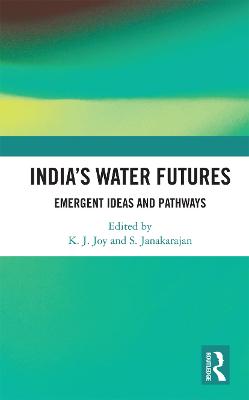
Indias Water Futures: Emergent Ideas and Pathways [Pehme köide]

Edited by (Society for Promoting Participative Ecosystem Management, India), Edited by
  • Formaat: Paperback / softback, 344 pages, kõrgus x laius: 216x138 mm, kaal: 680 g
  • Ilmumisaeg: 18-Dec-2020
  • Kirjastus: Routledge India
  • ISBN-10: 0367732769
  • ISBN-13: 9780367732769
  • Pehme köide
  • Hind: 47,80 €*
  • * hind on lõplik, st. muud allahindlused enam ei rakendu
  • Tavahind: 63,74 €
  • Säästad 25%
  • Raamatu kohalejõudmiseks kirjastusest kulub orienteeruvalt 3-4 nädalat
  • Kogus:
  • Lisa ostukorvi
  • Tasuta tarne
  • Tellimisaeg 2-4 nädalat
  • Lisa soovinimekirja
  • Raamatukogudele
  • Formaat: Paperback / softback, 344 pages, kõrgus x laius: 216x138 mm, kaal: 680 g
  • Ilmumisaeg: 18-Dec-2020
  • Kirjastus: Routledge India
  • ISBN-10: 0367732769
  • ISBN-13: 9780367732769

This book critically engages with the emerging issues in the Indian water sector. It brings together brings together well-known names in the Indian water sector to engage with critical issues, and also suggests ways forward and a new water vision.


When it comes to water, we flush and forget. We use, abuse and almost never recycle.


Water sector in India, since the 1990s, has seen some new ideas formalised legally and institutionally, while others are still emerging and evolving. Confronting the reality of current water management strategies, this volume discusses the state of the Indian water sector to uncover solutions that can address the imminent water crises.


This book:


  • Analyses the growing water insecurity, increase in demand, inefficiency in water use, and growing inequalities in accessing clean water;


  • Sheds light on water footprint in agricultural, industrial and urban use, pressures on river basin management, depleting groundwater resources, patterns of droughts and floods, watershed based development and waste water and sanitation management;


  • Examines water conflicts, lack of participatory governance mechanisms, and suggests an alternative framework for water regulation and conflict transformation;


  • Highlights the relationship between gender discourse and water governance;


  • Presents an alternative agenda for water sector reforms.


This volume, with hopes for a more water secure future, will interest scholars and researchers of development studies, environment studies, public policy, political studies, political sociology, and, NGOs, media and think tanks working in this area.

Arvustused

"While the escalating demand for water to fuel industrial growth and urbanisation puts a question mark on the future of the water sector in India, this volume, covering a wide range of issues from science to policies, law, governance, and institutions, presents emergent thinking, ideas and pathways for a paradigm shift that offers hope for sustainable development." Brij Gopal, Founder-Coordinator, Centre for Inland Waters in South Asia, Khajuraho & Jaipur

"Ramaswamy Iyer was a distinguished civil servant who, after the mid-1980s, emerged as one of Indias leading thinkers, scholars and informed commentators on the countrys water resources and their efficient, equitable and sustainable use. For almost three decades, his writings had a profound influence on the public discourse on water issues. This volume, by a number of water experts, is a fine and enduring tribute to his intellectual contributions." Jairam Ramesh, Member of Parliament and former Union Minister, Government of India

"The contribution of Ramaswamy R. Iyer in promoting new and necessary ideas on water management in India is immense. This book, published in his honour, is a suitable tribute to that contribution. It is a record of the task ahead for attaining equity and environmental security in water governance in India." Jayanta Bandyopadhyay, Distinguished Fellow, Observer Research Foundation, India

"This volume is unprecedented in its sweep and depth. It addresses the entire gamut of water-related issues in India and examines each very deeply. And this is accomplished without losing sight of the interlinkages between different aspects of the water crisis that India faces. Expectedly then, governance by antiquated institutions emerges as the most significant roadblock in moving towards viable and necessary solutions. Though it introduces an optimistic note by claiming that the direction of change in water policy has survived changing governments, the tasks ahead seem daunting nevertheless. My felicitations to the editors and authors for putting together a volume that is sure to become a must-read for researchers and policy-makers alike, much as Ramaswamy Iyer would have wanted it to." Kanchan Chopra, Former Director and Professor, Institute of Economic Growth, Delhi; and Co-Editor, Ecology, Economy and Society, the Journal of INSEE

"Changing the way we think about water was Ramaswamy Iyers project. This volume pays tribute to that endeavour and elaborates it, on the premise that discourse and practice co-evolve. The book is an important document in that it consolidates for a wider audience the thinking that went into water resources policy reform through the preparation of the 12th Plan. The book can be read as a manifesto for necessary structural change; it is a searchlight in an era of mostly depressing news on the state of Indias water resources." Peter Mollinga, Professor, SOAS University of London, UK

"Ramaswamy Iyer was a mentor to Arghyam from its initial days. His work and contribution to the water sector inspire nothing short of a societal transformation with regard to this key resource. I hope this book will add to a vigorous discourse." Rohini Nilekani, Chairperson, Arghyam

Foreword
1. Introduction: India Water Futures: Emergent Ideas and
Pathways
2. Water Resource Development in India: Achievements, Shortcomings
and Remedial Measures
3. Managing River Basins: Re-Examining the Biophysical
Basis
4. Changing Land Use, Agrarian Context and Rural Transformation:
Implications for Watershed Development
5. Environmental Flows in the Indian
Context: Prospects and Challenges
6. Changing Water Use Practices of the
Urban Middle Class in India: Insights from Metropolitan Calcutta
7. The
Centralized Approach to Wastewater Management and Implications for Sanitation
Governance: An Analysis of the Intent and Practice of the National Urban
Sanitation Policy in India
8. Canal Irrigation Performance and Impacts:
Applying Contingency Theory to Irrigation Management in India
9. Out of
Balance: Agricultural Growth and Groundwater Depletion in Two Backward States
of India
10. Reducing Water for Agriculture for Improving Productivity:
Adapting and Up-scaling Innovative Approaches
11. Gender and Water: Why We
Need Alternatives to Alternative Discourses
12. Inter-state Water Conflicts
and Linguistic Identity in India: The Case of the Cauvery
13. Dams and
Environmental Clearances: Learnings and Way Forward
14. Rationale for
Independent Regulatory Agency for Water in India: Reconceptualizing Credible
Commitment
15. Reforming Indias Water Sector: Which Way Forward?
K. J. Joy is Senior Fellow with Society for Promoting Participative Ecosystem Management (SOPPECOM), Pune, India, and is the Convener of Forum for Policy Dialogue on Water Conflicts in India.


S. Janakarajan is a professorial consultant at Madras Institute of Development Studies, Chennai, India and is the President of South Asia Consortium for Interdisciplinary Water Resources Studies, Hyderabad, India.