Muutke küpsiste eelistusi

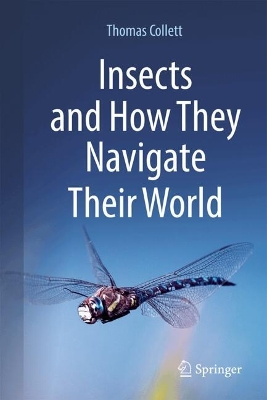
Insects and How They Navigate Their World [Kõva köide]

  • Formaat: Hardback, kõrgus x laius: 235x155 mm, 50 Illustrations, black and white
  • Ilmumisaeg: 17-Jun-2026
  • Kirjastus: Springer Nature Switzerland AG
  • ISBN-10: 3032230764
  • ISBN-13: 9783032230768
Teised raamatud teemal:
  • Kõva köide
  • Hind: 34,94 €*
  • * hind on lõplik, st. muud allahindlused enam ei rakendu
  • Tavahind: 46,59 €
  • Säästad 25%
  • See raamat ei ole veel ilmunud. Raamatu kohalejõudmiseks kulub orienteeruvalt 3-4 nädalat peale raamatu väljaandmist.
  • Kogus:
  • Lisa ostukorvi
  • Tasuta tarne
  • Tellimisaeg 2-4 nädalat
  • Lisa soovinimekirja
  • Formaat: Hardback, kõrgus x laius: 235x155 mm, 50 Illustrations, black and white
  • Ilmumisaeg: 17-Jun-2026
  • Kirjastus: Springer Nature Switzerland AG
  • ISBN-10: 3032230764
  • ISBN-13: 9783032230768
Teised raamatud teemal:
Despite having brains as small as a grain of sand, Darwins most marvellous atoms of matter, insects learn much about the world that they inhabit. This book invites you to explore this world and learn how insects navigate within it, from moths migrating thousands of miles to avoid inclement weather, guided by the sun in the day and the pattern of stars and a magnetic compass by night, to shorter foraging journeys. Social insects, like ants and honeybees, leave their nests to collect food to nourish their young and gather supplies for the winter. To do so, they rapidly learn the visual and olfactory landscape around their nest. They may have to travel long distances. Honeybees can even use their remarkable dance to tell their hive mates where they have been foraging and whether the place is worth visiting. Insect societies can be small, with only a few workers, or enormous. The underground nests of leaf cutter ants are many metres deep and wide. Their queen lays several million eggs during her life, while worker leaf cutters strip the surrounding forest of its leaves.  Clear, accessible, and full of surprising discoveries and their histories, this book celebrates the ingenuity of insects and explores what their behaviour can teach us about life in another world, from ants that make slaves to others that sacrifice their own lives to save a nest mate. Read the book to be amazed by the unexpected insect world around you.
Preface.- Introduction.
Chapter 1: Navigation.- Chapter 2: Social
insects: The life of honeybees.- Chapter 3: Social insects: The diversity of
ants.- Chapter 4: Vision for Navigation.
Chapter 5: Path integration.-
Chapter 6: Visual memories for navigation.
Chapter 7: Learning and following
paths.
Chapter 8: How individual insects follow paths guided by odour,
vision and sounds.
Chapter 9: Insect migration.
Chapter 10: Insect
cognition and conclusions.
Professor Thomas Collett taught and did research at the University of Sussex, Brighton, UK for most of his career with stimulating interludes in Switzerland, the USA and Australia. His initial interests were in the mechanisms and uses of 3-D vision in a variety of animals: insects. frogs and toads, gerbils and humans. Later he concentrated on insect navigation studied  both in the laboratory and during fieldwork in the Tunisian desert. Much of this research was an enjoyable collaboration with other biologists.