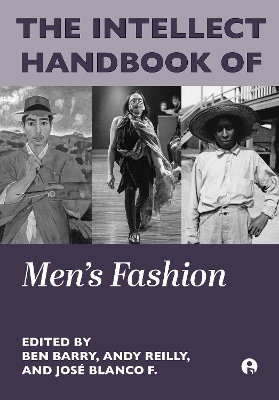
The study of mens fashion has evolved from an emerging subject to a dynamic and growing field, intersecting with critical conversations on gender, race, sexuality, disability, colonialism, and globalization.
The Handbook of Mens Fashion pushes beyond conventional narratives by centering three guiding approaches: decentralizing and decolonizing mens fashion studies, global viewpoints, and intersectionality. With 34 chapters from fashion and dress scholars, the collection offers a uniquely progressive perspective on the fields development.
Divided into six sectionsTheoretical Perspectives, People and Bodies, Places, Objects and Products, Promotions and Business, and Popular Culturethe book examines how masculinity is fashioned, contested, and expressed across time and space. Topics range from national dress and subcultural style to queer and disabled masculinities, luxury branding, and digital fashion communities. By centering histories and communities that have been marginalized in previous scholarship, the chapters collectively expand the boundaries of mens fashion studies.
Rather than providing a definitive account, The Handbook of Mens Fashion serves as an invitation to rethink the field, interrogate absences, and imagine new possibilities. It is an essential resource for scholars, students, and industry professionals invested in the past, present, and future of mens fashion.
The main audience for this book is academic, but it will also appeal to fashion practitioners, curators, and cultural critics, and to general readers interested in the history, culture, and meaning of mens fashion and dress.