Muutke küpsiste eelistusi

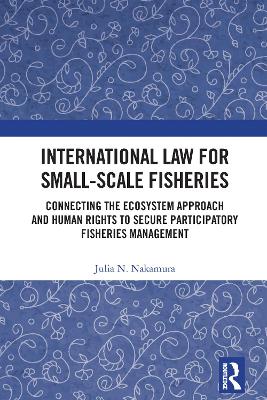
International Law for Small-Scale Fisheries: Connecting the Ecosystem Approach and Human Rights to Secure Participatory Fisheries Management [Pehme köide]

  • Formaat: Paperback / softback, 246 pages, kõrgus x laius: 234x156 mm, 1 Tables, black and white; 1 Line drawings, black and white; 1 Illustrations, black and white
  • Ilmumisaeg: 22-Jun-2026
  • Kirjastus: Routledge
  • ISBN-10: 1032953756
  • ISBN-13: 9781032953755
  • Pehme köide
  • Hind: 48,81 €*
  • * hind on lõplik, st. muud allahindlused enam ei rakendu
  • Tavahind: 65,09 €
  • Säästad 25%
  • See raamat ei ole veel ilmunud. Raamatu kohalejõudmiseks kulub orienteeruvalt 3-4 nädalat peale raamatu väljaandmist.
  • Kogus:
  • Lisa ostukorvi
  • Tasuta tarne
  • Tellimisaeg 2-4 nädalat
  • Lisa soovinimekirja
  • Formaat: Paperback / softback, 246 pages, kõrgus x laius: 234x156 mm, 1 Tables, black and white; 1 Line drawings, black and white; 1 Illustrations, black and white
  • Ilmumisaeg: 22-Jun-2026
  • Kirjastus: Routledge
  • ISBN-10: 1032953756
  • ISBN-13: 9781032953755
This book provides an original and groundbreaking account of the applicability and key contributions of international law to small-scale fisheries, a fisheries subsector that has been historically overlooked by governments and international legal scholarship.

Small-scale fisheries constitute most of the worlds capture fisheries workforce; they sustain the livelihoods of fishers and their communities while building and transmitting traditional knowledge and culture. Significant attention has been given to small-scale fisheries by the international community over the past decade, building the momentum for dedicated research on such a topic. Nevertheless, the literature examining small-scale fisheries from an international legal perspective remains scarce. This book fills this gap by systemically examining different international legal regimes to unravel the normative foundations for securing the meaningful participation of small-scale fisheries peoples in international fisheries management. It connects the ecosystem approach, a key principle of international fisheries law, and the human rights regime to elucidate the benefits that participatory international fisheries management brings to enhance both the ecological and social aspects of fisheries sustainability. It also examines the extent to which fisheries governance is democratic, and provides an enabling framework for the integration of fishers knowledge into international fisheries management. It is thereby oriented toward more justice and fair outcomes for small-scale fisheries.

This book will be a valuable resource for academics and researchers with an interest in the governance of fisheries in international law, the law of the sea, environmental law, and human rights law, as well as to practitioners and policymakers working on the development and implementation of laws and policies governing fisheries and natural resources.
Introduction
1. Exploring the Ecosystem Approach in International Law
for Enhanced Participatory Fisheries Management
2. Disentangling the Human
Rights and Fisheries Nexus for Realizing Adequate Participation in Fisheries
Management
3. Unravelling the International Law for Small-Scale Fisheries and
Participatory International Fisheries Management
4. Examining International
Fisheries Governance and Management, and Integrating Small-Scale Fisheries
Peoples' Contributions
5. Assessing Current Practices and Opportunities for
the Participation of Small-Scale Fisheries Peoples in Regional Fishery Bodies
6. Conclusion
Julia N. Nakamura is a legal officer at the Development Law Service of the Legal Office of the Food and Agriculture Organization of the United Nations (FAO), based in Rome, Italy. The views expressed in this book are those of the author and do not reflect the views or policies of the FAO.