Muutke küpsiste eelistusi

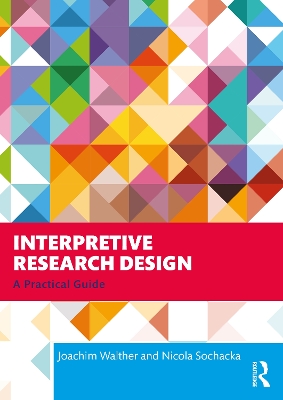
Interpretive Research Design: A Practical Guide [Pehme köide]

  • Formaat: Paperback / softback, 172 pages, kõrgus x laius: 246x174 mm, 6 Tables, black and white; 14 Line drawings, color; 9 Halftones, color; 23 Illustrations, color
  • Ilmumisaeg: 19-Jun-2026
  • Kirjastus: Routledge
  • ISBN-10: 1041019327
  • ISBN-13: 9781041019329
Teised raamatud teemal:
  • Pehme köide
  • Hind: 44,76 €*
  • * hind on lõplik, st. muud allahindlused enam ei rakendu
  • Tavahind: 59,69 €
  • Säästad 25%
  • See raamat ei ole veel ilmunud. Raamatu kohalejõudmiseks kulub orienteeruvalt 3-4 nädalat peale raamatu väljaandmist.
  • Kogus:
  • Lisa ostukorvi
  • Tasuta tarne
  • Tellimisaeg 2-4 nädalat
  • Lisa soovinimekirja
  • Formaat: Paperback / softback, 172 pages, kõrgus x laius: 246x174 mm, 6 Tables, black and white; 14 Line drawings, color; 9 Halftones, color; 23 Illustrations, color
  • Ilmumisaeg: 19-Jun-2026
  • Kirjastus: Routledge
  • ISBN-10: 1041019327
  • ISBN-13: 9781041019329
Teised raamatud teemal:

Introduction to Interpretive Research Design offers a pioneering approach to understanding interpretive research by positioning it as a design-centric process. This comprehensive guide helps bridge the gap between complex research methodologies and practical application, making interpretive research accessible and actionable for students, self-directed learners, and experienced researchers alike.

This book provides essential tools and insights that empower readers to navigate the intricacies of interpretive research with confidence. Key features include practical frameworks for defining research scope, choosing methodologies, ensuring quality, and systematically analyzing data to reveal meaningful patterns. With these tools, readers are equipped to construct well-aligned, impactful research studies across diverse social contexts. Project Development Guides (PDGs) in each chapter offer practical, hands-on tools to help readers build their studies from initial curiosity to completed design.

Ideal for graduate students, educators, and professionals engaged in qualitative and discipline-based educational research across the social sciences, education, health, and STEM fields, Introduction to Interpretive Research Design is an invaluable resource for those seeking to deepen their understanding of interpretive research. Its structured yet adaptable approach ensures lasting relevance across various research fields, fostering innovation and clarity in research design.


This book offers a pioneering approach to understanding interpretive research by positioning it as a design-centric process. It helps bridge the gap between complex research methodologies and practical application, making interpretive research accessible and actionable for students, self-directed learners, and experienced researchers alike.

Arvustused

"A stellar achievement, this book presents a well-grounded and articulate integrative framework that reimagines interpretive research through the lens of design. It offers STEM education and allied fields an empowering, practice-oriented roadmap for conducting high quality, relevant, and transformative qualitative inquiry."

Karl A. Smith, Professor Emeritus, University of Minnesota and Purdue University, USA.

"This book beautifully elevates accessible approaches to interpretive research design through a designerly lens. Rather than following a recipe or checking boxes, these authors encourage crafting focused and thoughtful research through flexible, creative, and empowering practices. A refreshing and necessary read."

Kelly Guyotte, Associate Professor of Qualitative Research, University of Alabama, USA.

"An invaluable resource, this book supports researchersaspiring and experienced alikewho are navigating the complexities of social systems research across disciplines, and in the innumerable new spaces created when disciplines intersect. Grounded in methodological sophistication, keen relational attunement, and written with remarkable insight, it offers a design-based approach to interpretive research that generates novel possibilities for inquiry across education, health, sustainability, and the social sciences."

Shari Miller, Dean of the School of Social Welfare, Stony Brook University, USA.

Chapter 1: Introduction

Chapter 2: Using Pictorial Systems Maps to Guide Research in Complex Social
Systems

Chapter 3: Defining the Scope of the Social Reality Under Investigation
(SRUI)

Chapter 4: Using Theory to Define the Nature of the Social Reality Under
Investigation (SRUI)

Chapter 5: Embedding Research Quality in the Study Design

Chapter 6: Selecting Data Gathering Methods to See the SRUI

Chapter 7: Selecting a Methodology as a Way of Tracing Patterns Through Our
SRUI

Chapter 8: Crafting Research Questions to Encapsulate the Design Choices that
Define Our Study

Chapter 9: Data Analysis to Systematically Identify Patterns in Our Data

Chapter 10: Research Quality in Handling Data

Chapter 11: Embodying a Design Approach in Our Research Practice
Joachim Walther co-directs the ProQual Institute for Interpretive Research Methods on the Sunshine Coast, Queensland, Australia, where he leads international training programs in interpretive research design. He was previously a Professor of Engineering Education at the University of Georgia, USA.

Nicola W. Sochacka co-directs the ProQual Institute for Interpretive Research Methods on the Sunshine Coast, Queensland, Australia. With more than two decades of experience in interpretive research, she works internationally as a research consultant specializing in educational projects.
Ei ole sisse logitud.