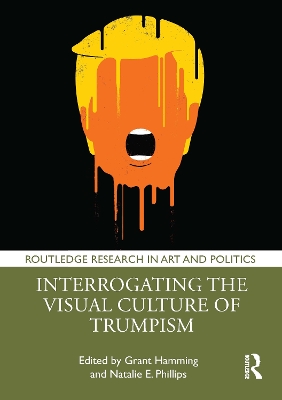
Bringing together scholars from art history, visual studies, and related disciplines, this edited volume asks why Trumpism looks the way it does and what that look means for American – and global – society.
Part I: Introduction
1. Interrogating the Visual Culture of Trumpism
Part II: Social Media and the Internet
2. Towards a Contrarian Postmodernism:
Elon Musk and the Ends of Historical Allegory
3. The Politics of Bigfoot
Porn, or the Relationship between Sasquatch and the Far Right
4. Trumpism,
NFTs, and the Cultural Politics of 21st Century Kitsch
5. The Worship of a
Golden Chair: Patterns and Implications of Warhammer 40.000 References in
Trumpist Propaganda Part III: Commodification and Consumption
6. Wheres the
Beef: American Portraiture, Stock Photography, and The Visual Politics of
Trump Steaks
7. Cassandra's Curse: Foreshadowing the Trumpian Era - A
conversation with Andrew Krasnow
8. Serious Balls: Donald Trump as Phallic
Symbol in Pop Presidential Paraphernalia
9. Seeing Red: A MAGA Re-Brand Part
IV: Portraiture and Caricature
10. Edel Rodriguez takes on Donald Trump: The
Time Magazine Covers
11. Trumps Court Artist
12. Drain
13. Transmedial
Trumpism: Strongman Politics Via Popular Caricature Part V: Public Space
14.
Making American Architecture Great Again? Executive Order 13967
15.
Postcommoditys Aesthetics of Place: An Intervention into Trumps Picture of
the Borderlands
16. The Visual World of Trumpism and Rural MAGA Warriors in
Northern California Part VI: American Sacred Spaces
17. Fake News from the
Oval Office between the Obama and Trump Administrations, or so we thought
18.
From Inauguration Crowds to Capitol Mobs: Photography and Fact in the
Post-Truth Era
19. The Flags that Flew on January 6th: DIY Populist Art Plays
with the Past
Grant Hamming is Collegiate Assistant Professor and Program Director of the Rhizome Living-Learning Community at Virginia Tech. He holds a Ph.D. in the history of art from Stanford University. His research and teaching interests include sustainability, graphic design, and transnationalism in antebellum American art.
Natalie E. Phillips is Associate Professor of Art History and Affiliate Faculty in Womens, Gender, and African American Studies at Ball State University. She received her Ph.D. in visual studies from the University of California, Irvine, in 2009, and specializes in contemporary art and visual culture.