Muutke küpsiste eelistusi

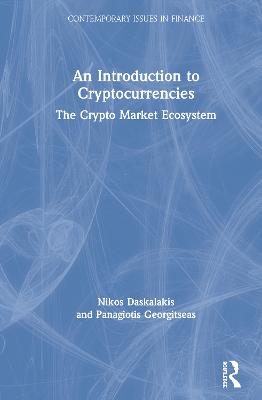
Introduction to Cryptocurrencies: The Crypto Market Ecosystem [Kõva köide]

  • Formaat: Hardback, 88 pages, kõrgus x laius: 234x156 mm, kaal: 240 g, 4 Tables, black and white; 25 Line drawings, black and white; 1 Halftones, black and white; 26 Illustrations, black and white
  • Sari: Contemporary Issues in Finance
  • Ilmumisaeg: 21-Jul-2020
  • Kirjastus: Routledge
  • ISBN-10: 0367370778
  • ISBN-13: 9780367370770
  • Kõva köide
  • Hind: 133,88 €*
  • * hind on lõplik, st. muud allahindlused enam ei rakendu
  • Tavahind: 178,50 €
  • Säästad 25%
  • Raamatu kohalejõudmiseks kirjastusest kulub orienteeruvalt 3-4 nädalat
  • Kogus:
  • Lisa ostukorvi
  • Tasuta tarne
  • Tellimisaeg 2-4 nädalat
  • Lisa soovinimekirja
  • Raamatukogudele
  • Formaat: Hardback, 88 pages, kõrgus x laius: 234x156 mm, kaal: 240 g, 4 Tables, black and white; 25 Line drawings, black and white; 1 Halftones, black and white; 26 Illustrations, black and white
  • Sari: Contemporary Issues in Finance
  • Ilmumisaeg: 21-Jul-2020
  • Kirjastus: Routledge
  • ISBN-10: 0367370778
  • ISBN-13: 9780367370770
The Crypto Market Ecosystem has emerged as the most profound application of blockchain technology in finance. This textbook adopts an integrated approach, linking traditional functions of the current financial system (payments, traded assets, fundraising, regulation) with the respective functions in the crypto market, in order to facilitate the reader in their understanding of how this new ecosystem works.

The book walks the reader through the main features of the blockchain technology, the definitions, classifications, and distinct characteristics of cryptocurrencies and tokens, how these are evaluated, how funds are raised in the cryptocurrency ecosystem (ICOs), and what the main regulatory approaches are. The authors have compiled more than 100 sources from different sub-fields of economics, finance, and regulation to create a coherent textbook that provides the reader with a clear and easily understandable picture of the new world of encrypted finance and its applications.

The book is primarily aimed at business and finance students, who already have an understanding of the basic principles of how the financial system works, but also targets a more general readership, by virtue of its broader scope and engaging and accessible tone.
List of figures
ix
List of tables
x
1 The new era of encrypted finance
1(8)
1.1 The traditional financial system and its main counterparts
1(2)
1.2 The new era of finance: encrypting the financial system
3(2)
1.3 Introducing the main counterparts of the new encrypted financial system
5(4)
2 The infrastructure: the blockchain technology
9(11)
2.1 What is blockchain technology?
9(1)
2.2 How the blockchain technology works
10(2)
2.3 How blockchain mining works
12(1)
2.4 Blockchain consensus mechanisms
13(2)
2.5 Blockchain 2.0: the Ethereum platform
15(1)
2.6 Smart contracts
16(1)
2.7 Alternative uses of blockchain technology
17(3)
3 Traded assets: introduction to cryptocurrencies
20(17)
3.1 Definitions and taxonomy: digital currencies, virtual currencies, cryptocurrencies, and tokens
20(4)
3.2 How cryptocurrency transactions work
24(2)
3.3 Properties and main characteristics of cryptocurrencies
26(2)
3.4 Altcoins (alternative cryptocurrencies)
28(1)
3.5 Trends in the cryptocurrency market
28(3)
3.6 Stablecoins
31(6)
4 "Tokenomics" and valuation
37(18)
4.1 Barriers to pricing and valuation
37(1)
4.2 Token supply and demand model
38(2)
4.3 Quantity theory of money
40(2)
4.4 Token economics of utility
42(1)
4.5 Combining the monetary policies and the economics of utility
42(1)
4.6 The discounted cash flow model
43(1)
4.7 Technical analysis
44(11)
5 Fundraising: initial coin offerings
55(14)
5.1 Defining initial coin offerings
55(1)
5.2 The road to ICOs
56(2)
5.3 How ICOs work
58(3)
5.4 Main features of an ICO
61(1)
5.5 Tokens
61(1)
5.6 The importance of white paper in ICOs
62(1)
5.7 Comparing ICOs with IPOs and crowdfunding
63(6)
6 The regulatory framework
69(14)
6.1 Introduction
69(1)
6.2 United States
70(1)
6.3 Singapore
71(1)
6.4 Canada
72(1)
6.5 China and South Korea
72(1)
6.6 United Kingdom
73(1)
6.7 Australia
74(1)
6.8 Switzerland
74(1)
6.9 Japan
75(1)
6.10 European Union (EU)
76(1)
6.11 Comparative analysis and conclusions of regulatory approaches
77(6)
Index 83
Nikos Daskalakis, PhD, is Assistant Professor in Finance and Accounting in Panteion University, Athens, Greece, and a former member of the Banking Stakeholder Group (BSG) of the European Banking Authority (EBA), the European Crowdfunding Stakeholder Forum (ECSF), and the Financial Services User Group (FSUG) of the European Commission. He is an experienced researcher who has published widely cited articles in numerous top-rated journals, and his scientific interests are on crowdfunding, blockchain applications in finance, and SMEs access to finance.

Panagiotis Georgitseas is an Anti-Money Laundering and Combating Financing of Terrorism Analyst in the Compliance Group at Eurobank and a PhD Candidate in the department of Public Administration in Panteion University of Athens. His prior work experience was in Trade Finance Division (Proton Bank S.A) and in Payment Systems Department (Eurobank). He is member of the Economic Chamber of Greece and his research interests focus on the Economics of Blockchain and to Cryptocurrencies Ecosystem.