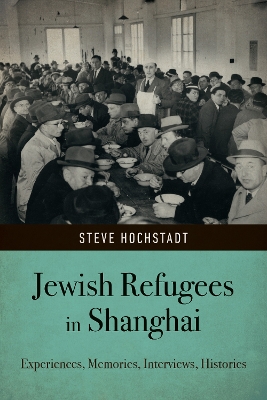
Between 1933 and 1942, around 20,000 refugees fled to Shanghai to escape Nazi-occupied Europe, most of them Jewish. Unable to assimilate into Chinese culture, the Jewish community spent a decade preserving their own culture and enduring harsh Japanese occupation in Shanghai, before dispersing around the world after the end of World War II. Steve Hochstadt, whose Viennese grandparents were among those who fled, tells their story by weaving together hundreds of sources and dozens of interviews into a series of compelling essays on this unique, but little-known rescue.
Between 1933-1942, around 20,000 refugees fled to Shanghai to escape Nazi-occupied Europe, most of them Jewish. Here they spent a decade preserving their culture and enduring Japanese occupation. Hochstadt, whose Viennese grandparents were among those who fled, compiles hundreds of sources and interviews to tell their story.
- The first comprehensive book on Shanghai Jews since the 1970s, Hochstadt incorporates research and historiographic developments of the last fifty years.
- Includes qualitative assessment of the period that will open up future avenues of research.
List of Illustrations
Acknowledgements
Preface
Introduction: A Seder in Shanghai
Part I: Experiences in Shanghai
Chapter
1. The Hochstädt Family of Refugees
Chapter
2. Shanghai: A Last Resort for Desperate Jews
Chapter
3. Counting Shanghai Refugees
Chapter
4. Who Became Refugees? The Demography of the Shanghai Refugees
Chapter
5. One Day in Shanghai: June 22, 1939
Part II: Memories of Shanghai
Chapter
6. At the Last Minute: Shanghai Refugees Remember Their Flight from
Germany
Chapter
7. Memories and Memoirs of Shanghai
Chapter
8. Rickshaw Reunion in San Francisco
Chapter
9. Refugees and Natives in Shanghai: The Portrait of the Chinese in
Jewish Refugee Memory
Part III: Holocaust Interviews and Holocaust Research
Chapter
10. Oral History and the Holocaust: The Necessity of Interviewing
Survivors
Chapter
11. Using Survivor Interviews Systematically: Social Science and the
Holocaust
Chapter
12. From Interview to History: Transcription, Editing, and Lost
Meaning in Holocaust Interviews
Part IV: Competing Histories
Chapter
13. Jewish Studies in China
Chapter
14. The Chinese History of Shanghai Refugees
Conclusion: The Future History of Shanghai Refugees
Epilogue
References
Steve Hochstadt retired in 2016 after a 37-year career teaching history at Illinois College and Bates College in Maine. His research focusses on migration in Germany and the Holocaust. He was awarded the Social Science History Associations Allan Sharlin Memorial Award for his book Mobility and Modernity: Migration in Germany 1820-1989 (1999). He is also the author of Shanghai Geschichten (2007), Exodus to Shanghai (2012) and Death and Love in the Holocaust (2022).