Muutke küpsiste eelistusi

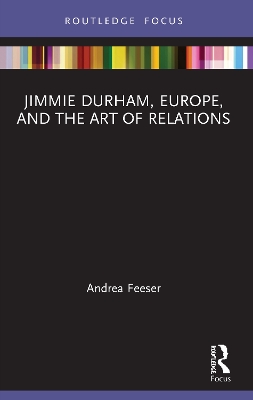
Jimmie Durham, Europe, and the Art of Relations [Pehme köide]

  • Formaat: Paperback / softback, 124 pages, kõrgus x laius: 216x138 mm, kaal: 480 g, 14 Halftones, black and white; 14 Illustrations, black and white
  • Sari: Routledge Focus on Art History and Visual Studies
  • Ilmumisaeg: 09-Oct-2024
  • Kirjastus: Routledge
  • ISBN-10: 036754881X
  • ISBN-13: 9780367548810
Teised raamatud teemal:
  • Pehme köide
  • Hind: 22,49 €*
  • * hind on lõplik, st. muud allahindlused enam ei rakendu
  • Tavahind: 29,99 €
  • Säästad 25%
  • Raamatu kohalejõudmiseks kirjastusest kulub orienteeruvalt 3-4 nädalat
  • Kogus:
  • Lisa ostukorvi
  • Tasuta tarne
  • Tellimisaeg 2-4 nädalat
  • Lisa soovinimekirja
  • Formaat: Paperback / softback, 124 pages, kõrgus x laius: 216x138 mm, kaal: 480 g, 14 Halftones, black and white; 14 Illustrations, black and white
  • Sari: Routledge Focus on Art History and Visual Studies
  • Ilmumisaeg: 09-Oct-2024
  • Kirjastus: Routledge
  • ISBN-10: 036754881X
  • ISBN-13: 9780367548810
Teised raamatud teemal:

This book investigates Jimmie Durham’s community-building process of making and display in four of his projects in Europe: Something … Perhaps a Fugue, or an Elegy (2005); two Neapolitan nativities (2016 and ongoing); The Middle Earth (with Maria Thereza Alves, 2018); and God’s Poems, God’s Children (2017).


This book investigates Jimmie Durham’s community-building process of making and display in four of his projects in Europe: Something … Perhaps a Fugue or an Elegy (2005); two Neapolitan nativities (2016 and ongoing); The Middle Earth (with Maria Thereza Alves, 2018); and God’s Poems, God’s Children (2017).

Andrea Feeser explores these artworks in the context of ideas about connection set forth by writers Ann Lauterbach, Franz Rosenzweig, Pamela Sue Anderson, Vinciane Despret, and Hirokazu Miyazaki, among others. Feeser argues that the materials in Durham’s artworks; the method of their construction; how Durham writes about his pieces; how they exist with respect to one another; and how they address viewers, demonstrate that we can create alongside others a world that embraces and sustains what has been diminished.

The book will be of interest to scholars working in contemporary art, animal studies, new materialism research, and eco-criticism.

Introduction. Art Exists for Us Socially

1. Art Matters: Something Perhaps a Fugue, or an Elegy, 2005

2. Neighbors and Faith in Community: Durhams Neapolitan Presepi, 2016 and
Ongoing

3. Civilization and its Dis(Contents): Maria Thereza Alves and Jimmie
Durhams The Middle Earth, 2018

4. Animals are Our Brethren: Gods Children, Gods Poems, 2017

Conclusion. Humanity Is Not a Completed Project
Andrea Feeser is Professor of Modern and Contemporary Art History, Theory, and Criticism at Clemson University.