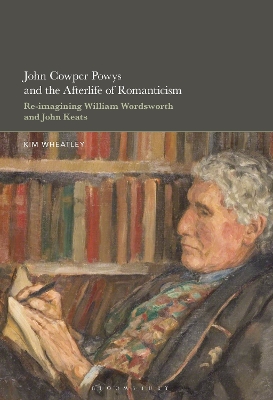
A meticulously researched, clearly written and very useful book. I would recommend it to anyone interested in profounder studies of literary texts It is a very welcome addition to the field of Powys studies, and I can see it being used as a reference book for many years to come. * VoegelinView * Kim Wheatleys book impressively demonstrates that John Cowper Powys, a great modernist maverick novelist and essayist, typifies essential ties between 20th-century writing and Romanticism. Those ties, she shows, are of compelling interest not only to historians of Powyss place in literary tradition but also to the appeal Powys currently holds for critics in the fields of disability studies and eco-studies. * Robert L. Caserio, Professor Emeritus of English, The Pennsylvania State University, USA * This is an exceptional, beautifully written work. Admirers of the novels of John Cowper Powys have always appreciated their intellectual and artistic indebtedness to Keats and especially Wordsworth. Wheatley lays all this out in commanding fashion. I have been reading Powys for sixty years but will now be returning to his prodigious oeuvre with renewed enthusiasm, quickened by her invigorating analysis and insights. * David Goodway, Founding Member and Vice-Chair of the Powys Society * Born in 1872, John Cowper Powys belonged to the generation of Modernismand his admiration for James Joyce and, notably, Dorothy M. Richardson displays his sensitivity to Modernism's modes of aspiration. Allthough his first major novel, Wolf Solent (1929) was at once compared to Ulysses, Powys has seldom been ranked alongside his eminent contemporaries. When not simply ignored, he has been treated as an an anomaly, even an anachronism, or plain old-fashioned'. Yet while Powys certainly recorded his pleasure in reading Sir Walter Scott, it is not as a belated Romantic novelist that he is to be appreciated. Rather, through a dedicated reading, attentive to echoes in the text not often heard before, Kim Wheatley traces Powyss debts to the Romantic poetsin particular, Wordsworth and Keatsand argues that Powys's novels do not merely offer majestic and mystical evocations of the British landscape: they revitalise the poetic inheritance of Romanticism in novelistic form. This is a serious, sophisticated and substantial intervention in the long-deferred making of the reputation of John Cowper Powys. * Charles Lock, Professor of English Literature, University of Copenhagen, Denmark, and former Editor of the Powys Journal *