Muutke küpsiste eelistusi

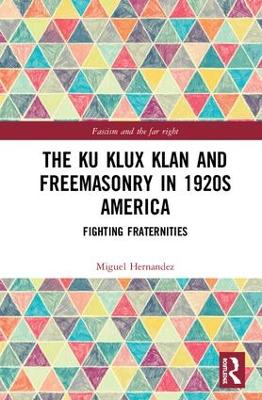
Ku Klux Klan and Freemasonry in 1920s America: Fighting Fraternities [Kõva köide]

  • Formaat: Hardback, 212 pages, kõrgus x laius: 234x156 mm, kaal: 570 g, 1 Tables, black and white; 5 Line drawings, black and white
  • Sari: Routledge Studies in Fascism and the Far Right
  • Ilmumisaeg: 23-Jan-2019
  • Kirjastus: Routledge
  • ISBN-10: 1138549584
  • ISBN-13: 9781138549586
  • Kõva köide
  • Hind: 159,19 €*
  • * hind on lõplik, st. muud allahindlused enam ei rakendu
  • Tavahind: 212,25 €
  • Säästad 25%
  • Raamatu kohalejõudmiseks kirjastusest kulub orienteeruvalt 3-4 nädalat
  • Kogus:
  • Lisa ostukorvi
  • Tasuta tarne
  • Tellimisaeg 2-4 nädalat
  • Lisa soovinimekirja
  • Formaat: Hardback, 212 pages, kõrgus x laius: 234x156 mm, kaal: 570 g, 1 Tables, black and white; 5 Line drawings, black and white
  • Sari: Routledge Studies in Fascism and the Far Right
  • Ilmumisaeg: 23-Jan-2019
  • Kirjastus: Routledge
  • ISBN-10: 1138549584
  • ISBN-13: 9781138549586

The Second Ku Klux Klan’s success in the 1920s remains one of the order’s most enduring mysteries. Emerging first as a brotherhood dedicated to paying tribute to the original Southern organization of the Reconstruction period, the Second Invisible Empire developed into a mass movement with millions of members that influenced politics and culture throughout the early 1920s. This study explores the nature of fraternities, especially the overlap between the Klan and Freemasonry. Drawing on many previously untouched archival resources, it presents a detailed and nuanced analysis of the development and later decline of the Klan and the complex nature of its relationship with the traditions of American fraternalism.

List of figures
viii
Acknowledgements ix
Abbreviations xi
Introduction 1(22)
1 Klanishness: brotherhood in the Invisible Empire
23(23)
2 Freemasonry's fighting brother: militancy, fraternalism and the Ku Klux Klan
46(23)
3 Kluxing America: the use and abuse of the Masonic reputation
69(23)
4 Hate at $10 a package: selling the Invisible Empire
92(22)
5 Hooded Freemasons: dual membership and conflict in local lodges
114(21)
6 Dallas Klan No. 66 and Anaheim Lodge No. 207: a case study of two communities
135(26)
7 Friend or foe? Grand Masters'responses to the Ku Klux Klan
161(25)
8 The collapse of the Second Ku Klux Klan
186(12)
Conclusion -- an "Invisible" Empire? 198(10)
Glossary 208(1)
Index 209
Miguel Hernandez is Lecturer in Twentieth Century American History in the Department of History at the University of Exeter.