Muutke küpsiste eelistusi

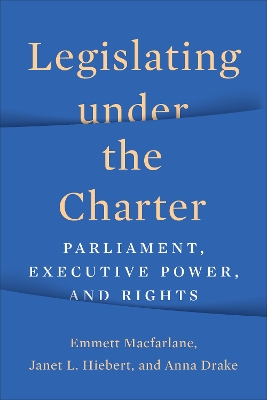
Legislating Under the Charter: Parliament, Executive Power, and Rights [Pehme köide]

  • Formaat: Paperback / softback, 264 pages, kõrgus x laius x paksus: 229x152x19 mm, kaal: 360 g
  • Ilmumisaeg: 04-Apr-2023
  • Kirjastus: University of Toronto Press
  • ISBN-10: 1487554532
  • ISBN-13: 9781487554538
  • Pehme köide
  • Hind: 29,39 €*
  • * hind on lõplik, st. muud allahindlused enam ei rakendu
  • Tavahind: 36,74 €
  • Säästad 20%
  • Raamatu kohalejõudmiseks kirjastusest kulub orienteeruvalt 3-4 nädalat
  • Kogus:
  • Lisa ostukorvi
  • Tasuta tarne
  • Tellimisaeg 2-4 nädalat
  • Lisa soovinimekirja
  • Formaat: Paperback / softback, 264 pages, kõrgus x laius x paksus: 229x152x19 mm, kaal: 360 g
  • Ilmumisaeg: 04-Apr-2023
  • Kirjastus: University of Toronto Press
  • ISBN-10: 1487554532
  • ISBN-13: 9781487554538

Covering a range of criminal justice and social policy issues, this book explores how governments and Parliament justify their legislative choices under the Charter of Rights and Freedoms.


Legislating under the Charter explores how governments and Parliament justify limitations on rights when advancing laws that raise rights concerns or when responding to judicial decisions under the Canadian Charter of Rights and Freedoms.

Through an analysis of legislation concerning criminal justice policy, the approval of new safe consumption sites, sex work, and medical aid in dying, the book provides a detailed analysis of the extent and nature of parliamentary deliberation about rights, the extent to which government initiatives are properly scrutinized, and the broader institutional relationships under the Charter. The authors draw from a host of qualitative data, including research interviews and examination of judicial decisions, various bills under study, Hansard debates from the floor of the House of Commons, committee and Senate scrutiny of legislation, bureaucratic advice and Charter statements by the department of justice, and news media coverage.

The book offers a set of concrete reform proposals to improve the transparency and accountability of executive and bureaucratic vetting processes, and to strengthen the role of Parliament in upholding constitutional values and holding the government to account. In doing so, Legislating under the Charter contributes to the broader comparative scholarship on models of judicial review, morality policy, policy change, and constitutionalism.

Acknowledgments vii
Introduction 1(17)
1 Institutional Relationships and Executive Dominance
18(20)
2 Charter "Vetting": Analysing Bureaucratic and Executive Assessments of Rights Compatibility
38(30)
3 The Legislative Process and Charter Rights: Criminal Justice Policy and the Harper Government
68(18)
4 Legislative Responses under the Charter: Harm Reduction and Drug Policy
86(20)
5 Legislative Responses under the Charter: Sex Work Policy
106(25)
6 Legislative Responses under the Charter: Medical Assistance in Dying Policy
131(29)
7 Transparency, Accountability, and Robust Legislative Scrutiny on Rights: Possibilities for Reform?
160(17)
Conclusion 177(12)
Notes 189(42)
Selected Bibliography 231(14)
Index 245
Emmett Macfarlane is a professor in the Department of Political Science at the University of Waterloo.


Janet L. Hiebert is a professor emeritus of political studies at Queens University.


Anna Drake is an assistant professor of political science at the University of Waterloo.