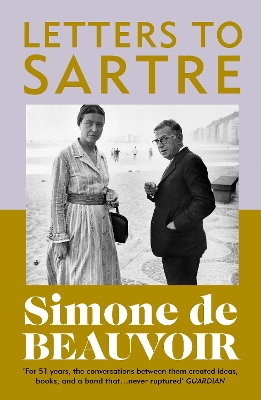
These intimate love letters reveal the close, open relationship between de Beauvoir and Sartre, two of the twentieth century’s most groundbreaking thinkers - two people living out their philosophy.
De Beauvoir lived her feminist philosophy. She never married or had children, she had many affairs with both men and women, and she actively defied societal norms for women of her time. At the same time she conducted an intense, long-term relationship with the philosopher Jean-Paul Sartre, who she referred to as her husband.
Beauvoir and Sartre met as philosophy students in Paris in 1929. For over 50 years, until their deaths in the 1980s, the couple had a close, open relationship. This book contains her love letters to him, revealing the details of her everyday life and her passion for the man who shared her ideals. It is an intimate portrait of a woman living in an adventurous, complicated way in the name of individual freedom.
De Beauvoir and Sartre are buried together under a shared gravestone in Montparnasse cemetery in Paris. Despite her career as a writer, philosopher and the founder of modern feminism, de Beauvoir stated that her relationship with Jean-Paul Sartre was ‘the one undoubted success’ of her life.
‘For 51 years, the conversations between them created ideas, books, and a bond which other passions enraged or enriched, but never altogether ruptured. It was, for De Beauvoir, an experiment in loving’ Guardian
'An opportunity to hear a vigorous and innovative thinker...speaking in her abrasive, touching, breathtakingly candid private voice' Sunday Times
TRANSLATED AND EDITED BY QUINTIN HOARE
In 1983 de Beauvoir published Sartre's letters, maintaining that her own to him had been lost. They were found by de Beauvoir's adopted daughter, and published to a storm of controversy in France. Tracing the emotional and triangular complications of her life with Sartre, the letters reveal her not only as manipulative and dependent but Simonealso as vulnerable, passionate, jealous and committed.