Muutke küpsiste eelistusi

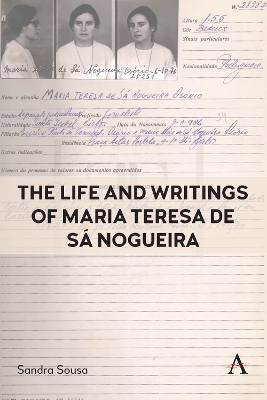
Life and Writings of Maria Teresa de Sá Nogueira [Kõva köide]

  • Formaat: Hardback, 216 pages, kõrgus x laius x paksus: 229x153x16 mm, kaal: 462 g
  • Sari: Anthem Studies in Race, Power and Society
  • Ilmumisaeg: 05-May-2026
  • Kirjastus: Anthem Press
  • ISBN-10: 1839998105
  • ISBN-13: 9781839998102
Teised raamatud teemal:
  • Formaat: Hardback, 216 pages, kõrgus x laius x paksus: 229x153x16 mm, kaal: 462 g
  • Sari: Anthem Studies in Race, Power and Society
  • Ilmumisaeg: 05-May-2026
  • Kirjastus: Anthem Press
  • ISBN-10: 1839998105
  • ISBN-13: 9781839998102
Teised raamatud teemal:
The Life and Writings of Maria Teresa de Sá Nogueira offers a compelling examination of one of Mozambiques most courageous yet underrecognized journalistic voices. Through close textual analysis and exclusive interviews, this book traces Maria Teresa de Sá Nogueiras life and work across colonial and postcolonial Mozambique and Portugal, revealing how her journalism served as both personal testimony and political resistance. More than a biography, it is a critical engagement with Lusophone identity, gender, and the enduring legacies of empire. Organized thematically to mirror the arc of her life, the book examines her role as a woman navigating male-dominated media, her confrontation with systemic injustice, and her literary activism on behalf of marginalized communities. Her translated reportage, presented here for the first time, captures the complexity of memory, migration, and freedom in times of upheaval. This volume speaks to anyone interested in how one voice can challenge silence and bear witness to the struggles for justice in the Lusophone world.

Arvustused

A vital and eloquent recovery of a forgotten feminist voice of the Lusophone world. Sandra Sousas meticulous scholarship and sensitive curation bring Maria Teresa de Sá Nogueiras courage, intellect, and transnational vision vividly to life, illuminating intersections of journalism, decolonial struggle, and gendered resistance across Mozambique, Portugal, and Brazil. Margarida Rendeiro, Assistant Researcher, Centre for the Humanities (CHAM), NOVA FCSH, Lisbon, Portugal.


In The Life and Writings of Maria Teresa de Sá Nogueira, Sandra Sousa reflects on the thought and work of a woman as important as she is forgotten by contemporary historiography. With a significant role played at decisive moments in the recent history of Mozambique and Brazil, Maria Teresa de Sá Nogueira anticipates a series of issues that transcend her time and place. From different perspectives, Sandra Sousa presents diverse facets of one of the most interesting voices in the Lusophone contexts of the twentieth century. Nazir Ahmed Can, Associate Professor at the Autonomous University of Barcelona, Spain, and Director of the José Saramago Chair.


Teresa de Sá Nogueira played a crucial role in Mozambiques cultural history, and Sandra Sousas research illuminates this significance with remarkable depth and clarity. This book represents an important and much-needed contribution to African studies in Portuguese.Carmen Lúcia Tindó Secco, Federal University of Rio de Janeiro, Brazil.

Muu info

Explores the life and journalism of Maria Teresa de Sá Nogueira, highlighting her powerful role as a voice of resistance and testimony across colonial and postcolonial Lusophone Africa and Portugal
Preface; Acknowledgments;
Chapter One-Maria Teresa De Sá Nogueira Osório
(19362002);
Chapter Two-Interview With José Luís Cabaço: Memories Of Teresa;
Chapter Three-Teresa Sá Nogueira: Jornal Tribuna (19631964);
Chapter
Four-Teresa Sá Nogueira: Revista Tempo (19711973);
Chapter Five-Teresa Sá
Nogueira: Jornal Da Bahia (1974);
Chapter Six-Conclusion; References; Index
Sandra Sousa is professor in the Modern Languages and Literatures Department at the University of Central Florida, where she teaches Portuguese language, Lusophone Studies, and Latin American Studies. Her research focuses on colonialism and postcolonialism; Portuguese colonial literature; race relations in Mozambique; war, dictatorship, and violence in contemporary Portuguese and Luso-African literature; and feminine writing in Portuguese, Brazilian, and African literature.