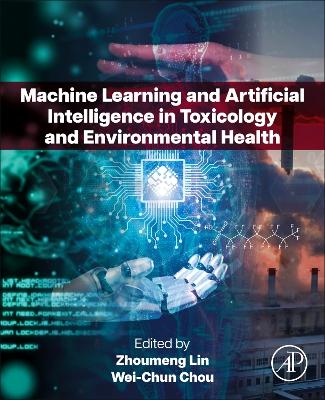
Machine Learning and Artificial Intelligence in Toxicology and Environmental Health introduces the fundamental concepts and principles of machine learning and AI, providing clear explanations on applying these methods to toxicology and environmental health. The book delves into predictions of chemical ADMET properties, development of PBPK and QSAR models, toxicogenomic analysis, and the evaluation of high-throughput in vitro assays. It aims to guide readers in adapting machine learning and AI techniques to various research problems within these fields. Additionally, the text explores ecotoxicology assessment, impacts of air pollution, climate change, food safety, and chemical risk assessment.
It includes case studies, hands-on computer exercises, and example codes, making it a comprehensive resource for researchers, academics, students, and industry professionals. The book highlights how AI can enhance risk assessment, predict environmental hazards, and speed up the identification of harmful substances.
1. Applications of machine learning and artificial intelligence in toxicology and environmental health
2. Basics of machine learning and artificial intelligence methods in toxicology and environmental health
3. Application of machine learning and AI methods in predictions of absorption, distribution, metabolism, excretion (ADME) properties
4. Application of machine learning and AI methods in developing physiologically based pharmacokinetic (PBPK) models
5. Application of machine learning and AI methods in predictions of different toxicity endpoints
6. Application of machine learning and AI methods in developing quantitative structure-activity relationship (QSAR) models
7. Application of machine learning and AI methods in quantitative adverse outcome pathway (qAOP) analysis
8. Application of machine learning and AI methods in toxicogenomics analysis
9. Application of machine learning and AI methods in analyzing high[ 1]throughput in vitro assays
10. Application of machine learning and AI methods in high-throughput cell imaging and analysis
11. Application of machine learning and AI methods in exposure and toxicity assessment of nanoparticles
12. Application of machine learning and AI methods in ecotoxicity assessment
13. Application of machine learning and AI methods in air pollution assessment and health outcome analysis
14. Application of machine learning and AI methods in climate changes and health outcome analysis
15. Application of machine learning and AI methods in predicting health outcomes based on human biomonitoring data
16. Databases for applications of machine learning and AI methods in toxicology and environmental health
17. Application of machine learning and AI methods in food safety assessment
18. Application of machine learning and AI methods in human health risk assessment of environmental chemicals
19. Application of machine learning and AI methods in toxicity and risk assessment of chemical mixtures
20. Data sharing, collaboration, challenges, and future direction of machine learning and AI methods in toxicology and environmental health
21. Regulatory and Ethical Consideration of machine learning and AI methods in toxicology and environmental health
Dr. Zhoumeng Lin is an Associate Professor in the Department of Environmental and Global Health at College of Public Health and Health Professions at the University of Florida. He is a member of the Center for Environmental and Human Toxicology (CEHT) and the Center for Pharmacometrics and Systems Pharmacology (CPSP). He received a B.Med. in Preventive Medicine from Southern Medical University in China in 2009 and a Ph.D. in Toxicology from the University of Georgia in 2013. He completed his postdoctoral training in Computational Toxicology in the Institute of Computational Comparative Medicine at Kansas State University in 2016. He was an Assistant Professor from 2016 to 2021 and then an Associate Professor from March to May 2021 at Kansas State University, prior to joining the University of Florida as an Associate Professor in May 2021. Dr. Lins research is focused on the development and application of computational technologies, especially physiologically based pharmacokinetic (PBPK) modeling, machine learning, and artificial intelligence approaches, to study nanomedicine, food safety, nanoparticle and chemical risk assessment. He is a co-author of more than 100 peer-reviewed manuscripts. He teaches two graduate level courses entitled Physiologically Based Pharmacokinetic Modeling in Toxicology and Risk Assessment” and Artificial Intelligence in Toxicology and Environmental Health”.
Dr. Wei-Chun Chou is a Research Assistant Professor of the Department of Environmental and Global Health and a member of the Center for Environmental and Human Toxicology (CEHT) at the University of Florida. He received his PhD in Biomedical Engineering and Environmental Sciences from the National Tsing Hua University, Taiwan in 2013. He completed his postdoctoral training in the Institute of Computational Comparative Medicine at Kansas State University in 2021. His research focused on the development of computational models for prediction of chemical toxicity and its application on human health risk assessments without resorting to animal testing. The goals are accomplished by integrating in vitro high-throughput toxicity screening data, physiologically based pharmacokinetic (PBPK) modeling, machine learning and artificial intelligence to quantitatively describe the relationships between environmental exposure and mechanisms that cause adverse effects in human populations. He has received several awards and honors from the Society of Toxicology (SOT), including the Andersen-Clewell Trainee Award of the Biological Modeling Specialty Section and Best Paper Award of Risk Assessment Specialty Section.