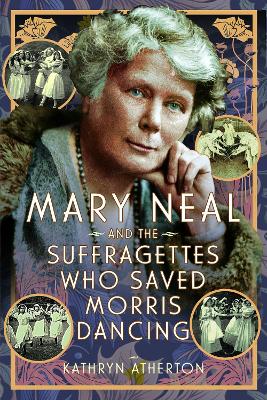
At the beginning of the 20th century Morris dancing had all but died out in much of England. It was militant suffragettes and slum girls who kick-started the revival that returned the forgotten dances of the countryside to towns and villages across the nation. As a result of their commitment to preserve and pass on the dances, the Morris survived as a living tradition that is still performed to this day. And the impetus to do so came from the women’s aspiration to change society for the better, the same impetus that drove them to militant action and to prison.The Morris revival and the militant suffrage movement were inextricably linked. The leader of the dance revival, Mary Neal, was a life-long radical campaigner for the rights of women and children. With her friend Emmeline Pethick she ran the Esperance Girls’ Club in one of London’s most deprived areas. She and Emmeline both sat on the national committee of Mrs Pankhurst’s militant Women’s Social and Political Union, the most notorious of the groups campaigning for the vote for women.The women’s embrace of traditional dance was rooted in Mary’s aspirations for equality and her commitment to social and political reform. The beginning of the dance revival and the launch of the militant suffragette campaign in London coincided almost exactly. Launched by a rather forlorn band of rebels, the WSPU grew into a movement capable of inspiring loyalty and loathing in equal measure. The Morris revival developed from an entertainment in a club for impoverished girls into a nationwide initiative. Mary and Emmeline’s associates in the dance revival ranged from young girls who worked in the militant campaign’s offices to hunger-striking daughters of the aristocracy.Mary and Emmeline provided the leadership and commitment that enabled two radical movements to flourish in the early years of the 20th century, but both found themselves marginalised after policy disagreements – with the folklorist Cecil Sharp and Mrs Pankhurst respectively - led to devastating splits in their respective organisations. Both then found themselves misrepresented and written out of the histories of movements which might never have got off the ground without them. Only in recent decades have women begun to reclaim their place in the Morris dance movement, the very existence of which is a legacy of the militant campaign for the vote.
At the beginning of the 20th century Morris dancing had all but died out in much of England. It was militant suffragettes and slum girls who kick-started the revival that returned the forgotten dances of the countryside to towns and villages across the nation.