Muutke küpsiste eelistusi

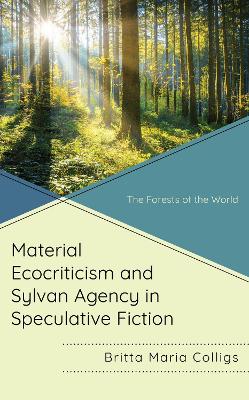
Material Ecocriticism and Sylvan Agency in Speculative Fiction: The Forests of the World [Kõva köide]

  • Formaat: Hardback, 218 pages, kõrgus x laius x paksus: 237x158x23 mm, kaal: 508 g
  • Ilmumisaeg: 06-Dec-2023
  • Kirjastus: Lexington Books
  • ISBN-10: 1666928763
  • ISBN-13: 9781666928761
Teised raamatud teemal:
  • Formaat: Hardback, 218 pages, kõrgus x laius x paksus: 237x158x23 mm, kaal: 508 g
  • Ilmumisaeg: 06-Dec-2023
  • Kirjastus: Lexington Books
  • ISBN-10: 1666928763
  • ISBN-13: 9781666928761
Teised raamatud teemal:
Material Ecocriticism and Sylvan Agency in Speculative Fiction: The Forests of the World links the examination of fictional forests and arboreal characters of speculative fiction with the literary approach of material ecocriticism and a conceptualization of a sylvan agency. Aiming to establish and situate the investigation of sylvan agency firmly within the context of material ecocriticism, this book offers a framework for reading fictional forests with an ecocritical, and particularly eco-sylvan, lens and applies it to the analysis of the sylvan realm, arboreal characters and the relationship between human characters and their fictional forests in speculative fiction. Drawing on the re-negotiation of matter and material agency, the comprehensive study of the sylvan realm establishes a sylvan and arboreal agency in speculative fiction, ranging from classics, such as J. R. R. Tolkiens fantasy The Lord of the Rings (1954-55) or Ursula Le Guins science-fiction novella The Word for World is Forest (1961), to contemporary texts, such as James Camerons Avatar (2010) or Ali Shaws The Trees (2016). The author argues for a re-negotiation of a sylvan agency and facilitation of an eco-sylvan awareness in times of environmental crisis.

List of Tables

Acknowledgments

Introduction: The Forests of the World

Chapter One: Theorising the Forest: Approaching a Sylvan and Arboreal Agency

Part I: The Sylvan Realm and Arboreal Characters

Chapter Two: Stepping Into the Sylvan World

Chapter Three: The Tree as a Diverse Motif and Ecological Symbol

Chapter Four: The Forest as a Sylvan Voice and Sylvan Agent for the Environment

Part II: Human Interaction with the Sylvan World

Chapter Five: The Forest as Commodity and Antagonist

Chapter Six: The Forest as a Dwelling

Chapter Seven: The Cultural and Environmental Significance of the Forest

Conclusion: The Forests of the World

Glossary of Selected Terms

Bibliography

About the Author
Britta Maria Colligs is postdoctoral researcher of British literature and culture at the University of Trier in Germany.