Muutke küpsiste eelistusi

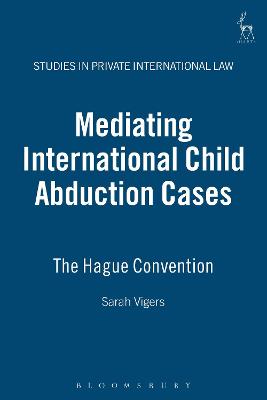
Mediating International Child Abduction Cases: The Hague Convention [Kõva köide]

  • Formaat: Hardback, 126 pages, kõrgus x laius x paksus: 234x156x12 mm, kaal: 358 g
  • Sari: Studies in Private International Law
  • Ilmumisaeg: 07-Oct-2011
  • Kirjastus: Hart Publishing
  • ISBN-10: 1849461813
  • ISBN-13: 9781849461818
  • Kõva köide
  • Hind: 98,44 €*
  • * hind on lõplik, st. muud allahindlused enam ei rakendu
  • Tavahind: 131,25 €
  • Säästad 25%
  • Raamatu kohalejõudmiseks kirjastusest kulub orienteeruvalt 3-4 nädalat
  • Kogus:
  • Lisa ostukorvi
  • Tasuta tarne
  • Tellimisaeg 2-4 nädalat
  • Lisa soovinimekirja
  • Raamatukogudele
    • Hart e-raamatud
  • Formaat: Hardback, 126 pages, kõrgus x laius x paksus: 234x156x12 mm, kaal: 358 g
  • Sari: Studies in Private International Law
  • Ilmumisaeg: 07-Oct-2011
  • Kirjastus: Hart Publishing
  • ISBN-10: 1849461813
  • ISBN-13: 9781849461818
There has been growing enthusiasm for the use of mediation to seek a resolution for cases arising under the Hague Convention of October 25, 1980 on the Civil Aspects of International Child Abduction. However, despite being endorsed by the conclusions of experts, judicial comment, and even legislative changes, there have been relatively few cases where mediation has played a significant role. It has been suggested that the reason underlying this dichotomy between the widespread support for the use of mediation and the current limited practice is that there are several key questions regarding the use of mediation in the context of the Convention which remain to be answered. Specifically, what is meant by Convention mediation? How can a mediation process fit within the constraints of the Convention? Why offer mediation in Convention cases given the existing legal framework? This book addresses these questions and, in doing so, encourages a movement from enthusiasm about the use of mediation in the Convention context to greater practice. It will be useful as a point of reference for practitioners, and stimulating and interesting to academics. (Series: Studies in Private International Law - Vol. 7)

Arvustused

I shall certainly be recommending this book with enthusiasm to all my studentsVigers book will be required reading for the team that secures the research contract recently announced by the European Parliament for a study on 'Cross-border parental child abduction' -- Trevor Buck * Cambridge Law Journal, Volume 72. Number 3 *

Series Editors' Preface vii
Acknowledgements ix
Table of Cases
xiii
Table of Legislation
xiv
1 Introduction
1(9)
I Aim and Purpose
1(3)
II Structure and Scope
4(3)
III Background and Context
7(2)
IV Conclusion
9(1)
2 What Is Convention Mediation?
10(23)
I Introduction
10(1)
II Definitional Difficulties
11(13)
A Distinguishing Mediation from Other Forms of Assisted Dispute Resolution
11(2)
B Distinguishing Mediation from Voluntary Return and Amicable Resolution
13(3)
C Defining Mediation
16(4)
D The Mediation Process
20(1)
i Legal Structures to Support Mediation
20(3)
ii Aspects of the Mediation Process
23(1)
III Place in the Procedure
24(7)
A Introduction
24(1)
B The Place of Convention Mediation
25(1)
i Provision of Information
25(1)
ii Instigating Mediation
26(1)
iii Mediation and the Court Hearing are not Equivalent
27(2)
iv The Focus of Mediation
29(2)
IV Conclusion
31(2)
3 How Can A Mediation Process Fit Within The Constraints Of The Convention?
33(28)
I Introduction
33(1)
II Convention Mediation as a Specialism
33(6)
A Introduction
33(1)
B Approaches to Convention Mediation
34(5)
III Responding to Specific Challenges
39(21)
A Introduction
39(1)
B The Scope of Mediation
39(3)
C Expeditious Procedures
42(3)
D Seising the Court
45(2)
E Confidentiality
47(2)
F Costs and Sources of Funding
49(2)
G Distance Telecommunications
51(1)
H Enforceability
52(5)
I Training and Qualifications of Mediators
57(3)
IV Conclusion
60(1)
4 Why Mediate In Convention Cases?
61(15)
I Introduction
61(1)
II Responding to Concerns Surrounding the Operation of the Convention
61(10)
A Background and Context
61(3)
B Avoiding Multiple Relocations and Promoting Contact
64(1)
C Welfare Concerns
65(4)
D The Rights and Interests of the Child
69(1)
E Delays
70(1)
III Additional Added Value
71(4)
A Introduction
71(1)
B Benefits Inherent in the Mediation Process
71(2)
C Wider Added Value
73(2)
IV Conclusion
75(1)
5 The Voice Of The Child
76(16)
I Introduction
76(1)
II The Voice of the Child in Mediation
76(3)
III The Voice of the Child in Convention Court Proceedings
79(7)
IV The Voice of the Child in Convention Mediation
86(4)
V Conclusion
90(2)
6 Conclusions
92(5)
I From Enthusiasm...
92(1)
II ...To Action
93(4)
Appendix 97(2)
Bibliography 99(16)
Index 115
Sarah Vigers worked for three years as a Legal Officer at the Hague Conference on Private International Law. She subsequently completed a research masters degree at Aberdeen University and is a family mediator.