Muutke küpsiste eelistusi

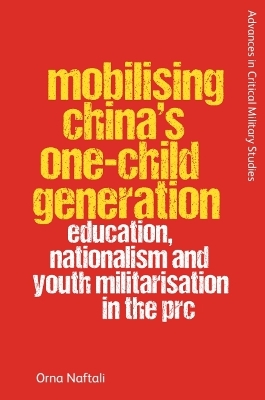
Mobilising China's One-Child Generation: Education, Nationalism and Youth Militarisation in the PRC [Pehme köide]

(Hebrew University of Jerusalem, Israel)
  • Formaat: Paperback / softback, 280 pages, kõrgus x laius: 234x156 mm
  • Sari: Advances in Critical Military Studies
  • Ilmumisaeg: 28-Feb-2026
  • Kirjastus: Edinburgh University Press
  • ISBN-10: 1399519425
  • ISBN-13: 9781399519427
  • Pehme köide
  • Hind: 29,39 €*
  • * hind on lõplik, st. muud allahindlused enam ei rakendu
  • Tavahind: 36,74 €
  • Säästad 20%
  • Raamatu kohalejõudmiseks kirjastusest kulub orienteeruvalt 3-4 nädalat
  • Kogus:
  • Lisa ostukorvi
  • Tasuta tarne
  • Tellimisaeg 2-4 nädalat
  • Lisa soovinimekirja
  • Formaat: Paperback / softback, 280 pages, kõrgus x laius: 234x156 mm
  • Sari: Advances in Critical Military Studies
  • Ilmumisaeg: 28-Feb-2026
  • Kirjastus: Edinburgh University Press
  • ISBN-10: 1399519425
  • ISBN-13: 9781399519427
Drawing on a wide variety of Chinese-language publications and in-depth interviews with high-school students, Mobilising China's One-Child Generation provides systematic evidence of the spread of martial logic and techniques into Chinese schools. The book explores how China has implemented Patriotic Education and National Defence Education programmes to foster love for the nation and the Party-state, mobilise the population to fight modern wars in the information age, and encourage youth to join the army. It studies how these programmes present the tropes of war and the military to youth, and how they are related to shifting constructions of gender and the national collectivity. It also documents students' varied perceptions–and notably contestations–of this militarised ethos, complicating our understanding of popular nationalism and militarisation processes in this authoritarian global power.

Explores the militarisation of education and youth in contemporary China.

Arvustused

In this ethnographically enriched book, Naftali navigates macro-level discourses, institutional practices and individual subjectivities to offer a nuanced exploration of Chinas militarisation of education and the complicated perceptions of it by the nations youth. -- Fengshu Liu, University of Oslo This is the first authoritative study of how the Chinese education system and media guide youth on war, peace and the military. And, how youth respond in often unexpected ways to these top-down lessons. Naftalis insights are urgent and profound for all those concerned about China and the worlds strategic order. -- Louise Edwards, University of New South Wales, Australia Around the world, matters of security are shrouded in secrecy. Naftali skilfully and courageously lifts the veil from the multiple enmeshments of education with militarisation in China, one youngster at a time. A disciplined and ruthless book, and a must read for everyone who desires to understand the promises and limits of militarisation. -- Sabine Frühstück, University of California Santa Barbara Orna Naftalis highly readable book is overall a meaningful addition to the debates about the militarization of Chinese society. It is of great relevance to anyone interested in Chinese youth, education, and military-society relations more broadly. -- Jérôme Doyon * The China Quarterly * An important contribution to the study of nationalism, education and militarisation in contemporary China. Naftalis research provides a comprehensive and well-documented account of the ways in which the state attempts to shape young peoples conceptions of war and military service, while recognising the role of young people in negotiating these narratives. Through a combination of fieldwork and textual analysis, it paints a dynamic picture of the ideological forces shaping Chinas younger generations. -- Giovannipaolo Ferrari * Europe-Asia Studies * Naftali presents research informed by geographical and socio-economic breadth, relevant to students and scholars of Chinese area studies and critical military studies alike. By asking students how they themselves link their views of conflict to the messaging they received at school and through popular culture, Naftali offers a nuanced addition to the literature on Chinese state nationalism under Xi Jinping and the efficacy of ideological instruction in contemporary China and beyond. -- Eleanor de Renzy Channer * Asian Affairs *

Introduction: Nationalism, Militarization, and Youth Education in China


The Militarization of Youth Education in Modern China
War and Peace in China's Contemporary History Textbooks
'Don't Get Soft': Youth Military Training in Contemporary China
Military Entertainment, Nationalism, and the Restoration of Chinese
Masculinity
'If Peace is Our Goal, Why Use War to Attain It?' Education, Media, and
Chinese Youth Notions of Armed Conflict
'You Can Serve the Country in More than One Way': Chinese Youth Views of the
PLA and Military Service


Conclusion: Rethinking the militarization of Chinese Youth in the Xi Era
References
Orna Naftali holds the Abraham Miller Chair in Chinese Studies and is an Associate Professor in the Department of Asian Studies at the Hebrew University of Jerusalem.