Muutke küpsiste eelistusi

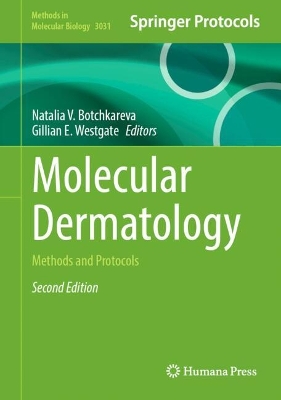
Molecular Dermatology: Methods and Protocols Second Edition 2026 [Kõva köide]

  • Formaat: Hardback, 403 pages, kõrgus x laius: 254x178 mm, 97 Illustrations, color; 9 Illustrations, black and white
  • Sari: Methods in Molecular Biology
  • Ilmumisaeg: 25-Jun-2026
  • Kirjastus: Humana
  • ISBN-10: 1071652524
  • ISBN-13: 9781071652527
Teised raamatud teemal:
  • Kõva köide
  • Hind: 165,74 €*
  • * hind on lõplik, st. muud allahindlused enam ei rakendu
  • Tavahind: 220,99 €
  • Säästad 25%
  • See raamat ei ole veel ilmunud. Raamatu kohalejõudmiseks kulub orienteeruvalt 3-4 nädalat peale raamatu väljaandmist.
  • Kogus:
  • Lisa ostukorvi
  • Tasuta tarne
  • Tellimisaeg 2-4 nädalat
  • Lisa soovinimekirja
  • Formaat: Hardback, 403 pages, kõrgus x laius: 254x178 mm, 97 Illustrations, color; 9 Illustrations, black and white
  • Sari: Methods in Molecular Biology
  • Ilmumisaeg: 25-Jun-2026
  • Kirjastus: Humana
  • ISBN-10: 1071652524
  • ISBN-13: 9781071652527
Teised raamatud teemal:
This second edition volume expands on the previous edition with a discussion on the latest advancements in laboratory techniques used in dermatological research. The chapters in this book cover topics such as methodologies for establishing 2D and 3D skin models; assessing DNA damage; genome editing using CRISPR/Cas systems; analyzing extracellular vesicles involved in intercellular communication; and detecting microflora and skin permeability barrier. This book also presents experimental strategies for modeling and modulating cutaneous pathologies, including wound healing and its associated microbiome, skin cancer, and hair follicle disorders. Written in the highly successful Methods in Molecular Biology series format, chapters include introductions to their respective topics, lists of the necessary materials and reagents, step-by-step, readily reproducible laboratory protocols, and tips on troubleshooting and avoiding known pitfalls.

Comprehensive and thorough, Molecular Dermatology: Methods and Protocols, Second Editon is a valuable resource for researchers working in both fundamental and applied dermatological science.
Isolation of Epidermal Keratinocytes from Human Skin: The Scratch-Wound
Assay for Assessment of Epidermal Keratinocyte Migration.- Isolation of
Different Dermal Fibroblast Populations from the Skin and the Hair
Follicle.-  Isolation of Epidermal and Hair Follicle Melanocytes.- Validated
Step-By-Step Protocols for Human Keratinocyte Isolation and the Construction
of Organotypic 3D Epidermal Models.- Human Epidermal Equivalents on Non-Woven
Scaffolds: A Model of Tissue Formation in an Artificial Environment.-
Purification of Extracellular Vesicles Secreted by Skin Fibroblasts and
Keratinocytes.- Genetic Engineering of Human Keratinocytes using CRISPR/Cas9
Ribonucleoprotein Complexes or Modified Cas9-Encoding mRNAs.-      Imaging
Approaches to DNA Damage Induction and Quantification.- Identification of
Long Non-Coding RNA by In Situ Hybridization Approaches.- Detection of
MicroRNAs in Skin by In Situ Hybridization.- 3D-FISH Analysis of the Spatial
Genome Organization in Mammalian Tissue in Situ.- Methods to Investigate the
Epidermal Permeability Barrier and the Light Irradiation Barrier In Vitro and
Ex Vivo.- A Protocol to Prepare and Stain Dorsal Skin Whole Mounts from
Mice.- Isolation of Mouse Hair Matrix Keratinocytes for Multi-Omics
Analysis.- Methods to Study Human Hair Follicle Growth Ex Vivo: Human
Microdissected Hair Follicle and Human Full Thickness Skin Organ
Culture.- Generation of Hair Follicle Germs In Vitro Using Human Postnatal
Skin Cells.- In Situ Laser Capture Microdissection for Detection of
Components of the Hair Follicle and Scalp Microbiome.- Viable vs. Non-Viable
Microbiota Evaluation of the Hair Follicle and Scalp
Microbiome.- Non-Surgical Induction of Alopecia Areata in C3H/HeJ Mice via
Adoptive Transfer of Cultured Lymphoid Cells.- Collapse and Restoration of
Hair Follicle Immune Privilege Ex Vivo: A Model for Alopecia
Areata.- Experimentally Induced Epithelial-Mesenchymal Transition of Human
Hair Follicle Stem Cells as a Model of Scarring Alopecia Ex Vivo.- Method for
Human Sweat Gland Isolation from the Scalp and Axilla by Means of the
Micro-Punch FUE Technique and Vital Dyes.- Assessment of Acute Wound Healing
using Excisional Mouse Tail Skin Wound Models.- Skin and Wound Infection
Models to Test Host-Pathogen Interactions and Evaluate Topical Antimicrobial
Treatments.- Human Wound Healing Ex Vivo Model with Focus on Molecular
Markers.- The Evaluation of Fibrotic Alterations in Regenerated Murine and
Human Xenografted Skin.- Method to Study Skin Cancer: Two-Stage Chemically
Induced Carcinogenesis in Mouse Skin.- Ultraviolet Irradiation of Skin
Cells.- Method for Investigation of Photobiological Effects of Light on Human
Skin Cells In Vitro Using Visible and Near-Infrared Light.