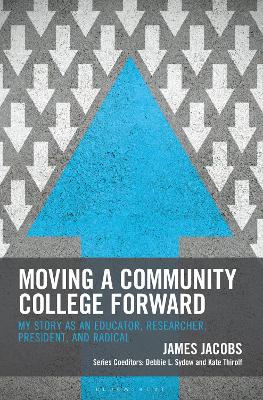
Tracing his journey from 1960s student radical to president of Macomb Community College, Jacobs provides an insiders view of how community colleges evolved from local experiments into essential engines of economic mobility and civic life. His story weaves personal experience with historical insight, illuminating how visionary leadership, grounded in research and social commitment, can help institutions adapt to sweeping economic, demographic, and political change. Both a memoir and a meditation on public purpose, this book captures the rise of the community college as one of Americas most importantand underappreciatededucational innovations, and reflects on what it will take to sustain that promise in the current era of upheaval and uncertainty for American higher education and society. -- Davis Jenkins * senior research scholar, Community College Research Center * Jim Jacobs journey from student radical to presidency of one of Americas most successful community colleges would itself be a good yarn. But Jacobs goes beyond that, skillfully weaving his own story into the story of the economic evolution of Macomb County and the lessons he learned as a college leader during rapidly changing and challenging times. -- David Wessel * senior fellow in economics, Brookings Institution * If you want to go from just believing in the values of equity and justice to actually achieving meaningful results, read this book! Jim Jacobs has written a professional biography that tracks his life from his early days of community organizing through to his transition as a galvanizing community college president. Jims signature work established workforce development programs at Macomb Community College outside Detroit. In the midst of job loss and disappearing businesses, his work catalyzed new job opportunities by co-creating targeted college programs for emerging jobs. The result increased both the viability of new businesses and future-focused careers. It is a joy to read this honest, detailed story of as an exemplar of leadership that works. -- Gail O. Mellow * president emeritus, LaGuardia Community College, CUNY * James Jacobs, a recognized leader in community college education and in workforce and economic development, has gifted the field through this book with a thoughtful and richly detailed description of the challenges and strategies of a community college CEO a self-described radical who focuses personal and institutional effort on the evidence-based needs of students and community. In the process of this story telling, Jacobs not only illustrates the change management challenges inherent in making a real difference; he also foreshadows thoughtfully and a little eerily the increasingly critical changes that community colleges must currently address. His emphasis on changing student demographics, on the need for more effective collaboration across sectors employers, K-12, transfer institutions, and community organizations, on the escalating requirement for more regional approaches and importantly, on the role of community colleges in promoting civic engagement and informed civic dialogue illuminates not just lessons from the past but imperatives for the future. -- Kay McClenney * former senior advisor at the American Association of Community Colleges and founding director of the Center for Community College Student Engagement (CCCSE) * Spanning seven decades of history, this book shares the learning, self-reflections and remarkable journey of one manfrom an idealistic youth in the 1960s to a highly influential leader in the community college sector, a role custom-designed to bring that idealism to life. The story also offers a fascinating glimpse into how one community navigated the socio-political and economic challenges of a region in the U.S. known for its hardships. Additionally, it tells a story of leadership and learning from the perspective of an extraordinary leader in higher education, who shares his experiences with passion, gratitude for those who have contributed to his growth, and a humorous self-awareness, acknowledging moments when he wished he had made different choices. This book beautifully showcases the intricate nature of leadership while inspiring hope in resilience, personal growth, and the incredible transformational impact that education can have within a community. -- - Dr. Gretchen Schmidt and Dr. Rob Johnstone * National Center for Inquiry & Improvement (NCII) * Dr. Jim Jacobs has a longstanding and peerless reputation as a college president who leads workforce development efforts, but in this book, he reveals with unparalleled candor the challenges and rewards of the community college presidency. The current and next generation of leaders would be well-advised to take many of his lessons learned to heart, as some aspects of visionary leadership never change, such as an unwavering commitment to learners, the imperative of deep engagement and alignment with the Board of Trustees, and collaboration with faculty, staff, industry, and the communities our colleges serve. For all of these reasons, Jim has always been a role model for me as a college president, and now all can benefit as he has recounted his remarkable career in writing. -- Jo Alice Blondin * president of Clark State College and president of the National Council for Workforce Education * James Jacobs has written the book our field needs right now...clear, practical, and grounded in personal experience and in the real work of serving students and communities. He shows how to align mission with metrics, bring labor and industry to the same table, and make student success the institutions true north. This isnt theory; its implementation with integrity. Ill be recommending it to presidents, trustees, and policymakers who are serious about equity and economic mobility. -- Daniel J. Phelan * president and CEO of Jackson College * Jim Jacobs weaves together a compelling narrative including a rich history of the American community college sector, insights into the Detroit regions unique dynamics with one of its leading community colleges, and heart-felt reflections on the journey from activism to college leadership. This book provides insights and wisdom for future generations interested in social change from a visionary leader in the field of workforce development. -- Michelle Van Noy * director of the Education and Employment Research Center at Rutgers University * Jim Jacobs passionately shows the power of centering the community in community colleges and how doing so can improve the colleges, their local labor markets, and the lives of the citizens in their regions. His honesty and reflective candor are instructive for all leaders looking to build a similar sense of place at their own institutions. -- Melinda Mechur Karp * Ph.D., founder, Phase Two Advisory *