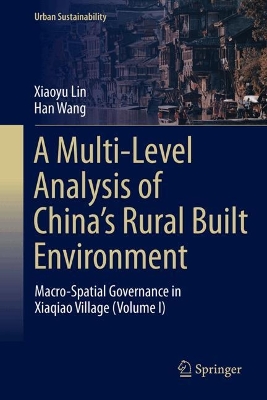
This book proposes a cross scale analytical framework is processed which integrates the method of morphology and typology to systematically interpret the changing spatial pattern of rural built environment and understand the dynamic interaction between space and daily life. A unique construction system of vernacular architecture is explored in Zhejiang province. It is a highly flexible construction system basing on locally modular bay, which makes the village self-sustainable.
This book is significant as a source of knowledge needed both for theoretical thinking and practical use to provide direction for the positive intervention, creation, preservation, and development of the rural built environment, affecting millions of towns and villages.
This book is an essential reference guide for architects, planners, and graduate students in the fields of rural planning, renewal, and construction.
Chapter
1. Introduction.
Chapter
2. Theoretical Framework.
Chapter
3.
Research Methodology.
Chapter
4. The Up-down Kingdom of Formal Governance:
Mapping the Settlement Levels.
Chapter
5. The Governance of Settlement Space
(Volume I).
Chapter
6. Conclusion to Volume I.
Lin Xiaoyu is an associate professor of architecture at the school of architecture in Harbin Institute of Technology (Shenzhen). She received a doctoral degree of philosophy from the department of architecture, the University of Hong Kong in 2018. Her research focuses on vernacular architecture theory, sustainable built environment design, educational architectural design, Asian architectural history, and heritage preservation research.
Wang Han is an associate professor at the College of Fashion and Design, Donghua University (Shanghai). She received a doctoral degree of philosophy from the department of architecture, the University of Hong Kong in 2018. Her research focuses on urban morphology and building typology.