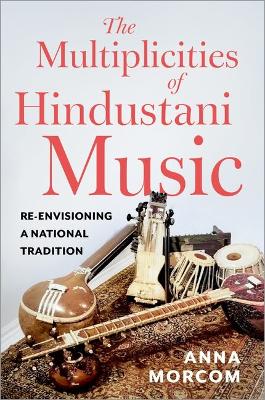
The Multiplicities of Hindustani Music explores the dynamic social and economic world of North Indian raga-based music over the twentieth century and into the present day. By approaching Hindustani music from beyond geographical and social centers, author Anna Morcom uncovers new dimensions of its history, richness, strengths, contradictions, and challenges. These include the historical existence of Hindustani music as a common as well as elite culture, the central role of Sufi shrines, the establishment of classical music in India's major cities and its draining from small towns, and the world of music schools and other projects to democratize classical music.
The Multiplicities of Hindustani Music explores the dynamic social and economic world of North Indian raga-based music over the twentieth century and into the present day. By approaching Hindustani music from beyond geographical and social centers, author Anna Morcom challenges the conventional framing of Hindustani music as a singular “classical” tradition, tracing its historical entanglements with popular, devotional, and commercial forms. In doing so, she uncovers new dimensions of its history, richness, strengths, contradictions, and challenges, and provides insights into future sustainability.
The Multiplicities of Hindustani Music looks at Hindustani music as historically patronized by elites but existing also as a common culture in fairs and festivals in temples, shrines, and the estates of royalty and landowners. Khyal in particular, today's main classical vocal style, flourished not only as court music but in Sufi shrines as the repertoire of qawwals, and lineages of khyal singers encompassed a myriad of genres, including qawwali. The greatest of them mastered a multiplicity of styles and were known as chaumukhi “all-round” artists. From the late nineteenth century, raga-focused Hindustani music was reformed and canonized as “classical music” with a nationalist ethos.
Morcom examines the late colonial and postcolonial reform movements that sought to codify and elevate Hindustani music as a national classical form from new perspectives. These efforts, while aiming to democratize access through music schools and institutions, also reinforced urban, middle-class dominance and marginalized regional and non-elite practices. Morcom pinpoints the paradox of reformist agendas that rejected commercialism yet depended on urban capital and networks. Crucially, she foregrounds the role of “lighter” forms of Hindustani music-often dismissed as peripheral-in sustaining the broader ecosystem. These genres, with greater national reach and accessibility, have enabled social mobility and educational opportunities, particularly for rural and lower-income students. The Multiplicities of Hindustani Music thus argues for a reconceptualization of the classical tradition as inherently pluralistic, highlighting that its vitality lies not in purity or exclusivity, but in its interdependence with a wider spectrum of musical practices.