Muutke küpsiste eelistusi

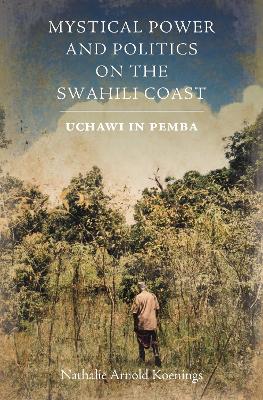
Mystical Power and Politics on the Swahili Coast: Uchawi in Pemba [Pehme köide]

  • Formaat: Paperback / softback, 310 pages, kõrgus x laius: 234x156 mm, 2 maps and 4 b/w illus.
  • Sari: Religion in Transforming Africa
  • Ilmumisaeg: 21-Jul-2026
  • Kirjastus: James Currey
  • ISBN-10: 1847013988
  • ISBN-13: 9781847013989
Teised raamatud teemal:
  • Pehme köide
  • Hind: 39,44 €
  • See raamat ei ole veel ilmunud. Raamatu kohalejõudmiseks kulub orienteeruvalt 3-4 nädalat peale raamatu väljaandmist.
  • Kogus:
  • Lisa ostukorvi
  • Tasuta tarne
  • Tellimisaeg 2-4 nädalat
  • Lisa soovinimekirja
  • Formaat: Paperback / softback, 310 pages, kõrgus x laius: 234x156 mm, 2 maps and 4 b/w illus.
  • Sari: Religion in Transforming Africa
  • Ilmumisaeg: 21-Jul-2026
  • Kirjastus: James Currey
  • ISBN-10: 1847013988
  • ISBN-13: 9781847013989
Teised raamatud teemal:
Traces changing visions of mystical power and authority on the island of Pemba, whose people's reputed resistance to outside rule has shaped the national narratives of both Zanzibar and Tanzania.

For two centuries, Pemba, the second largest island of Zanzibar, has been known by East Africans and outsiders alike as rich in dangerous knowledge. Despite Pembans' reputation for piety and deep Islamic knowledge,uchawi- 'mystical work and power', sometimes termed 'magic', 'witchcraft', or 'sorcery' - has long featured in diverse visions of their identity and as key to worldly power. Today, as traditional methods of securing agency are called into question and new ways proliferate, the mystical world is an intensely conflicted realm where the nature of power, ethical action, and reality itself is continually reframed.

This luminous ethnography follows Pemban notions of invisible and worldly power through the Zanzibar Revolution of 1964, the trials of multiparty democracy, the rise of Islamic revival, and intensifying neoliberalism. Through an exploration of rural imaginings of power, it argues that nations and the grammars that underwrite them are made in and by their peripheries, which give 'the centre' shape. Highlighting the intersections of mystical practices, religion, and politics-as-such on the Swahili Coast, the book contributes new perspectives to studies of the imagination, power, and religious transformation in Africa, the Indian Ocean, and the larger Islamic world.

Arvustused

Part history, part anthropology, part love letter to Pemba, the book will change how scholars think about uchawi, uganga, and Zanzibar. Mystical Power and Politics on the Swahili Coast is a book to enjoy as much for what you will learn from it as for the writing itself. * TANZANIAN AFFAIRS * Koenings has managed to develop an original approach to an otherwise thoroughly saturated and polarized topic in African studies. At the same time, the book represents a serious contribution to the English-language literature on the Zanzibar Revolution and its aftermath, especially outside the usual focus on the "main island" of Unguja. * AFRICAN STUDIES REVIEW *

Introduction

PART I POWER
1. Kichawi dogsand Colonial Thinking
2. Ordinary Sorcery: The First Four Rooms of Uchawi's House
3. 'We Come to You Only as a Test': Uganga in Uchawi
4. The Sixth and Seventh Rooms: From Righteous Flight to Giving
Lives in Turn
5. Uchawi as it Was: Power, Humour, Agony

PART 2 CRISIS
6. Revolution: Political Change and Mystical Authority
7. The Poetics of Loss: Hunger, Commodification, and the
Withdrawal of Magic Books

PART 3 TRANSFORMATIONS
8. Emergenc(i)es: Politics and the Unseen
9. Islamic Revival, Dividing Jinns, and the New Uchawi

Conclusion: Locating Pemba Today
NATHALIE ARNOLD KOENINGS is Associate Professor of Anthropology, Literary Arts and African Studies at Hampshire College in Amherst, Massachusetts. Her publications about Pemba include explorations of historical memory, sung poetry and the creation of politicised space, food discourse as history, and language and materiality. She has also published fiction and translations of Swahili literature. Her current ethnographic research concerns human relations to animals on the Swahili Coast.