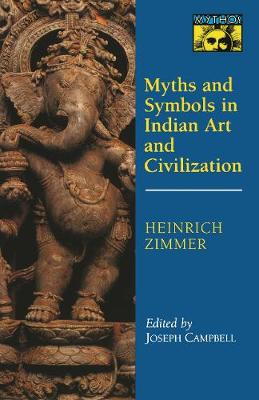
The author examines the myths and legends that underlie Hindu and Buddhist ideas and institutions
This book interprets for the Western mind the key motifs of India's legend, myth, and folklore, taken directly from the Sanskrit, and illustrated with seventy plates of Indian art. It is primarily an introduction to image-thinking and picture-reading in Indian art and thought, and it seeks to make the profound Hindu and Buddhist intuitions of the riddles of life and death recognizable not merely as Oriental but as universal elements.
Arvustused
"Zimmer moves among [ the myths of India] unhurriedly, with a respect that amounts to devotion. Gradually his comments bring to light the universal meanings beneath the archaic exterior."--New York Times
Muu info
In viewing India's art and civilization, the late Dr. Heinrich Zimmer, a man of penetrating intellect, the keenest esthetic sensibility and a predilection for psychoanalytic methods, found unlimited material for employing all three qualities... The Indian material offered is of the best quality: the language in which it is presented is imaginative, figurative, poetic, vigorous. -- W. Norman Brown
Heinrich Zimmer (18901943) was a historian of South Asian art. He was the author of Philosophies of India. Joseph Campbell (19041987) was the author of many books on comparative mythology, including The Hero with a Thousand Faces and The Masks of God.