Muutke küpsiste eelistusi

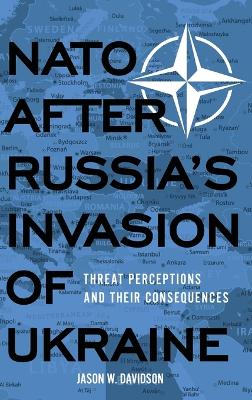
NATO After Russia's Invasion of Ukraine: Threat Perceptions and Their Consequences [Kõva köide]

  • Formaat: Hardback, 276 pages, kõrgus x laius x paksus: 229x152x25 mm, kaal: 499 g, 14 Tables, unspecified
  • Ilmumisaeg: 05-Jan-2026
  • Kirjastus: Georgetown University Press
  • ISBN-10: 1647126703
  • ISBN-13: 9781647126704
  • Kõva köide
  • Hind: 119,04 €*
  • * hind on lõplik, st. muud allahindlused enam ei rakendu
  • Tavahind: 148,80 €
  • Säästad 20%
  • Raamatu kohalejõudmiseks kirjastusest kulub orienteeruvalt 3-4 nädalat
  • Kogus:
  • Lisa ostukorvi
  • Tasuta tarne
  • Tellimisaeg 2-4 nädalat
  • Lisa soovinimekirja
  • Formaat: Hardback, 276 pages, kõrgus x laius x paksus: 229x152x25 mm, kaal: 499 g, 14 Tables, unspecified
  • Ilmumisaeg: 05-Jan-2026
  • Kirjastus: Georgetown University Press
  • ISBN-10: 1647126703
  • ISBN-13: 9781647126704
A revealing look at differing threat perceptions in six key NATO countries

When Russia began its full-scale invasion of Ukraine in February 2022, analysts and policymakers highlighted the unifying shock that NATO members experienced. However even before the return of US president Donald Trump, beneath this seeming cohesion lay deep-seated differences in how member states perceive and prioritize security threats.

NATO after Russia's Invasion of Ukraine analyzes the six most influential members of the alliance: the United States, the United Kingdom, France, Germany, Poland, and Italy. Through extensive interviews with current and former policymakers and a detailed examination of public statements and policies, Jason W. Davidson delivers a unique assessment of how divergent threat perceptions influence the NATO allies' major defense decisions, such as defense spending, and whether the alliance addresses each ally's most important threat and its view of NATO's most important challenges. With the rise in tumultuous geopolitical challenges posed by Russia, China, terrorism, mass refugee flows, and nationalism, this book provides the crucial context needed to navigate NATO's evolving role in international security.

Davidson provides vital insights for anyone seeking to understand the complex dynamics shaping the future of NATO and transatlantic security. Policy professionals will find actionable intelligence, while scholars and students of international relations and political science will appreciate its rigorous analysis and extensive primary research.

Muu info

"The war in Ukraine is widely assumed to have revitalized NATO and brought back a shared sense of common purpose between member states. Davidson's book effectively demolishes that common assumption and instead provides a nuanced, thorough, and thoughtful overview of the divergent threat perceptions and military preparations of the alliance's most important members." Emma Ashford, senior fellow, Stimson Center, and columnist, Foreign Policy
List of Tables
Acknowledgments
1. Introduction
2.: Poland
3. The United Kingdom
4. France
5. Italy
6. Germany
7. United States
8. Conclusion
Appednxi A: Military Capabilities Tables: Country Breakdowns and
Abbreviations
Appendix B: Elite Interviews Conducted by the Author
Bibliography
Index
About the Author

List of Tables

Table 2.1 Poland's Defense Spending
Table 2.2 Poland's Military Capabilities
Table 3.1 The United Kingdom's Defense Spending
Table 3.2 The United Kingdom's Military Capabilities
Table 4.1 France's Defense Spending
Table 4.2 France's Military Capabilities
Table 5.1 Italy's Defense Spending
Table 5.2 Italy's Military Capabilities
Table 6.1 Germany's Defense Spending
Table 6.2 Germany's Military Capabilities
Table 7.1 The United States' Defense Spending
Table 7.2 The United States' Military Capabilities
Table 7.3 The United States' Military Deployments by Region: 2023
Table 8.1 Core Findings
Jason W. Davidson is professor in the Department of Political Science and International Affairs at the University of Mary Washington and a nonresident senior fellow in the Transatlantic Security Initiative at the Atlantic Council's Scowcroft Center. His published works and include America's Entangling Alliances: 1778 to the Present and America's Allies and War: Kosovo, Afghanistan, and Iraq.