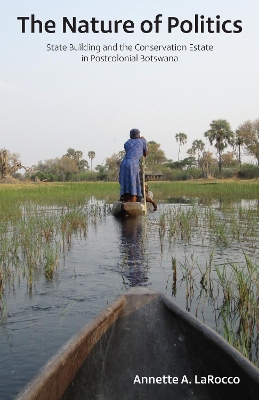
With a smart research design and rich, original interviews, Annette A. LaRoccos book complicates the existing narrative of Botswanan exceptionalism as she compares the politics for how and why the state builds roads in two different wildlife areas. Her work deftly bridges multiple disciplines, including political science, history, indigenous studies, development studies, and environmental policy, to investigate important real-world problems of conservation and public service delivery in Africa. - Lauren M. MacLean, Indiana University Bloomington Annette A. LaRoccos well-written book advances our understanding of the intersection of biodiversity conservation and state politics. It is a welcome text for political ecological research and African studies. - Maano Ramutsindela, University of Cape Town A seminal and ground-breaking study . . . [ that] will prove to be of particular value to readers with an interest in environmental science, policy, and African politics. (Midwest Book Review) As a political scientist who has sometimes been disappointed by the way the discipline has tended to think about environmental policy as just another issue area upon which institutions act rather than a politically co-constituted site, I find LaRoccos work to construct and apply a more inclusive concept both encouraging and important. - Rachel DeMotts (International Journal of African Historical Studies) An outstanding, closely observed analysis of state and society in the context of conservation in Botswana. (H-Environment, H-Net Reviews) Annette A. LaRoccos work is incredibly lucid, well articulated, and cogent-an essential and accessible resource for anyone interested in this field. - Baron Glanvill (African Studies Review)