Muutke küpsiste eelistusi

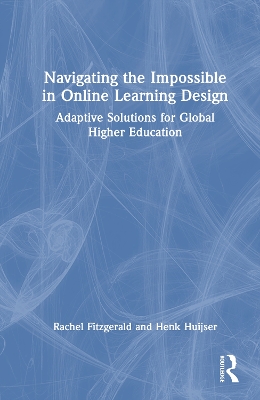
Navigating the Impossible in Online Learning Design: Adaptive Solutions for Global Higher Education [Kõva köide]

  • Formaat: Hardback, 178 pages, kõrgus x laius: 229x152 mm, 1 Line drawings, black and white; 1 Illustrations, black and white
  • Ilmumisaeg: 19-Jun-2026
  • Kirjastus: Routledge
  • ISBN-10: 1032897368
  • ISBN-13: 9781032897363
  • Kõva köide
  • Hind: 159,19 €*
  • * hind on lõplik, st. muud allahindlused enam ei rakendu
  • Tavahind: 212,25 €
  • Säästad 25%
  • See raamat ei ole veel ilmunud. Raamatu kohalejõudmiseks kulub orienteeruvalt 3-4 nädalat peale raamatu väljaandmist.
  • Kogus:
  • Lisa ostukorvi
  • Tasuta tarne
  • Tellimisaeg 2-4 nädalat
  • Lisa soovinimekirja
  • Formaat: Hardback, 178 pages, kõrgus x laius: 229x152 mm, 1 Line drawings, black and white; 1 Illustrations, black and white
  • Ilmumisaeg: 19-Jun-2026
  • Kirjastus: Routledge
  • ISBN-10: 1032897368
  • ISBN-13: 9781032897363

Navigating the Impossible in Online Learning Design explores a range of innovative practices and opportunities for rethinking teaching and assessment in online higher education.


Navigating the Impossible in Online Learning Design explores a range of innovative practices and opportunities for rethinking teaching and assessment in online higher education. Emerging societal norms like remote work, lifelong learning, and consumer technologies have challenged traditional approaches to university education, leaving post-secondary students in need of greater flexibility from their institutions. Building upon authentic empirical research cases and constructivist learning approaches, this book demonstrates how teaching and assessment can be designed to integrate and leverage digital technologies, engage and motivate learners, and facilitate collaborative and innovative learning in ways that align with the needs of increasingly automated societies. Chapters focus specifically on educational activities often considered impossible to undertake or be assessed online, such laboratory work, practicums, fieldwork, physical assessment, and research supervision. Tools and formats discussed include generative artificial intelligence, models of gamification, micro-learning, personalized learning, virtual reality, and more. Instructional designers, learning scientists, and teaching faculty charged with course design and development will come away inspired to sustain innovation in online teaching and assessment.
Chapter
1. Redefining pedagogy: Innovations in online learning
Chapter
2. The value of the virtual laboratory
Chapter
3. Role play in the virtual practicum
Chapter
4. Collaboration online: Working with groups and teams
Chapter
5. Observation and fieldwork in the digital world
Chapter
6. Lifelong learning and professional development
Chapter
7. Virtual research supervision
Chapter
8. Shaping the future of university education
Rachel Fitzgerald is Associate Professor (Management) and Deputy Associate Dean (Academic) in the Faculty of Business, Economics and Law at the University of Queensland, Australia.

Henk Huijser is Associate Professor and Strategic Lead for Educator Development & Recognition in the Learning and Teaching Unit at Queensland University of Technology, Australia.