Muutke küpsiste eelistusi

Neuron Signaling in Metabolic Regulation [Kõva köide]

Edited by (University of Texas Health Science Center, TX, USA)
  • Formaat: Hardback, 326 pages, kõrgus x laius: 234x156 mm, kaal: 843 g, 10 Tables, black and white; 19 Line drawings, black and white; 14 Halftones, black and white; 25 Illustrations, color; 8 Illustrations, black and white
  • Sari: Methods in Signal Transduction Series
  • Ilmumisaeg: 08-Jun-2021
  • Kirjastus: CRC Press
  • ISBN-10: 0367420295
  • ISBN-13: 9780367420291
Teised raamatud teemal:
  • Kõva köide
  • Hind: 159,19 €*
  • * hind on lõplik, st. muud allahindlused enam ei rakendu
  • Tavahind: 212,25 €
  • Säästad 25%
  • Raamatu kohalejõudmiseks kirjastusest kulub orienteeruvalt 3-4 nädalat
  • Kogus:
  • Lisa ostukorvi
  • Tasuta tarne
  • Tellimisaeg 2-4 nädalat
  • Lisa soovinimekirja
  • Raamatukogudele
  • Formaat: Hardback, 326 pages, kõrgus x laius: 234x156 mm, kaal: 843 g, 10 Tables, black and white; 19 Line drawings, black and white; 14 Halftones, black and white; 25 Illustrations, color; 8 Illustrations, black and white
  • Sari: Methods in Signal Transduction Series
  • Ilmumisaeg: 08-Jun-2021
  • Kirjastus: CRC Press
  • ISBN-10: 0367420295
  • ISBN-13: 9780367420291
Teised raamatud teemal:
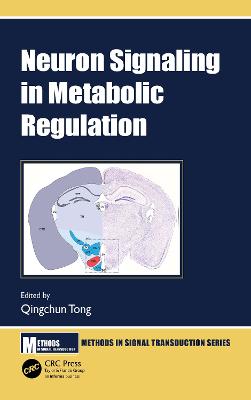
This book focuses on neuron signaling in the regulation of metabolism and body weight, and especially on methods used in these studies. Obesity and related metabolic syndromes have reached epidemic status, but still are no effective strategies for prevention and treatment. Body weight homeostasis is maintained by balanced food intake and energy expenditure, both of which are under the control of brain neurons. In the recent years, significant progress has been made in identifying specific neurons, neural pathways, and non-neuron cells in feeding regulation, as well as in delineating autonomic nervous systems targeting peripheral metabolic tissues in the regulation of energy expenditure and metabolism. This book reviews recent progress on important neuron signaling for body weight and metabolic regulation and the state-of-the-art methods that has been applied in this field, ranging from animal models with neuron-specific manipulations, pharmacology, optogenetics, in vivo Ca2+ imaging, and viral tracing. Readers will be exposed to latest research frontiers on neuron regulation of metabolism.

Key Features


Explores the role signaling between neurons plays with respect to metabolism


Documents how neurotransmitters affect the regulation of feeding


Describes various methods and technologies used to study the neuronal control of metabolism


Includes contributions from an international team of leading researchers.

Related Titles

Lim, W. & B. Mayer. Cell Signaling: Principles and Mechanisms (ISBN 978-0-8153-4244-1)

Feltz, A. Physiology of Neurons (ISBN 978-0-8153-4600-5)

Zempleni, J. & K. Dakshinamurti, eds. Nutrients and Cell Signaling (ISBN 978-0367-39307-6)
Preface vii
Notes on the Editor viii
List of Contributors
ix
1 Regulation of Energy Balance by Hypothalamic Camp-Related Signaling
1(22)
Makoto Fukuda
2 Brain Melanocortins Regulate Weight in Animals and Humans
23(18)
Yongjie Yang
Yong Xu
3 Neurotransmitter Co-Transmission in Brain Control of Feeding and Body Weight
41(26)
Jing Cai
Ryan M. Cassidy
Jessie Morrill
Qingchun Tong
4 Brain Glucagon-Like Peptide 1 Receptor Influence On Feeding Behavior
67(20)
Diana L. Williams
Lisa R. Anderson
Isabel I. Coiduras
Calyn B. Maske
5 Dorsomedial Hypothalamic Regulation of Energy Balance and Glucose Homeostasis: Lessons From Adeno-Associated Virus-Mediated Gene Manipulation
87(18)
Sheng Bi
Ni Zhang
Kapil Suchal
Jianqiao Zhang
6 The Ventromedial Hypothalamic Nucleus in the Regulation of Energy Homeostasis
105(16)
Le Trung Tran
Ki Woo Kim
7 Current Genetic Techniques Available For Investigating Feeding Behavior and the Control of Energy Balance
121(22)
Mitchell T. Harberson
Jennifer W. Hill
8 The Central Action of Thyroid Hormone On Energy Metabolism
143(16)
Siyi Shen
Yan Li
Shengnan Liu
Ying Yan
Jingjing Jiang
Hao Ying
9 Oxytocinergic Regulation of Energy Balance
159(20)
Tooru M. Mizuno
10 Lessons Learned About Metabolism From Traditional and Novel Tools For Studying the Structure and Function of the Vagus Nerve
179(56)
Guillaume de Lartigue
Arashdeep Singh
Alan de Araujo
Calyn B. Maske
Macarena Vergara
11 Neuronal Regulation of Adipose Tissue Biology
235(26)
Wenwen Zeng
Xinmin Qian
12 Sex Differences in Feeding Regulated by Estrogen: Crosstalk Between Dopaminergic Reward Circuitry and Adiposity Signals
261(32)
Kristen N. Krolick
Danielle N. Tapp
Matthew S. McMurray
Haifei Shi
13 High-Throughput Evaluation of Metabolic Activities Using Reverse Phase Protein Array Technology
293(26)
Hsin-Yi Lu
Jian Xiong
Dimuthu Nuwan Perera
Kimal Rajapakshe
Xuan Wang
Myra Costello
Kimberly R. Holloway
Carlos Ramos
Sandra L. Grimm
Julia Wuljkuhle
Cristian Coarfa
Dean P. Edwards
Michael X. Zhu
Shixia Huang
Index 319
Dr. Qingchun Tong received his B.S. in Biology from Anhui Normal University in China in1996, and M.S. in Physiology from Shanghai Institute of Physiology, Chinese Academy of Sciences in 1999. He then moved to US and obtained his PhD in Neural and Behavioral Sciences from SUNY Downstate Medical Center in 2003. He expanded his PhD studies during his postdoc training at Beth Israel Deaconess Medical Center and Harvard Medical School during 2003-2009, where he used mouse genetics to study hypothalamic neurocircuits in metabolism and feeding behaviors related to obesity and diabetes. In 2009, he was recruited to the Institute of Molecular Medicine (IMM) of University of Texas Health Science Center at Houston (UTHealth) and has remained as a faculty member ever since. Dr. Tong is currently Professor and Cullen Chair in Molecular Medicine at IMM of McGovern Medical School of UTHealth. He is also an adjunct faculty member of Department of Neurobiology and Anatomy of McGovern Medical School and the Endocrine Division of Department of Medicine at Baylor College Medicine.


Dr. Tongs research focuses on brain control of feeding behaviors and metabolism. The current obesity epidemic and its associated metabolic syndrome have imposed unprecedented challenges to society and medicine, but with no apparent effective therapeutics. His research goal is to understand the fundamental mechanistic insights on key driving causes for defective feeding and body weight regulation, therefore providing conceptual and effective targets for prevention and treatment of eating disorders, obesity and its associated diabetes. Toward this goal, he employs animal models in combination with state-of-the-art techniques including electrophysiology, optogenetics, chemogenetics, neuronal tracing and in vivo live imaging to dissect key functional neurocircuits in the regulation of feeding, body weight and glucose homeostasis.


Dr. Tong has published over 70 peer-reviewed research articles and is frequently invited as a speaker at national and international conferences. He currently serves as active manuscript reviewers for numerous academic journals and an editorial board member of Molecular Metabolism and Obesity Medicine.