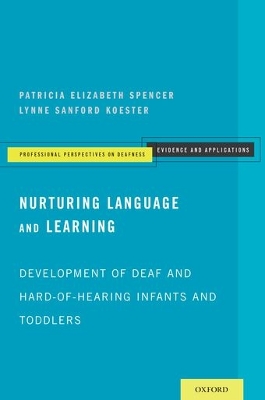
Regardless of a child's hearing abilities, increasing parents' knowledge about their baby or toddler's expected development and their confidence in their parenting abilities supports positive early interactions and developmental progress. Fortunately, as early hearing screening has become widespread, more information is available about development of deaf and hard-of-hearing infants and ways to best support their developing learning and language abilities.
This book combines a review of up-to-date research with theory and first-hand observations to provide a framework for parents and professionals as they promote developmental achievements of infants and toddlers with limited hearing. In what ways is development of deaf and hard-of-hearing babies and toddlers like that of those with typical hearing? What specific challenges are likely to be faced by child and parent - and when are they most likely to occur? What modifications in parenting and caregiver interactive behaviors can help avoid or overcome these challenges?
A strong, supportive foundation for optimal learning throughout life grows from early, positive, and responsive interactive experiences. This book provides information and guidelines for professionals and parents helping deaf and hard-of-hearing infants and toddlers build that foundation.
Arvustused
"The strength of this book comes through in the underlying messages that underpin effective early intervention in deaf education. The authors consistently emphasize the importance of meeting individual needs, supporting and empowering families, and the parent-child relationshipEL As a hearing professional, I found these intuitive visual communication strategies fascinating and could identify deaf children with hearing parents that would hugely benefit in this wayEL I imagine this book becoming a key text for Deaf Education programs as well as an informative read for parents and other professionals new to the subject. The content is thorough and effectively bridges the gap between research and practice." -Suzanne Williams, review in Deafness & Education International
| Preface: Or, Why This Book Was Written |
|
ix | |
|
1 Great Expectations: An Introduction |
|
|
1 | (30) |
|
|
|
31 | (38) |
|
Chart 1 Behaviors to Watch for at or near Birth |
|
|
65 | (2) |
|
Chart 2 Advances to Watch for by about 3 Months |
|
|
67 | (2) |
|
3 Welcome to the World: The Prenatal Period to 3 Months |
|
|
69 | (26) |
|
4 Early Parenting Goals: Nurturing and Supporting Development in the First 3 Months |
|
|
95 | (32) |
|
Chart 3 Advances to Watch for by about 6 Months |
|
|
125 | (2) |
|
5 Why Is Early Learning So Important?: 3 to 6 Months |
|
|
127 | (26) |
|
6 Learning, Feeling, and Communicating: 3 to 6 Months |
|
|
153 | (30) |
|
Chart 4 Advances to Watch for by about 9 Months |
|
|
178 | (3) |
|
Chart 5 Advances to Watch for by about 1 Year of Age |
|
|
181 | (2) |
|
7 On the Move: 6 to 12 Months |
|
|
183 | (34) |
|
8 Little Communicators: 6 to 12 Months |
|
|
217 | (28) |
|
Chart 6 Advances to Watch for by about 18 Months |
|
|
243 | (2) |
|
9 The Symbol Users: Representing, Remembering, Recreating: 12 to 18 Months |
|
|
245 | (38) |
|
Chart 7 Advances to Watch for by about 2 Years |
|
|
281 | (2) |
|
10 Almost Two and Look What's New! 18 to 24 Months |
|
|
283 | (34) |
|
Chart 8 Advances to Watch for in 2- to 3-Year-Olds |
|
|
315 | (2) |
|
11 Little Psychologists and Budding Linguists: From 2 to 3 Years Old |
|
|
317 | (42) |
|
12 Where We Are ... And Where We Are Going |
|
|
359 | (10) |
| Appendix: Resources and Websites for Parents and Professionals |
|
369 | (4) |
| References |
|
373 | (24) |
| Index |
|
397 | |
Patricia Elizabeth Spencer has been a teacher, assessment specialist, and educational advocate for deaf and hard-of-hearing students (including those with multiple learning challenges) across the age range of infancy through post-graduate levels. Her work at the Gallaudet Research Institute focused on early interaction, play, and language development. She has worked internationally as a researcher and educational consultant and has written extensively on issues related to development and education of deaf and hard-of-hearing children.
Lynne Sanford Koester retired from the University of Montana after 25 years of teaching developmental psychology there and at the University of North Carolina-Greensboro. She has also worked in Ethiopia, Austria, and Germany, and is the former Director of the Intercultural Youth and Family Development graduate program at her university. Her research has focused primarily on infant development within the family context - parenting behaviors and cultural influences, early parent-child interactions, and intuitive parenting.