Muutke küpsiste eelistusi

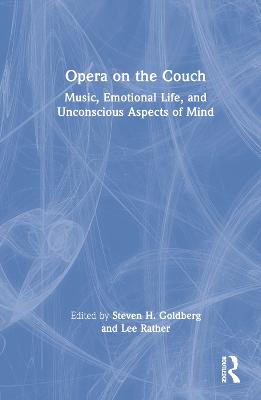
Opera on the Couch: Music, Emotional Life, and Unconscious Aspects of Mind [Kõva köide]

Edited by , Edited by
  • Formaat: Hardback, 240 pages, kõrgus x laius: 234x156 mm, kaal: 498 g, 2 Line drawings, black and white; 2 Illustrations, black and white
  • Ilmumisaeg: 01-Jun-2022
  • Kirjastus: Routledge
  • ISBN-10: 1032210761
  • ISBN-13: 9781032210766
Teised raamatud teemal:
  • Kõva köide
  • Hind: 149,06 €*
  • * hind on lõplik, st. muud allahindlused enam ei rakendu
  • Tavahind: 198,75 €
  • Säästad 25%
  • Raamatu kohalejõudmiseks kirjastusest kulub orienteeruvalt 3-4 nädalat
  • Kogus:
  • Lisa ostukorvi
  • Tasuta tarne
  • Tellimisaeg 2-4 nädalat
  • Lisa soovinimekirja
  • Raamatukogudele
  • Formaat: Hardback, 240 pages, kõrgus x laius: 234x156 mm, kaal: 498 g, 2 Line drawings, black and white; 2 Illustrations, black and white
  • Ilmumisaeg: 01-Jun-2022
  • Kirjastus: Routledge
  • ISBN-10: 1032210761
  • ISBN-13: 9781032210766
Teised raamatud teemal:
"In this widely ranging collection of essays, a group of contemporary psychoanalyst/authors turn their finely-honed listening skills and clinical experience to plumb the depths and illuminate themes of character, drama, myth, culture, and psychobiographyin some of the world's most beloved operas. The richly diverse chapters are unified by a psychoanalytic approach to the nuances of unconscious mental life and emotional experience as they unfold synergistically in opera's music, words, and drama. Opera creates a unique bridge between thought and feeling, mind and body, and conscious and unconscious that offers fertile ground for psychological exploration of profound human truths. Each piece is written in a colorful and non-technical manner that will appeal to mental health professionals, musicians, academics, and general readers wishing better to understand and appreciate opera as an art form"--

In this widely ranging collection of essays, a group of contemporary psychoanalyst/authors turn their finely-honed listening skills and clinical experience to plumb the depths and illuminate themes of character, drama, myth, culture, and psychobiography in some of the world’s most beloved operas.

Arvustused

Goldberg and Rather have compiled an operatic and psychoanalytic treat for lovers of opera. Their imaginative and scholarly introduction demonstrates how much the two disciplines share in common. Every psychoanalytic session has something of an opera about it, and the music and drama of every opera tells a psychological tale. Readers will have their appreciation of both disciplines deepened and much enhanced

Francis J. Grier. Composer. Training Analyst and Supervisor, British Psychoanalytic Society. Regional Editor (UK) & Editor-In-Chief Elect, International Journal of Psychoanalysis

Opera lovers have long known that the most direct path to the psyche is via the complex interplay of extraordinary music and profound human experiences depicted in the great operas. Psychoanalytic thinkers have pondered the connection over many decades. It is a great delight to read this extraordinary new volume that so masterfully brings together heart and the mind. Therapists, music lovers, and historians will love it!

Glen O. Gabbard, M.D. Baylor College of Medicine; Training and Supervising Analyst. Center for Psychoanalytic Studies, Houston, TX.

Like fairy tales or myths brought to life, opera touches deep levels of our understanding. This thoughtful collection of papers bringing opera and psychoanalysis together shows much about why this is so. While the themes of individual operas are illuminated by erudite psychoanalytic commentary, the understanding of the interplay of words and music in opera enhances a grasp of the interplay between verbal and non-verbal, conscious and unconscious in analysis. A pleasure to read.

Lucy LaFarge, M.D. Clinical Professor of Psychiatry, Weill Cornell Medical College. Editor in Chief, The Psychoanalytic Quarterly

Notes on Contributors vii
Acknowledgments x
Epigraph xiii
1 Psychoanalysis and Opera: A Felicitous Match
1(10)
Steven H. Goldberg
Lee Rather
2 The Internal World of Don Giovanni
11(14)
Richard Rusbridger
3 Across the Great Divide: Reflections on the Moral Reversal in Mozart's The Magic Flute
25(13)
Lee Rather
4 Lucia di Lammermoor: An Intersection on the Oral and Aural Roads
38(13)
Julie Jaffee Nagel
5 Transformation Through the Other: Senta and The Flying Dutchman
51(10)
L. Eileen Keller
6 The Orpheus of All Secret Misery: The Expression of Profound Grief in Wagner's Tristan Und Isolde
61(15)
John J. H. Muller
7 The Dark Matter of Wagner's Dream: Chaos and Creativity in Die Meistersinger von Nurnberg
76(15)
Jeanne C. Harasemovitch
8 Evil as Sadistic Perversion in Tosca
91(17)
Amy Tyson
9 Sliding Walls and Glimpses of the Other in Puccini's Madama Butterfly
108(12)
Steven H. Goldberg
10 Elektra: Traumatic Loss and the Impossibility of Mourning
120(14)
Catherine Mallouh
11 Yearning for Intimacy: Bela Bartok's Duke Bluebeard's Castle
134(16)
Anna Balas
12 Reflections on Applied Analysis and a Secret Program in Alban Berg's Wozzeck
150(16)
Ralph H. Beaumont
13 Janacek's Eternal Feminine: The Makropulos Affair
166(16)
Adele Tutter
14 Billy Budd: A Study in Envy and Repression
182(6)
Milton Schaefer
15 Sendak and Knussen's Wliere the Wild Things Are: A Developmental Journey
188(16)
Debbie Hindle
Appendix 204(15)
Index 219
Steven H. Goldberg, M.D., is a training and supervising analyst at the San Francisco Center for Psychoanalysis, and a personal and supervising analyst at the Psychoanalytic Institute of Northern California. In addition to many publications, he has co-chaired Opera on the Couch in collaboration with the San Francisco Opera.

Lee Rather, Ph.D., is a personal and supervising analyst at the Psychoanalytic Institute of Northern California and a faculty at the San Francisco Center for Psychoanalysis. As a teacher, presenter, and writer he has a long-time interest in the unconscious aspects of creativity in music, literature, and the arts.