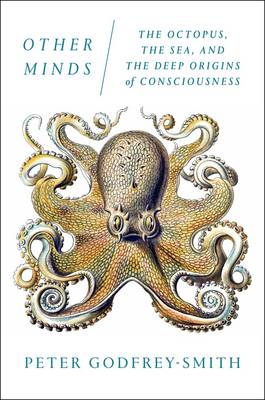
The leading philosopher of science and award-winning author of Darwinian Populations and Natural Selection provides photos taken during his advanced scuba dives to share stories of cephalopod encounters and insights into how nature became self-aware. A leading philosopher of science discusses the evolution of the cephalopod mind, shares photos of cephalopod encounters taken during his advanced scuba dives, and offers insights into how nature became self-aware. A philosopher dons a wet suit and journeys into the depths of consciousnessPeter Godfrey-Smith is a leading philosopher of science. He is also an accomplished scuba diver whose underwater videos of warring octopuses have attracted wide notice. In this book, he brings his parallel careers together to tell a bold new story of how nature became aware of itself. Mammals and birds are widely seen as the smartest creatures on earth. But one other branch of the tree of life has also sprouted higher intelligence: the cephalopods, consisting of the squid, the cuttlefish, and above all the octopus. New research shows that these marvelous creatures display remarkable gifts, with each of their tentacles even capable of thinking for itself. What does it mean that higher intelligence on earth has evolved not once but twice? And that the mind of the octopus is nonetheless so different from our own? Combining science and philosophy with firsthand accounts of his cephalopod encounters, Godfrey-Smith shows how primitive organisms bobbing in the ocean began sending signals to each other and how these early forms of communication gave rise to the advanced nervous systems that permit cephalopods to change colors and human beings to speak. By tracing the problem of consciousness back to its roots and comparing the human brain to its most alien and perhaps most remarkable animal relative, Godfrey-Smiths Other Minds sheds new light on one of our most abiding mysteries.