Muutke küpsiste eelistusi

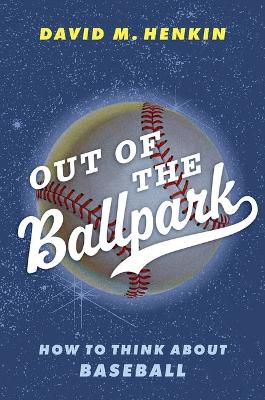
Out of the Ballpark: How to Think About Baseball [Kõva köide]

(Professor of History, University of California, Berkeley)
  • Formaat: Hardback, 152 pages, kõrgus x laius x paksus: 201x135x8 mm, kaal: 318 g, 11 b/w
  • Ilmumisaeg: 16-Jun-2026
  • Kirjastus: Oxford University Press Inc
  • ISBN-10: 0197789552
  • ISBN-13: 9780197789551
  • Kõva köide
  • Hind: 18,59 €*
  • * hind on lõplik, st. muud allahindlused enam ei rakendu
  • Tavahind: 23,24 €
  • Säästad 20%
  • See raamat ei ole veel ilmunud. Raamatu kohalejõudmiseks kulub orienteeruvalt 3-4 nädalat peale raamatu väljaandmist.
  • Kogus:
  • Lisa ostukorvi
  • Tasuta tarne
  • Tellimisaeg 2-4 nädalat
  • Lisa soovinimekirja
  • Formaat: Hardback, 152 pages, kõrgus x laius x paksus: 201x135x8 mm, kaal: 318 g, 11 b/w
  • Ilmumisaeg: 16-Jun-2026
  • Kirjastus: Oxford University Press Inc
  • ISBN-10: 0197789552
  • ISBN-13: 9780197789551
From America's Pastime to a global phenomenon--the life of the spectacular game as it is played and celebrated in communities around the world

All over the world, masses of people watch, follow, document, and obsess over baseball. Everything remarkable about the impact of baseball derives from the game's history and cultural status as events that draw people together in these ways. Understanding baseball as a cultural phenomenon is therefore less a matter of mastering the vocabulary of the game or merely recollecting its iconic stadiums, players, and stats. While all those details compel insiders and inspire fans, baseball's peculiar and persistent appeal can only be understood by adopting a wider lens. It requires reckoning with the history of structured competition. The classic backyard game of catch between a father and son draws meaning from its associations with the organized sport and its history. The challenge lies less in finding one perfect spot to look, but rather in identifying the many different places where baseball has accumulated significance.

Out of the Ballpark reconsiders the character, meaning, and delights of the game by exploring both baseball's unusual features and the sport's many resonances with other aspects of modern life. To this end, it abandons several assumptions and mythologies that underlie most approaches to histories of baseball: that it is unique among sports and fundamentally different from other kinds of entertainment; that it is specific to the United States; that it has changed fundamentally in recent years; and that the keys to understanding it lie primarily in examining what happens on the field of play.

Instead, David M. Henkin moves across time and space to examine baseball's history since the nineteenth century and beyond US borders. He takes readers inside the structures of clubs and leagues, interprets the sacred scripture of rulebooks, and illuminates some of baseball's rites and rituals that are often associated with honor and manhood. He charts baseball's significance along the routes of American and Japanese imperial expansion and the shifting maps of race and ethnicity in the US. Baseball is found at negotiating tables that pit capital against labor and in pivotal moments in the history of mass media. Here, we are shown how baseball might offer a complex and capacious space for thinking about such things as spectatorship, success, community, order, and contingency in the modern world.

Out of the Ballpark strips away the mythology that has accumulated around baseball in the United States to better appreciate the different sites of the sport's development and the various sources of its appeal. It explores baseball's function as a modern entertainment spectacle and moves across time and space to examine its history since the nineteenth century and beyond US borders.

Arvustused

Baseball has always been more than just a game, of course, but David Henkin's Out of the Ballpark expands the canvas to the point that I now see baseball in everything: Family bonds, geographic boundaries, international politics, even human relationships. I've always thought that baseball might just be everything. This book convinced me. * Will Leitch, author of Lloyd McNeils Last Ride and founder of Deadspin * Out of the Ballpark locates baseball in city streets, social customs, and popular culture in the U.S., the Caribbean, and Asia to demonstrate the many ways that the game and the growing pains of global industrialization reflected and influenced each other. While filled with sparkling quotations and anecdotes, the book is more than a jaunty amble through a pleasant pastime. Fans might sometimes head to the ballpark to escape the hard stuff like conflicts over race, class, gender, and capitalism, but Henkin persuasively shows that baseball has in fact been profoundly shaped by them. * Chandra Manning, Georgetown University * David M. Henkin is one of the most innovative cultural historians working today, and in Out of the Ballpark, he tackles the seemingly exhausted subject of baseball to find a treasure trove of new insights. Henkin demonstrates that baseball's cultural significance lies not just in its on-field action but in its connections to urban life, imperial expansion, racial politics, and a deep-seated obsession with record-keeping. By shifting our focus from the 'fabled fields of dreams,' this book masterfully reveals how the game's history has unfolded far beyond the stadium-in cities, in newsprint, in labor negotiations, and in our very imaginations. This is an exciting triumph in cultural history and a vital new perspective on America's greatest pastime. * Rhae Lynn Barnes, author of Darkology *

I. Introduction: Locating Baseball II. Urban Settings III. Associations
IV. The Rule of Law V. Manhood VI. Empires VII. Color Lines VIII. Labor and
Capital IX. Spectacle and Media X. Partisanship XI. Accounting XII.
Conclusion: Imagination and Fantasy
David M. Henkin is Professor of History at the University of California, Berkeley, where he has taught courses on society and culture in nineteenth-century America for close to three decades. He is the author of City Reading: Written Words and Public Spaces in Antebellum New York (1998); The Postal Age: The Emergence of Modern Communications in Nineteenth-Century America (2006); The Week: A History of the Unnatural Rhythms That Made Us Who We Are (2021); and (with Rebecca McLennan) Becoming America: A History for the 21st Century (2022).