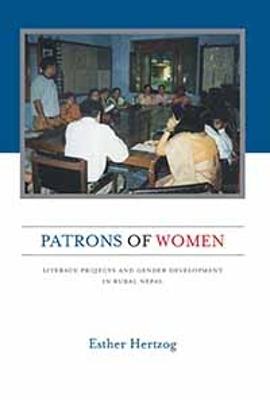
Assuming that womens empowerment would accelerate the pace of social change in rural Nepal, the World Bank urged the Nepali government to undertake a Gender Activities Project within an ongoing long-term water-engineering scheme. The author, an anthropologist specializing in bureaucratic organizations and gender studies, was hired to monitor the project. Analyzing her own experience as a practicing development expert, she demonstrates that the professed goal of womens empowerment is a pretext for promoting economic organizational goals and the interests of local elites. She shows how a project intended to benefit women, through teaching them literary and agricultural skills, fails to provide them with any of the promised resources. Going beyond the conventional analysis that positions aid givers vis-ą-vis powerless victimized recipients, she draws attention to the complexity of the process and the active role played by the Nepalese rural women who pursue their own interests and aspirations within this unequal world. The book makes an important contribution to the growing critique of development projects and of womens development projects in particular.
Arvustused
Hertzog has produced a valuable anthropological work, and it is a good contribution to the ongoing anthropological discourse on aid politics. JRAI
This compelling ethnographic analysis raises very important questions about gender and development that resonate well beyond the particular context of rural Nepal. Although the book paints quite a bleak picture of gender consultancies and development projects more generally, it is a great example of self-critical scholarship that should encourage us to reflect on the implications of our own practices. International Feminist Journal of Politics
|
|
|
viii | |
|
List of Abbreviations and Dramatis Personae |
|
|
ix | |
| Acknowledgments |
|
x | |
| Foreword |
|
xiii | |
| Preface |
|
xv | |
| Introduction |
|
1 | (46) |
|
1 The Vulnerable Patron: Playing the Role of a Foreign Gender Consultant |
|
|
47 | (32) |
|
2 Instrumental Patronage: Leon and Hanna |
|
|
79 | (30) |
|
3 Marginalizing Economic Activities, Profiting from Literacy Classes |
|
|
109 | (25) |
|
|
|
127 | (7) |
|
4 The Role of Economic Activities in Negotiating Consent |
|
|
134 | (41) |
|
5 The Seminar: The Successful Failure of the Women's Empowerment Project |
|
|
175 | (26) |
|
|
|
195 | (6) |
|
6 Gender and the Phantom Budget |
|
|
201 | (35) |
| References |
|
236 | (19) |
| Index |
|
255 | |
Esther Hertzog is a Social Anthropologist at Beit Berl Academic College in Israel. Her research focuses on bureaucracy and gender relations. She has published Immigrants and Bureaucrats (Berghahn, 1999); Op-Ed, Feminist Social Justice in Israel (Hebrew, 2004); Life, Death and Sacrifice, Women and Family in the Holocaust (ed.) (Gefen, 2008); Perspectives on Israeli Anthropology (co-ed.) (Wayne State University Press, 2010); At Teachers Expense: Gender and Power in Israeli Education (co-ed.) (Hebrew, 2010); and many articles and chapters, as well as hundreds of articles in Israeli dailies. She has been involved in feminist activities for more than twenty years and founded a womens NGO, two womens parties, and the Womens Parliament.