Muutke küpsiste eelistusi

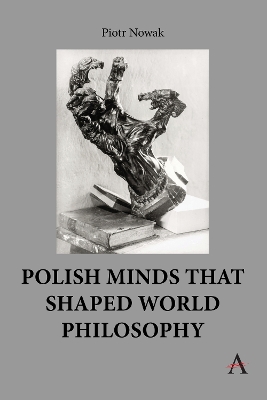
Polish Minds That Shaped World Philosophy [Kõva köide]

  • Formaat: Hardback, 312 pages, kõrgus x laius x paksus: 229x153x21 mm, kaal: 588 g
  • Ilmumisaeg: 05-May-2026
  • Kirjastus: Anthem Press
  • ISBN-10: 1839998547
  • ISBN-13: 9781839998546
Teised raamatud teemal:
  • Formaat: Hardback, 312 pages, kõrgus x laius x paksus: 229x153x21 mm, kaal: 588 g
  • Ilmumisaeg: 05-May-2026
  • Kirjastus: Anthem Press
  • ISBN-10: 1839998547
  • ISBN-13: 9781839998546
Teised raamatud teemal:
The philosophical biography penned by the eminent Polish philosopher and translator Professor Piotr Nowak presents the difficult fate of Polish thinkers who reflected and created their philosophies in the 20th centurythe century of three Polands, three wars, and two totalitarian regimes. Building his narrative around three key words, the author presents the lives and work of Wadysaw Tatarkiewicz, Tadeusz Kroski, Leszek Koakowski, Andrzej Walicki, Adam Schaff, Bronisaw Baczko, Krzysztof Pomian, Zbigniew Kuderowicz, Stefan Amsterdamski, Jerzy Szacki, Zygmunt Bauman, Jan Garewicz, Barbara Skarga, Juliusz Domaski, Ryszard Legutko, Krzysztof Michalski, Marek J. Siemek, Józef Tischner, Roman Ingarden, Henryk Elzenberger, Tadeusz Kotarbiski, Kazimierz Adjunkiewicz, Marian Przecki, Bogusaw Wolniewicz, Józef Maria Bocheski, Alfred Tarski, Leon Chwistek, and Stanisaw Ignacy Witkiewicz. The book concludes with a transcript of a conversation between Zbigniew Janowski (an American philosopher of Polish descent) and the author of this book, discussing the influence of two powerful ideologies born in the 19th century, Marxism and liberalism, on the intellectual and political life of contemporary nations.

Arvustused

Philosophy is always both national (because it is written in a national language) Piotr Nowak and universal (because it analyses concepts). Piotr Nowaks fascinating book reminds us of this truth by gathering the biographies (and photographs) and summarizing the works of 28 extraordinary Polish thinkers of the past hundred years, in whom philosophical rigour and political turmoil combined, often tragically, to produce results that will be of interest not only in Warsaw and Cracow but also in California and Munich. Glenn W. Most, The University of Chicago


At this moment of resurgent nationalism and the decline of the international liberal order, Nowak reminds us that philosophy challenges all ideologies without freeing philosophers from impossible political dilemmas. Like Plutarchs Lives, Nowaks biographies forge a comprehensive Socratic education. The narratives are rich, the philosophical insights still richer. J. Walter Sterling, President, St. Johns College


This fascinating gallery of profiles examines twentieth-century Polish philosophers some of whom created works of worldwide significance but whose lives and work became enmeshed in totalitarianism in proportion to their distance from Socratic philosophy. Zarko Minkov, Roosevelt University

Muu info

Explores the turbulent lives and ideas of 20th-century Polish thinkers shaped by war, totalitarianism, and ideological struggle, culminating in a reflection on Marxism and liberalism's enduring influence
Introduction; Wadysaw Tatarkiewicz; Tadeusz Kroski; Leszek
Koakowski; Andrzej Walicki; Adam Schaff; Bronisaw Baczko; Krzysztof Pomian;
Zbigniew Kuderowicz; Stefan Amsterdamski; Jerzy Szacki; Zygmunt Bauman; Jan
Garewicz; Barbara Skarga; Juliusz Domaski; Ryszard Legutko; Krzysztof
Michalski; Marek J. Siemek; Józef Tischner; Roman Ingarden; Henryk Elzenberg;
Tadeusz Kotarbiski; Kazimierz Ajdukiewicz; Marian Przecki; Bogusaw
Wolniewicz; Józef Maria (Innocentius) Bocheski; Alfred Tarski; Leon
Chwistek; Stanisaw Ignacy Witkiewicz; Summation: Zbigniew Janowski in
Conversation with Piotr Nowak; Bibliography; Index
Piotr Nowak is Professor of Philosophy at the Bialystok University in Poland, deputy editorinchief of the annual Kronos. Philosophical Journal, and the author of The Ancients and Shakespeare on Time: Some Remarks on the War of Generations (2014) and After Jews. Essays on Political Theology, Shoah and the End of Man (2022). He published among others in Philosophy and Literature (Gods and Children: Shakespeare Reads The Prince, Vol. 41, No. 1A, 2017).