Muutke küpsiste eelistusi

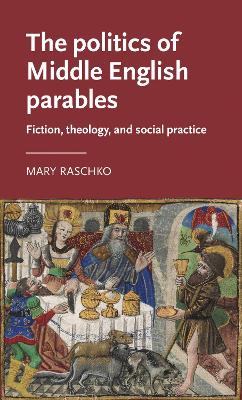
politics of Middle English parables: Fiction, theology, and social practice [Kõva köide]

  • Formaat: Hardback, 272 pages, kõrgus x laius x paksus: 216x138x16 mm, kaal: 463 g
  • Sari: Manchester Medieval Literature and Culture
  • Ilmumisaeg: 03-Oct-2018
  • Kirjastus: Manchester University Press
  • ISBN-10: 152613117X
  • ISBN-13: 9781526131171
Teised raamatud teemal:
  • Kõva köide
  • Hind: 94,20 €*
  • * hind on lõplik, st. muud allahindlused enam ei rakendu
  • Tavahind: 117,75 €
  • Säästad 20%
  • Raamatu kohalejõudmiseks kirjastusest kulub orienteeruvalt 3-4 nädalat
  • Kogus:
  • Lisa ostukorvi
  • Tasuta tarne
  • Tellimisaeg 2-4 nädalat
  • Lisa soovinimekirja
  • Formaat: Hardback, 272 pages, kõrgus x laius x paksus: 216x138x16 mm, kaal: 463 g
  • Sari: Manchester Medieval Literature and Culture
  • Ilmumisaeg: 03-Oct-2018
  • Kirjastus: Manchester University Press
  • ISBN-10: 152613117X
  • ISBN-13: 9781526131171
Teised raamatud teemal:
The politics of Middle English parables examines the dynamic intersection of fiction, theology and social practice in late-medieval England. Parables occupy a prominent place in Middle English literature, appearing in dream visions and story collections as well as in lives of Christ and devotional treatises. While most scholarship approaches the translated stories as stable vehicles of Christian teaching, this book highlights the many variations and points of conflict across Middle English renditions of the same story. In parables related to labour, social inequality, charity and penance, the book locates a creative theological discourse through which writers attempted to re-construct Christian belief and practice. Analysis of these diverse retellings reveals not what a given parable meant in a definitive sense but rather how Middle English parables inscribe the ideologies, power structures and cultural debates of late-medieval Christianity. -- .

Arvustused

'Thoroughly researched and meticulously argued, The Politics of Middle English Parables succeeds in its ambitious effort to contextualize a uniquely paradoxical and suggestive body of late medieval religious writing.' Studies in the Age of Chaucer -- .

Acknowledgements viii
Introduction 1(26)
1 Teaching unreasonable tales: the parable of the Labourers in the Vineyard
27(37)
2 Stories for revising the self: the parable of the Prodigal Son
64(41)
3 Examinations of social conscience: the parable of Dives and Lazarus
105(37)
4 Ethical allegories: the parable of the Good Samaritan
142(35)
5 Paradox formed into story: the parables of the Wedding Feast and Great Supper
177(39)
Epilogue: Writing parabolic fiction: Langland's pardon episode 216(12)
Bibliography 228(17)
Index 245
Mary Raschko is Associate Professor of English at Whitman College -- .