Muutke küpsiste eelistusi

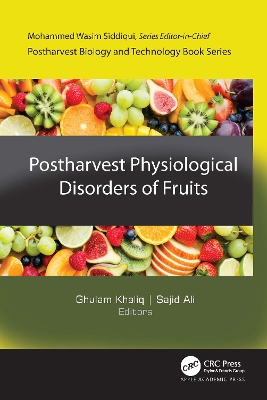
Postharvest Physiological Disorders of Fruits [Kõva köide]

Edited by , Edited by
  • Formaat: Hardback, 426 pages, kõrgus x laius: 234x156 mm, kaal: 1000 g, 9 Tables, black and white; 6 Line drawings, black and white; 26 Halftones, color; 22 Halftones, black and white; 26 Illustrations, color; 28 Illustrations, black and white
  • Ilmumisaeg: 22-Sep-2025
  • Kirjastus: Apple Academic Press Inc.
  • ISBN-10: 1774919222
  • ISBN-13: 9781774919224
Teised raamatud teemal:
  • Kõva köide
  • Hind: 184,50 €*
  • * hind on lõplik, st. muud allahindlused enam ei rakendu
  • Tavahind: 246,00 €
  • Säästad 25%
  • Raamatu kohalejõudmiseks kirjastusest kulub orienteeruvalt 3-4 nädalat
  • Kogus:
  • Lisa ostukorvi
  • Tasuta tarne
  • Tellimisaeg 2-4 nädalat
  • Lisa soovinimekirja
  • Raamatukogudele
  • Formaat: Hardback, 426 pages, kõrgus x laius: 234x156 mm, kaal: 1000 g, 9 Tables, black and white; 6 Line drawings, black and white; 26 Halftones, color; 22 Halftones, black and white; 26 Illustrations, color; 28 Illustrations, black and white
  • Ilmumisaeg: 22-Sep-2025
  • Kirjastus: Apple Academic Press Inc.
  • ISBN-10: 1774919222
  • ISBN-13: 9781774919224
Teised raamatud teemal:

Details postharvest physiological disorders of fresh fruits, describing their diverse morphological structures, compositions, and general physiology as well as the technologies for the effective handling and treatment of fresh fruits. Discusses latest diagnostic methods, management, and technologies to confront these challenges.


Fruits are valuable products; they are, however, highly perishable in nature and need special measures to maintain their quality while transporting them long distances for sale. Postharvest physiological disorders of fresh fruit are serious problems that arise from environmental and management factors, affecting the quantity and quality of fruits. This new volume focuses on these postharvest physiological disorders of fresh fruits, describing their diverse morphological structures, compositions, and general physiology, as well as the technologies for the effective handling and treatment of fresh fruits.

This volume covers important information on the postharvest physiological disorders of fruits that are caused by temperature, rain, humidity, pruning, irrigation, harvest procedures, and nutrient deficiencies. The book details the modern and sophisticated diagnostic methods, management, and technologies to confront these challenges.. The book gives comprehensive explanations regarding the causes for the occurrence of physiological disorder symptoms and the possible mechanisms to control these abnormalities.

Organized by the type of fruits, this volume focuses on the physiological disorders that affect tropical and subtropical fruits that include mango, banana, citrus, pomegranate, litchi, papaya, guava, fig, cashew, etc., and also covers the postharvest physiological disorders of temperate fruits, such as apple, grape, peach, cherry, strawberry, kiwi, persimmon, apricot, and plum.

Key features:

  • Provides the most recent advances in understanding the postharvest physiological disorders of fresh fruits
  • Reviews the fundamental and innovative technologies for the management of the postharvest physiological disorders
  • Covers preharvest factors affecting the postharvest quality of fresh fruits
  • Outlines the preharvest and postharvest causes of physiological disorders and handling technologies for the highly perishable fruits

This volume provides informative and practical information that will aid researchers, scientists, industry professionals and faculty and students in the understanding the principles, food safety techniques, and the mechanisms of postharvest physiological disorders for the best management of fresh fruits.

Introduction PART I: TROPICAL AND SUB-TROPICAL FRUITS
1. Postharvest
Physiological Disorders of Mango
2. Postharvest Physiological Disorders of
Banana
3. Postharvest Physiological Disorders of Citrus
4. Postharvest
Physiological Disorders of Pomegranate
5. Postharvest Physiological Disorders
of Litchi
6. Postharvest Physiological Disorders of Papaya
7. Postharvest
Physiological Disorders of Sapodilla and Mamey Sapote
8. Postharvest
Physiological Disorders of Guava
9. Postharvest Physiological Disorders of
Fig
10. Postharvest Physiological Disorders of Cashew PART II: TEMPERATE
FRUITS
11. Postharvest Physiological Disorders of Apple
12. Postharvest
Physiological Disorders of Grape
13. Postharvest Physiological Disorders of
Peach
14. Postharvest Physiological Disorders of Cherry
15. Postharvest
Physiological Disorders of Strawberry
16. Postharvest Physiological Disorders
of Kiwifruit
17. Postharvest Physiological Disorders of Persimmon
18.
Postharvest Physiological Disorders of Apricot
19. Postharvest Physiological
Disorders of Plum
Ghulam Khaliq, PhD, is Associate Professor/Chairman in the Department of Horticulture at Lasbela University of Agriculture, Water and Marine Sciences, Uthal, Pakistan. Prior to that, he was a research associate in the Agriculture and Cooperatives Department of the Government of Pakistan. His research is focused on postharvest physiology of fruits, vegetables, and ornamental plants, and he is also working on postharvest technologies such as edible coatings, elicitors, biopreservative packaging, and the development of novel approaches to maintain quality and extend the shelf life of highly perishable products. He has executed research projects supported by the Higher Education Commission of Pakistan and collaborates with other research institutions around the world. He published research articles, book chapters, conference papers, and reports in national and international journals and serves as an editor, associate editor, reviewer, and editorial board member of several international journals. He is a lifetime member of several scientific societies, including the Pakistan Society for Horticultural Sciences, Pakistan Botanical Society, and Pakistan Society of Plant Protection.

Sajid Ali, PhD, is Assistant Professor of Horticulture in the Faculty of Agricultural Sciences and Technology at Bahauddin Zakariya University, Multan, Pakistan. Dr. Ali teaches courses in undergraduate and postgraduate classes with a major focus on fruit production and postharvest physiology. His current focus is to improve postharvest quality of fresh horticultural produce with minimum loss. He worked as a research officer and as a project development officer on two research projects at the University of Agriculture, Faisalabad, Pakistan. He has won several research projects. Dr. Ali has authored and co-authored over 100 peer-reviewed international journal publications and around 25 book chapters. He is an academic editor of Plos One and review editor of Frontiers in Sustainable Food Systems and Frontiers in Plant Science. He received advanced training in postharvest physiology of horticultural crops at the US Horticultural Research Laboratory.