Muutke küpsiste eelistusi

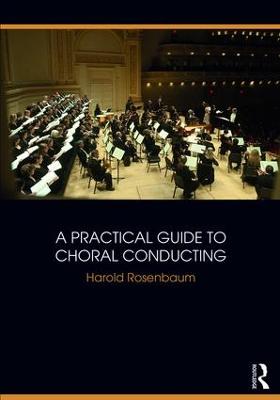
Practical Guide to Choral Conducting [Pehme köide]

(New York, USA)
  • Formaat: Paperback / softback, 236 pages, kõrgus x laius: 254x178 mm, kaal: 453 g
  • Ilmumisaeg: 16-Oct-2017
  • Kirjastus: Routledge
  • ISBN-10: 1138058440
  • ISBN-13: 9781138058446
Teised raamatud teemal:
  • Formaat: Paperback / softback, 236 pages, kõrgus x laius: 254x178 mm, kaal: 453 g
  • Ilmumisaeg: 16-Oct-2017
  • Kirjastus: Routledge
  • ISBN-10: 1138058440
  • ISBN-13: 9781138058446
Teised raamatud teemal:

Rooted in the experience of a professional choral conductor, this book provides a guide to practical issues facing conductors of choral ensembles at all levels, from youth choruses to university ensembles, church and community choirs, and professional vocal groups. Paired with the discussion of practical challenges is a discussion of over fifty key works from the choral literature, with performance suggestions to aid the choral conductor in directing each piece.

Dealing with often-overlooked yet vital considerations such as how to work with composers, recording, concert halls, and choral tours, A Practical Guide to Choral Conducting offers a valuable resource for both emerging choral conductors and students of choral conducting at the undergraduate and graduate levels.

Arvustused

"There can be no one better qualified to write a practical guide to conducting than Harold Rosenbaum.... This is an invaluable guide to conducting by a musician whose interpretations seem always on the mark and whose reverence for music is both keen and infectious."

Clara Longstreth, New Music Connoisseur, Volume 23, No. 2

"Maestro Rosenbaum has produced an aptly named and very useful addition to the conducting bibliography ... it is a compendium of accumulated wisdom from an accomplished and deeply experienced practitioner of the art. ... A Practical Guide to Choral Conducting is an excellent textbook for choral techniques or choral conducting classes. It would also be a valuable asset for orchestral conductors developing competence with choirs. For experienced choral conductors, this is a rewarding read as a valedictory filled with many thoughtful nuggets and a sincere celebration of how lucky we are to do this work."

Jonathan D. Green, for the Conductors Guild

"Harold Rosenbaum has a wealth of experience with professional choral ensembles, teaching at the collegiate level, and presenting choral conducting master classes. One of the standout topics in this book is working with other musicians, accompanists, solo singers, and orchestral players. A Practical Guide to Choral Conducting sheds light on lesser-discussed subjects and topics relevant to and useful for all choral musicians, and provides vital insight into all aspects of the choral art, and would be a welcome addition to the bookshelf of any choral conductor."

Alan Davis, Choral Journal

"This book is a gem, a must read for all serious choral conductors. It describes how to deal effectively with all the different challenges (some expected, some unexpected) that confront any choral conductor. Harold Rosenbaum is an outstanding and truly dedicated musician: very experienced, sensitive, and indeed, thoroughly practical."

Thea Musgrave, composer

"In rehearsal and performance, the hallmark of Harold Rosenbaums conducting is simplicityminimum intervention with no impedance to the flow of understanding between conductor, performer, and listener. A Practical Guide to Choral Conducting reveals much about how he achieves his results. Rosenbaum offers astute, experienced, no-nonsense routes through the places we all find most challenging. There is illumination in this book."

John Harbison, composer and Institute Professor, Massachusetts Institute of Technology

"Mr. Rosenbaum is a consummate master of his craft, with a keen ear, an insightful intellect, and a profound musical sensitivity. Its a great gift for him to share his wisdom from a lifetime of deep commitment to choral music-making, one from which we all can benefit."

Robert Spano, Music Director, Atlanta Symphony Orchestra

Acknowledgements x
PART 1 Leadership, Logistics, and Musical Insights
1(106)
1 Responsibilities and Opportunities
3(6)
Responsibilities
3(1)
Opportunities
4(5)
2 Recruiting, Auditioning, and Assessing
9(4)
Recruiting
9(1)
Auditioning
10(2)
Assessing
12(1)
3 Choosing and Learning Repertoire
13(8)
How to Find and Acquire Music
13(1)
Choosing Stylistically Appropriate Music for Your Choir
14(1)
Creating a Successful Concert Program
15(2)
Learning the Score
17(4)
4 Common Conductor Problems and How to Avoid or Fix Them
21(3)
Failing to Hear Mistakes
21(1)
Expectations
22(1)
Giving Pitches Incorrectly
22(1)
Teaching Notes Ineffectively
22(1)
Not Cuing Enough
23(1)
Not Having Adequate Piano Skills
23(1)
5 Acquiring a Solid Conducting Technique With No Wasted Motion
24(6)
Specific Wasted Motions
25(4)
Mirror Conducting
29(1)
Kinesthetics
29(1)
6 Logistics: Arranging Your Singers and Placing Your Choir
30(4)
Achieving Balance
30(1)
Arranging the Singers
31(1)
Mixed Formation
31(1)
Special Arrangements
32(2)
7 Running Rehearsals
34(4)
Time of Day
34(1)
Rehearsal Length
34(1)
Running Rehearsals From the Piano
35(1)
The Dress Rehearsal
36(2)
8 Achieving a Better Choral Sound
38(4)
Tone Quality and Dynamics
38(1)
Tone Quality and Vowels
38(1)
Blending
39(1)
Singing From Memory
39(1)
Diction
40(1)
Helping Choirs to Interpret More Fully
40(2)
9 Special Choral Concepts and Techniques
42(16)
Phrasing
42(5)
Clever Breathing
47(2)
Staccatos
49(1)
Interweaving Lines
49(1)
Choral Crescendos and Decrescendos
49(3)
Breaking Habits That Minimize Expressivity
52(1)
"Amen"
53(5)
10 Collaborating With Other Performers
58(5)
Piano Accompanists
58(1)
Mixing Professional and Amateur Singers
59(1)
Soloists
59(1)
Orchestras
60(3)
11 Collaborating With and Supporting Composers
63(6)
Calling for Scores
63(1)
Commissioning
64(1)
Advising Composers
65(4)
12 Concerts and Venues
69(5)
Performance Locations
69(1)
Placing the Choir and Instrumentalists
70(1)
Preparing the Venue
71(1)
The Day of the Concert
72(1)
Practical Considerations on the Day of the Concert
72(2)
13 The Concert Experience: Directing and Savoring
74(5)
14 Choral Tours
79(5)
Working With Tour Companies
79(1)
What to Include in the Itinerary
80(1)
What to Include Regarding Performances
81(1)
Travel Tips for Ideal Rehearsals and Performances
81(1)
Deviations
81(1)
What Can Go Wrong
82(2)
15 Making Recordings
84(7)
Finding a Recording Space
84(1)
Recording Engineers
85(1)
Scheduling Sessions
86(1)
In Session
86(1)
The Session Begins
87(4)
16 Breaking Rules: When and Why It Is Acceptable
91(4)
When Not to Conduct
91(2)
When Not to Follow the Printed Score
93(2)
17 The World of Professional Choristers: An Inside Look at The New York Virtuoso Singers
95(4)
Rehearsals
97(1)
What I Have Learned About Professional Singers
97(1)
What I Have Learned From Professional Singers
98(1)
Further Observations and Thoughts About Professional Singers
98(1)
18 Performing Modern Music
99(5)
Complex Contemporary Choral Music
101(3)
19 Final Thoughts
104(3)
PART 2 Anthology
107(105)
Appendix I Interpreting Johann Sebastian Bach's Matthaus-Passion (St. Matthew Passion) (Barenreiter edition) 212(4)
Appendix 2 Interpreting Wolfgang Amadeus Mozart's Requiem 216(5)
Appendix 3 Executing Fermatas in Haydn's Die Schopfung (The Creation) (Oxford University Press edition) 221(4)
Appendix 4 Interpreting Giuseppe Verdi's Messa da Requiem (Edition Peters Nr. 4250 or Dover Publications) 225(4)
Index 229
Harold Rosenbaum is a critically acclaimed choral conductor who has led numerous choral ensembles over the course of a decades-long career. The founder of The New York Virtuoso Singers and The Canticum Novum Singers, he has collaborated with ensembles including the New York Philharmonic, American Symphony Orchestra, and the Brooklyn Philharmonic, and has conducted 540 world premieres. Having taught at SUNY Buffalo, the Juilliard School, Queens College, and Adelphi University, he is now active as a guest conductor, clinician, and lecturer, and runs the Harold Rosenbaum Choral Conducting Institute, an annual program of conducting workshops. Visit his website at www.haroldrosenbaum.com to learn more.