Muutke küpsiste eelistusi

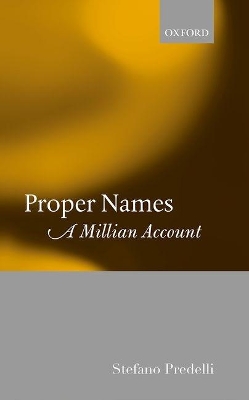
Proper Names: A Millian Account [Kõva köide]

(University of Nottingham)
  • Formaat: Hardback, 176 pages, kõrgus x laius x paksus: 223x143x18 mm, kaal: 326 g
  • Ilmumisaeg: 23-Mar-2017
  • Kirjastus: Oxford University Press
  • ISBN-10: 0198778155
  • ISBN-13: 9780198778158
Teised raamatud teemal:
  • Formaat: Hardback, 176 pages, kõrgus x laius x paksus: 223x143x18 mm, kaal: 326 g
  • Ilmumisaeg: 23-Mar-2017
  • Kirjastus: Oxford University Press
  • ISBN-10: 0198778155
  • ISBN-13: 9780198778158
Teised raamatud teemal:
Proper Names explores the aims and scope of the Millian approach to the semantics of proper names. Stefano Predelli covers the core semantic aspects of Millianism, and develops them against the background of an independently motivated pre-semantic picture, grounded on the distinction between meaning and use. Accordingly, the volume defends Millianism from certain popular misconceptions and criticisms, it highlights its explanatory potential, and it tackles a variety of traditional philosophical problems from its viewpoint. In particular, Predelli discusses the relationships between co-referential names, the issue of non truth-conditional meaning for proper names, the role of onomastics in a theory of the use of names, the phenomenon of empty names, cases of so-called fictional names and names from myth and false scientific theories, and apparently predicative uses of proper names.
Acknowledgements ix
Introduction 1(6)
1 Preliminaries
7(14)
2 Articulations and Uses
21(18)
3 Launching Names
39(21)
4 Using Names
60(21)
5 Loose Ends
81(14)
6 Names and Nouns
95(15)
7 A Tale of Two Horses
110(15)
8 The No-Name Hypothesis
125(28)
References 153(10)
Index 163
Stefano Predelli completed his doctoral studies at UCLA in 1991, with a dissertation on indexicals supervised by David Kaplan. He then moved to Norway, where he taught for a few years at the University of Oslo. He is currently a professor at the University of Nottingham. His previous publications include Contexts: Meaning, Truth, and the Use of Language (OUP, 2005), and Meaning without Truth (OUP, 2013).