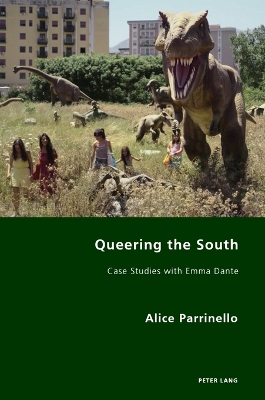
This book offers a queer reading of the oeuvre of Sicilian director Emma Dante, winner of the 2026 Theatre Golden Lion at the Venice Biennale. It contextualises Dantes work within the longstanding anti-meridionalist NorthSouth binary that has dogged Italy history and culture, and argues that Dante exemplifies a Southern and queer epistemology that unsettles this divide and revalorises the South. The book examines this alternative understanding of the South in Dantes work, focusing in turn on the poetics of human and nonhuman kinship, oddkin, and queer families; haunting and temporality; and Southern cultural bodies (the Opera dei Pupi and the femminelle). Throughout, it situates Dantes production within a broader genealogy of cultural texts and practices that are also both queer and Southern, drawing connections with works by artists such as Letizia Battaglia, Liliana Cavani, Jolanda Insana, Curzio Malaparte, Fabio Mollo, Elsa Morante, and Ferzan Özpetek. Working on and with Emma Dante on her oeuvre and the expansive cultural network it generates the book ultimately argues that queerness, far from being the marginal other of the Italian South, is situated at the core of its cultural, theoretical, and epistemological articulation.