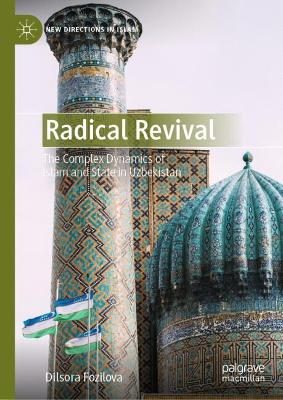
This book offers a nuanced and original analysis of the complex relationship between Islam and the state in post-Soviet Uzbekistan. Situating religious revival within the countrys historical, political, and social transformations, it reveals the paradoxical dynamics that have shaped contemporary Islamic life. The study traces how state efforts to promote official Islam while repressing unofficial expressions have produced unintended consequences, including the radicalization of some believers. By illuminating the dialectical tensions between governance, control, and religious agency, the book provides a groundbreaking account of the power struggles that define Uzbekistans religious and political landscape. Drawing on historical materials and contemporary data from previously inaccessible sources, it makes a significant contribution to the sociology of religion, political sociology, social scientific studies of Islam, and political science.
Chapter 1: Introduction: Contextualizing Islam in Post-Soviet
Uzbekistan.
Chapter 2: Historical Legacy: Soviet Secularism and Its Impact
on Contemporary Islam.
Chapter 3 Outline Paradoxical Governance: The
Duality of Official and Unofficial Islam in Post-Soviet Uzbekistan.
Chapter
4: Dialectical Radicalization: State-Islam Dynamics in Uzbekistan.
Chapter 5
Adashganlar: The Politics of Fear and Control.
Chapter 6: Role of Media
in the Revival of Islam: Navigating Official and Unofficial Islam in
Uzbekistan.
Chapter 7: Islam in Transition: Power, Religion, and Identity in
Post-Soviet Uzbekistan.
Chapter 8: Beyond Paradox: Islam, Secularism, and
the Future of Governance in Uzbekistan.
Dilsora Fozilova holds a Ph.D. in Sociology from the University of British Columbia, Canada. She teaches sociology at the University of British Columbia and the University of the Fraser Valley in Canada and is also affiliated with Tashkent State University of Transportation in Uzbekistan. Her research focuses on statesociety relations, religion, governance, and social inequality in Central Asia. She has conducted extensive fieldwork, including interviews with government officials, religious leaders, activists, and community members, examining the complex and often paradoxical governance of Islam in Uzbekistan. Her scholarship is informed by her long-standing engagement with issues of social justice and human rights, including advocacy addressing political repression and the exploitation of child and forced labor. Her work bridges academic research and public scholarship, contributing to conversations on religion, power, and social change in post-Soviet societies.