Muutke küpsiste eelistusi

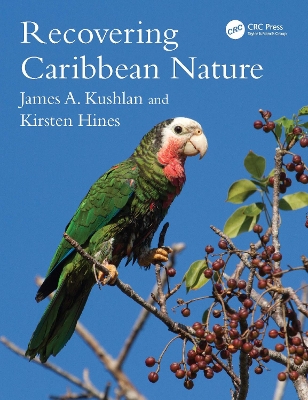
Recovering Caribbean Nature [Kõva köide]

  • Formaat: Hardback, 250 pages, kõrgus x laius: 246x188 mm, kaal: 453 g, 2 Line drawings, color; 147 Halftones, color; 149 Illustrations, color
  • Ilmumisaeg: 29-Oct-2024
  • Kirjastus: CRC Press
  • ISBN-10: 1032489839
  • ISBN-13: 9781032489834
Teised raamatud teemal:
  • Kõva köide
  • Hind: 169,31 €*
  • * hind on lõplik, st. muud allahindlused enam ei rakendu
  • Tavahind: 225,75 €
  • Säästad 25%
  • Raamatu kohalejõudmiseks kirjastusest kulub orienteeruvalt 3-4 nädalat
  • Kogus:
  • Lisa ostukorvi
  • Tasuta tarne
  • Tellimisaeg 2-4 nädalat
  • Lisa soovinimekirja
  • Raamatukogudele
  • Formaat: Hardback, 250 pages, kõrgus x laius: 246x188 mm, kaal: 453 g, 2 Line drawings, color; 147 Halftones, color; 149 Illustrations, color
  • Ilmumisaeg: 29-Oct-2024
  • Kirjastus: CRC Press
  • ISBN-10: 1032489839
  • ISBN-13: 9781032489834
Teised raamatud teemal:
The Caribbean is a global biodiversity hotspot, half its resident bird species found nowhere else; yet a quarter are threatened with extinction. This is largely because only 1% of the landscape can be considered natural, with nearly all the land privately owned. The habitat limitations faced by the Caribbean’s distinctive fauna and flora can therefore be ameliorated by planning and managing sustainable naturalistic landscapes, parks, and private gardens. This book uniquely provides a theoretical background and practical applications to modify and expand temperate-zone concepts of restoring nature to the tropical Caribbean. Packed with beautiful colour photographs, it offers unifying principles applicable across the tropics and synthesizes information on the Caribbean’s environmental uniqueness and globally significant biodiversity. It also provides explicit guidance on establishing sustainable and more naturalistic landscapes, from large public lands to private yards and gardens. The book is essential reading for academics and researchers studying the Caribbean environment, resource management professionals, and scientists and educators from non-governmental organizations who provide programs and advocacy for conservation and regional sustainability. Moreover, it highlights the importance of private lands and gardens, where the greatest gains can be made, so offers a handbook for knowledgeable private landowners and their professional advisors.

. This book uniquely provides both a theoretical background and practical applications to modify and expand to the tropical Caribbean temperate-zone concepts of restoring nature. Packed with beautiful color photographs, it offers unifying principles that can be applied across the tropics.

Arvustused

The recovery of nature is one of the most urgent challenges we face, in the Caribbean and around the world. With more than 1 million species threatened with extinction and the specter of climate change and sea level rise upon us the path forward may seem insurmountable. But the good news is that we can all participate in the creation of a new sustainable world, though personal actions in our gardens and landscapes. Recovering Caribbean Nature comes at a perfect time and is a welcome new resource packed with detailed guidance on how to personally contribute to the restoration and recovery of nature.

George D. Gann, Executive Director, The Institute for Regional Conservation and Chair Emeritus, Society for Ecological Restoration.

Recovering Caribbean Nature is a monumental how to restore the Caribbean native flora. Decades of research, island reconnaissance, and visits to gardens, nurseries and still intact and pristine habitats, provide the authors with unique insights into a growing imperative to restore the regions native flora. As a conservation practitioner for BirdLife International, its given me a refreshing perspective on the Caribbean natural history. I even think it is the foundation for a much-needed Caribbean-wide rewilding movement one garden at a time.

Ian J. Davidson, Director-Americas, BirdLife International.

Jim Kushlan and Kirsten Hines have consolidated knowledge from a range of resources and their own studies over many years to provide Caribbean-specific information on how to protect, restore, and recreate Caribbean nature. I am confident this book will have a tremendous impact on inspiring more people to plant native, thereby providing more high-quality habitats that are needed to support and sustain the incredible diversity of endemic and migratory birds that call the Caribbean home. Present and future generations and locals and visitors alike will enjoy and benefit from a healthier environment flourishing with native plants and abundant birds.

Lisa Sorenson, Executive Director, BirdsCaribbean.

I learned from and enjoyed reading this book, Recovering Caribbean Nature. Its review of the environmental history of the Caribbean and its role in current nature conservation provide valuable examples that can be useful for both a community member and university classes. Recovering Caribbean Nature rightly emphasizes the roles played by gardens in conserving Caribbean birds, as we have discovered in the National Botanic Garden of Cuba. The authors provide accounts of plants suggested for nature recovery and describe the birds and other animals that might use them, information that will now be available to many people in the Caribbean. The book provides both practical advice and reflections on nature restoration that can guide conservation action throughout the Caribbean. Books like this may help the islands of the West Indies to be more resilient and beautiful and at the same time become a better place in the world!

Lourdes Mugica Valdés, PhD, Faculty of Biology, University of Havana.

Anyone with an interest in seriously regreening and recovering areas, particularly for birds, will want to check out Recovering Caribbean Nature by James A. Kushlan and Kirsten Hines. This book presents both scientific background and logistical applications about restoring nature across the Caribbean. Most importantly, perhaps, it presents clear guidance on establishing sustainable and naturalistic landscapes, from large public lands to private yards and gardens. In the process, the greening of private lands is stressed, especially by the creation of a matrix of recovered nature, a patch-by-patch invitation to improve areas where significant gains can be made for birdlife and other creatures. There are 63 very informative pages devoted to individual plant species and families, vitally important and evaluated, with about a half-dozen pages describing other tempting, but always to-be-avoided and non-native plants. And although Caribbean birdlife is stressed in the book, reviewed in 40 pages of overlap with the plants they prefer, the beneficiaries of the planting process is not limited to birds. Reptiles, amphibians, mammals, and invertebrates (especially butterflies) are all considered within the recovered landscapes. The book is also beautifully illustrated with color photographs.

The Birding Community eBulletin, Feb 2025, Paul Baicich and Wayne Petersen

Introduction
1. Caribbean nature
2. Recovering nature
3. Place-based conservation
4. Practical matters
5. Nature-friendly plants
6. Birds, butterflies, and other animals
7. Reflections on conserving Caribbean nature
8. Resources

James A. Kushlan is a biologist, and writer who lives in Coconut Grove, Florida, and Annapolis, Maryland, USA. In his 12 books and over 250 technical articles, he shares with a diverse audience his perspectives on science, conservation, and natural history. His books include:The Herons; Heron Conservation; Storks, Ibis, and Spoonbills of the World; Attracting Birds to South Florida Gardens; Seeking the American Tropics, South Floridas Early Naturalists; and three books on South Floridas national parks. He holds a PhD from the University of Miami and two honorary doctor of science degrees. His professional positions have included director of Patuxent Wildlife Research Center, research associate of the Smithsonian Institution, professor of biology at Texas A&M-Commerce and the University of Mississippi. He was the 51st president of the American Ornithologists Union and president of the Waterbird Society. He has served on many other professional and conservation boards including the American Bird Conservancy, Wetlands International, John Cabot University, Station Biologique de la Tour du Valat, and the Everglades Foundation. The University of Miami has established the Chair of Waterbird Biology and Conservation in his name. More background can be found at www.JamesAKushlan.com.

Kirsten Hines is a Florida-based author, wildlife photographer, and conservationist with a masters degree in biology and background as an environmental educator. Her writing and photography have appeared in numerous publications including seven of her own books, such as Attracting Birds to South Florida Gardens, Wild Florida: An Animal Odyssey, and a soon to come Helm Wildlife Guide to the Birds of Florida. Kirsten aims to inspire conservation action through her story-telling, wildlife-oriented presentations, guiding and workshops, and through not-for-profit work such as being a Conservation Associate at the Institute for Regional Conservation, co-founding Phoebes Birding to connect women through nature, and serving on such boards as Tropical Audubon Society and Audubon Florida, where she is Conservation Chair. More about Kirsten and her work can be found at www.KirstenHines.com.